Households that shop once a week
If you store several days’ worth of fresh and frozen food, compare the usable capacity of both compartments. A total capacity that seems sufficient may be divided up differently than you expect.


Start by considering the space available and how much fresh and frozen food you need to store between shops. A table-top or under-counter fridge can work well when space is tight and you don’t need to store much; if you regularly buy frozen food, consider a fridge freezer with a separate freezer compartment. If the appliance needs to fit inside a cabinet, check the housing, door fixing and ventilation requirements before you order.
The space you can spare for a fridge isn’t the only factor that determines which type is right for you. How often you shop and how much frozen food you buy matter too, as Que Choisir points out.
If you store several days’ worth of fresh and frozen food, compare the usable capacity of both compartments. A total capacity that seems sufficient may be divided up differently than you expect.
A table-top or under-counter model may suit the space available. Still, check how much you can store between shops and how much room you’ll need to open the door.
Measure the housing and identify how the existing cabinet door is fixed. Bosch Electroménager France points out that the hinge type must match the new appliance.
Start with the food you need to store, then rule out any sizes that won’t fit the space. Next, compare the energy label and delivery terms for the models you’re considering.
| Priority | What to check | Think about your needs |
|---|---|---|
| Usable capacity | Compare the usable litres for fresh and frozen food, not just the total capacity. Que Choisir gives an average guide of 100 to 150 L for one person, plus 50 L for each additional person; adjust this to suit your habits. | I shop once a week: how much space do my fresh groceries actually take up until my next shop? |
| Freezing | Check whether there’s a freezer compartment and how much it holds. A small compartment in a single-door fridge is different from the separate freezer in a fridge freezer. | I often buy frozen food: I need enough room for it without leaving too little space for fresh food. |
| Location | Measure the width, depth and height, as well as the doorway. For a built-in appliance, check the housing, cabinet-door fixing and ventilation requirements against the model’s instructions; Bosch particularly highlights the importance of the hinge type. | In my small kitchen, the appliance needs to fit in its space while leaving room for the door to open and allowing air to circulate as the manufacturer recommends. |
| Noise | The European energy label shows the noise emissions. Que Choisir points out that a decibel figure alone can’t predict how loud an appliance will seem. | My kitchen opens onto the living area: I want to compare the stated noise levels without assuming that two appliances with the same rating will sound the same. |
| Energy use | Check the energy rating and consumption shown on the European energy label, along with the compartment capacities. Compare appliances that can meet the same storage needs. | I’d rather choose the capacity that suits me, then compare the energy use of models of a similar size. |
| Delivery | Measure the route into your kitchen and check what’s included in the installation service. Electrolux France’s pre-installation guide says its installers don’t carry out joinery, plumbing or electrical work. | If access is narrow or a cabinet door needs adapting, I want to sort this out before delivery day. |
Its compact size also means less room for groceries. If you shop weekly and regularly buy frozen food, check whether the freezer compartment will meet your needs.
Work out separately how much fresh and frozen food you need to store between shops, then compare the corresponding usable capacities.
A compatible height doesn’t guarantee that the housing, hinges and cabinet door will fit. Bosch Electroménager France specifically advises checking the hinge type when replacing an appliance.
Note down the housing measurements and how the door is fixed, then check the model’s installation diagram and what’s included in the installation service.
Adapting a cabinet door or housing may require work that isn’t included in the appliance installation.
The noise level can help you narrow down your options, but Que Choisir points out that how loud an appliance seems is subjective, particularly in a small home.
Check the energy label and, if your kitchen is open-plan, look for comparable acoustic tests rather than judging by the stated figure alone.
An appliance may fit in its intended space but be difficult to get there. If it needs to be built in, don’t assume that any work to the cabinets is included.
Measure the route into your kitchen, clear the space and confirm the delivery, installation and any old-appliance collection arrangements with the retailer.
This selection includes freestanding fridge freezers for storing fresh and frozen food, as well as built-in models to consider if your kitchen has a suitable housing. Compare their capacities with your shopping needs and check the installation dimensions before choosing.
 Image unavailable
For shopping that includes both fresh and frozen food, this model offers 153 L of fridge space and 74 L of freezer space. It’s listed as 54 cm wide; also check the height, depth and clearance needed in your chosen location. Its listed features include an E energy rating, Low Frost technology and a reversible door.
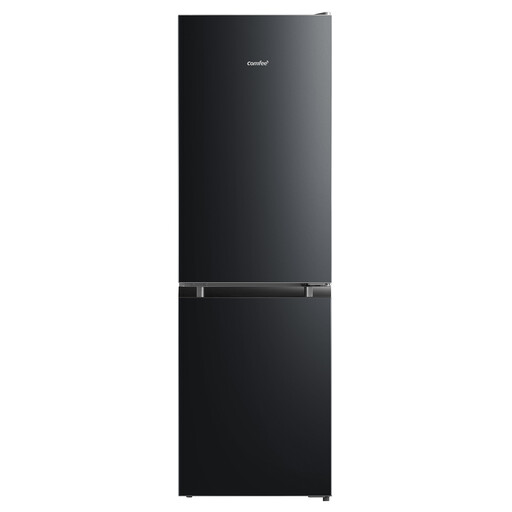 Image unavailable
This freestanding fridge freezer gives you a separate space for frozen food while keeping fresh groceries chilled. It has a stated total capacity of 174 L; compare the capacity of each compartment with your weekly shop. The product description mentions Low Frost and a reversible door, so check the dimensions and the space needed to open the door.
 Image unavailable
This built-in model is designed for a kitchen with a suitable housing, not simply a clear space with the same external dimensions. It’s listed with a 249 L capacity, TwinTech No Frost and an E energy rating. Before replacing an appliance, check that the housing, cabinet-door fixing and ventilation requirements match those of the model you’ve chosen.
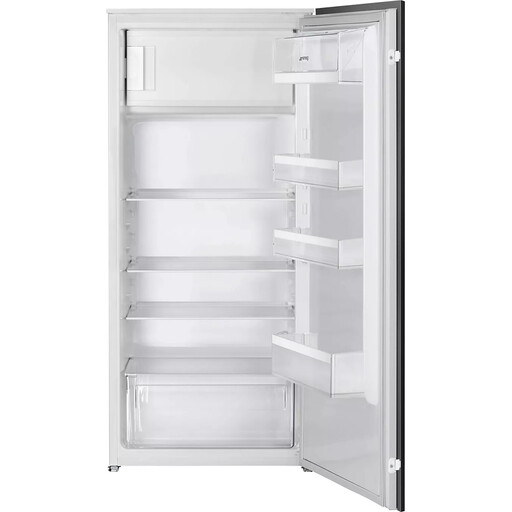 Image unavailable
Consider this built-in model with a top-mounted freezer if you want to prioritise fresh food while still having some freezer space. It’s listed with a total capacity of 188 L and an E energy rating; check the freezer’s own capacity against how much frozen food you buy. Also check the housing measurements and how the cabinet door is fixed.
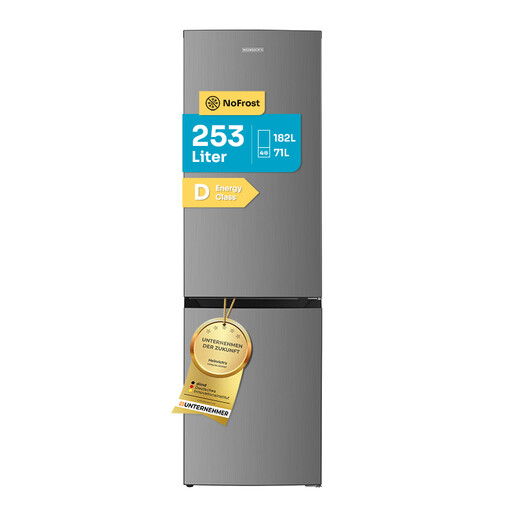 Image unavailable
With a stated capacity of 182 L for refrigeration and 71 L for freezing, this model is worth comparing for a mix of fresh and frozen groceries. Check its full dimensions and the clearance required before choosing it for a small kitchen. The 39 dB noise level stated in the product description doesn’t, on its own, guarantee comfortable noise levels in an open-plan room.
Start with the usable capacity and how it’s divided between the fridge and freezer, rather than looking only at the external dimensions. Que Choisir gives an average guide of 100 to 150 L for one person, plus 50 L for each additional person; adjust this to the amount you actually store between shops.
Not on that basis alone. Measure the housing, then check the cabinet-door fixing and the new model’s installation instructions. Bosch Electroménager France points out that the hinge type must also match when replacing an appliance.
Follow the model’s instructions on ventilation clearances and how long to wait before plugging it in. In its installation guidance for a fridge freezer, Electrolux France advises leaving space for air to circulate around the appliance and recommends waiting at least four hours before plugging it in; check the instructions for your specific appliance.
It provides useful information, including the energy rating, consumption, capacity and noise emissions of the appliances concerned, as the European Commission explains. Also compare how the capacity is divided against the groceries you need to store. For noise, Que Choisir points out that the same decibel figure alone can’t predict how loud an appliance will seem in your room.