Shopping for several days in a narrow kitchen
If you live alone or have a small household, you need to store fresh food without blocking the way or stopping the door from opening. Check the external dimensions and usable capacity separately.


For a small kitchen, first choose an appliance that lets you open the door and move around freely. Then work out how much space you need for fresh food and frozen food, based on your shopping habits. A table-top fridge may suit you if you mainly store fresh food and only a few frozen items. If you regularly freeze portions or fresh food, consider a fridge-freezer with a separate freezer compartment, provided its height and clearance requirements work for your space. Que Choisir suggests allowing 100 to 150 litres of usable capacity for one person, then around 50 litres for each additional person. Use this as a guide and choose according to your habits, rather than looking only at the total capacity.
If you live alone or have a small household, you need to store fresh food without blocking the way or stopping the door from opening. Check the external dimensions and usable capacity separately.
If your shopping includes frozen food or portions to freeze, check the space and specifications of the freezer compartment. A small freezer compartment may not be suitable for the same uses as a separate freezer.
If the appliance will be near your living space, compare its stated noise emissions too. According to the European Commission, the energy label shows the noise level and class, as well as capacity and energy consumption.
Start with the space you actually have, then decide how much of your shopping needs to be kept fresh or frozen. Finally, compare the practical features of appliances with similar sizes and capacities.
Worth considering: if ceiling height is limited and you mainly buy fresh food.
Bear in mind: depending on the model, freezer space may be very limited or unavailable.
Worth considering: if a small amount of frozen food now and then suits your habits.
Bear in mind: a small freezer compartment is not the same as a freezer designed for storing larger amounts or regularly freezing fresh food.
Worth considering: if you keep several days’ worth of shopping and regularly use a separate freezer compartment.
Bear in mind: you’ll need enough height, and should check the separate capacities for fresh and frozen food.
Worth considering: if your fridge already meets your needs but you’re consistently short of freezer space.
Bear in mind: a second appliance takes up more space and needs to be kept somewhere suitable for its climate class.
| What matters | What to check | Who is it for? |
|---|---|---|
| Installation and room to move | Measure the space, the delivery route and the door’s swing; check the manual for clearance requirements and, if needed, the climate class. | In a narrow kitchen, I want to be able to install the appliance and open the door without blocking the way. This is the top priority for around 33% of consumers concerned. |
| Space for fresh food | Compare the fridge’s usable litres and the layout of its shelves and drawers, rather than focusing only on total capacity. | When fresh food needs to last until my next shop, I prioritise practical storage that doesn’t mean piling food on top of itself. Around 27% of consumers put this refrigeration capacity first. |
| Freezing | Check the freezer’s capacity and the compartment specifications if you plan to freeze fresh food. | If I prepare portions in advance or regularly keep frozen food, a small freezer compartment may not suit my needs. Freezing is the top priority for around 20% of consumers. |
| Energy use, noise and maintenance | For comparable models, check kWh/year, noise in dB(A), and the defrosting and cleaning instructions. | In an open-plan kitchen, I pay attention to everyday noise. I also want to compare energy use and maintenance tasks. For around 20% of consumers, these factors come first. |
Two appliances with the same total capacity may offer different amounts of space for fresh and frozen food. This split matters particularly if you freeze portions every week.
Note the capacity in litres of each compartment and compare it with what you actually buy. Don’t treat a small freezer compartment as a separate freezer.
An appliance may fit in its space but still get in the way when the door is open. The room temperature must also be within the range specified by the model’s climate class.
Before ordering, check the delivery route, the door’s swing, the clearances specified in the manual and the temperature range of the intended location.
The letter on its own doesn’t tell you the annual energy use, the split between compartments or the noise level. The European Commission says these details are shown on the energy label for fridges and freezers.
Compare kWh/year and noise emissions for appliances with similar sizes and capacities, then check the capacity of each compartment.
More space doesn’t replace keeping track of your food. ADEME points out that buying too much can mean food passes its use-by date and gets thrown away.
Choose a capacity that suits your shopping, check what you have before buying more, and organise food so you can find it easily.
Worth considering if you’re comparing a fridge-freezer, a single-door fridge and a possible separate freezer.
Worth considering when comparing fridge-freezers, built-in or freestanding appliances, and additional freezers.
Worth considering if you’re comparing fridge-freezers, particularly built-in models, and their cooling features.
These five fridge-freezers let you explore separate storage for fresh and frozen food for a shop that lasts several days. Before choosing one for a small kitchen, check its dimensions and door swing against your available space.
 Image unavailable
Worth exploring if you want to split your shopping between two compartments in a narrow kitchen. The model name indicates 153 L for the fridge, 74 L for the freezer, a width of 54 cm, a reversible door, Low Frost and an E energy rating. Check the height, depth and required clearances before deciding whether it will fit your space.
 Image unavailable
Worth comparing if you have enough room for a fridge-freezer with a bottom freezer. The product name indicates a total capacity of 282 L and an E energy rating. Check the capacity of each compartment, the space needed for the door and the freezer specifications if you plan to freeze fresh food regularly.
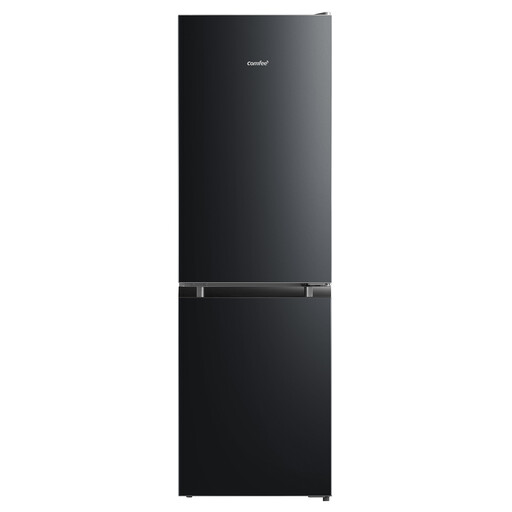 Image unavailable
Worth exploring if limited space points you towards a fridge-freezer with a smaller total capacity. The product name indicates Low Frost, an adjustable thermostat and a reversible door. For an open-plan kitchen, compare the noise level shown on the energy label: the words “Low Noise” aren’t enough to assess it.
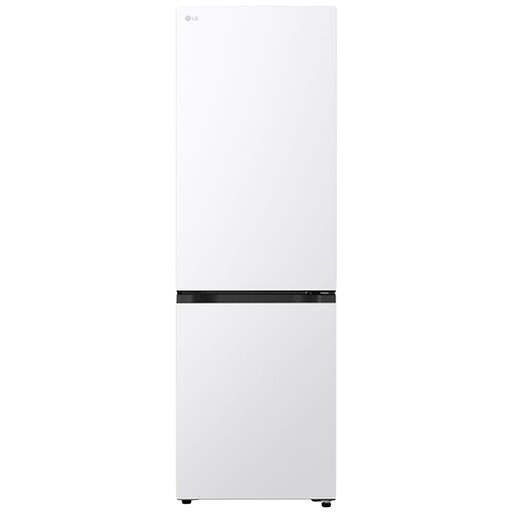 Image unavailable
Worth considering if your available space and habits call for a 333 L appliance rather than a smaller model. The product name indicates a C energy rating and the NatureFRESH™, DoorCooling+™ and LinearCooling™ features. Check the dimensions, installation clearances and freezer capacity against your needs; the feature names alone don’t prove an effect on food.
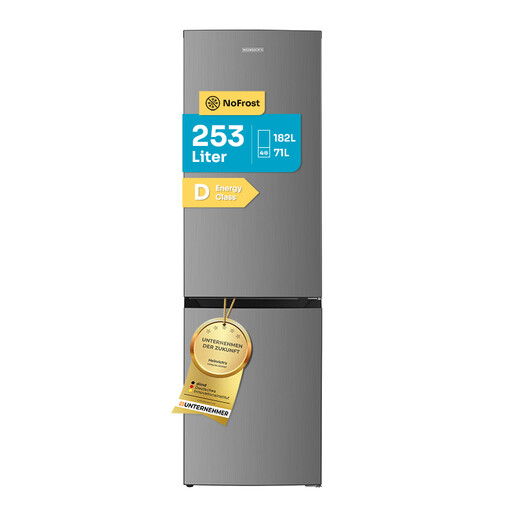 Image unavailable
Worth comparing if you need separate space for fresh and frozen food, rather than choosing by total capacity alone. The product name indicates 182 L for the fridge, 71 L for the freezer, No Frost and 39 dB. Measure the required width and depth, and check the compartment specifications if you freeze fresh food.
It may be suitable if you only keep a few frozen items and do so occasionally. If you regularly freeze fresh food or store several portions, consider a separate freezer compartment and check the specifications of the model you choose.
Anses recommends 4 °C in the coldest part of the fridge. Use the manual to find this area and store meat, fish and cooked meals there, without overfilling the appliance.
For domestic fridges of similar size and capacity, compare the energy rating, kWh/year, compartment capacities and noise emissions. The European Commission says these details appear on the label. In France, the Ministry of the Economy specifies that the label must be displayed for the appliances concerned, both in shops and online.
First check that the room temperature stays within the range specified by the model’s climate class. Bosch points out that a room that’s too cold or too hot can affect how the appliance works. Check the rating plate and manual before choosing this location.
No. Although Whirlpool describes No Frost as a technology that limits frost build-up in the appliances it applies to, you still need to monitor the temperature in the coldest area, avoid overfilling the fridge and follow food use-by dates.