For a small kitchen, first choose a fridge that allows the door to open and meets the manufacturer's installation requirements. A table-top or single-door model may suit you if you mainly store fresh food. If your weekly shop regularly includes frozen food, look instead at the separate freezer capacity of a fridge-freezer. Then compare the compartment capacities and stated energy consumption in kWh/year across appliances of a similar size and capacity.
Which options suit different needs?
Single person or couple with few frozen foods
If you have limited height and mainly use the fridge compartment for food, compare a table-top fridge with a single-door model. Check the capacity of each rather than estimating it from the external dimensions.
Household that shops once a week
If your shopping regularly includes frozen food, a fridge-freezer lets you compare the space set aside for fresh and frozen food separately. Its full dimensions must also fit the space available.
Fitted kitchen with an existing housing unit
To replace an integrated appliance, measure the housing unit and check the door-panel fixing, ventilation and door opening requirements in the manual for the model you're considering.
What should you check before choosing?
Table-top fridge
Consider it: if height is limited and you store few frozen foods.
Keep in mind: its compact height doesn't guarantee enough room for a week's shopping or a suitable freezer compartment.
Single-door fridge
Consider it: if you prioritise fridge capacity and have more height available than for a table-top model.
Keep in mind: if you buy frozen food every week, check the type and capacity of any freezer compartment.
Fridge-freezer
Consider it: if your weekly shop regularly includes both fresh and frozen food.
Keep in mind: its height, depth and door opening must all work in your kitchen.
Integrated fridge
Consider it: if an existing housing unit and kitchen door panel mean you need this type of installation.
Keep in mind: the housing unit, fixings and specified ventilation must all be suitable for the exact model.
| Criteria | What to check | What I need |
|---|
| Size |
Measure the height, width and depth. Check the door opening and clearances specified in the manual. For an integrated model, also check the housing unit and fixings. |
I want to be able to open the door without blocking the walkway or getting in the way of nearby furniture. |
| Fridge capacity |
Check the capacity of the fridge compartment, then look at the internal layout to make sure it suits your containers. Que Choisir suggests 100 to 150 L for one person, plus 50 L for each additional person. |
My fresh food and meals need to fit between shops, and I don't want to choose capacity based on appearance alone. |
| Freezer capacity |
Compare the freezer compartment's capacity separately from the total capacity. Check its stated specifications if you regularly store frozen food. |
I do a weekly shop that includes frozen food, so I need to know how much space is actually set aside for it. |
| Electricity use |
Compare the stated kWh/year for appliances of a similar type and capacity, taking their capacities into account. The European Commission gives an energy label scale from A to G; ADEME points out that these appliances run continuously. |
I want to assess energy use alongside the capacity I need, rather than relying on the energy rating letter alone. |
| Everyday use |
Check which way the door opens, whether it can be reversed on the specific model, and its stated noise level in dB. |
In a narrow or open-plan kitchen, access to storage and noise matter once the appliance is installed. |
What mistakes should you avoid?
-
Focusing on width alone
An appliance may fit in the space but still prevent the door from opening or fail to meet the specified clearance requirements.
Measure the available height, width and depth, then check the door swing and the installation instructions for the exact model.
-
Confusing total capacity with freezer space
Two fridges with a similar total capacity may divide their space differently between the fridge and freezer compartments.
Compare the separate capacities with what you usually store between shops.
-
Comparing energy ratings alone
The rating letter doesn't replace the stated annual energy use or a check of the compartments' capacities. ADEME points out that fridges and freezers run continuously.
Check the kWh/year and compare appliances of a similar type and capacity.
-
Assuming an integrated model will fit any housing unit
Dimensions and fixing methods vary by model: a 88 cm housing unit won't fit an appliance that's 177.2 cm tall.
Before choosing, compare the housing unit measurements, door panel and opening side with the installation instructions.
Which branded models offer useful points of comparison?
Liebherr
These two models let you compare a table-top fridge with a single-door model without confusing height and capacity.
- According to Liebherr's product information, the Rdi 1620 Plus has a capacity of 141 L and measures 85 × 60 × 60,7 cm, while the Ke230-26 has a capacity of 213 L and measures 114 × 55 × 63 cm.
- These dimensions apply to these specific models. Also check the compartment layout and installation requirements.
Bosch
The freestanding KGN33NWEB fridge-freezer is a useful example of how space is divided between the fridge and freezer.
- Bosch's product information gives it 193 L of fridge capacity and 89 L of freezer capacity, with overall dimensions of 176 × 60 × 66 cm.
- Check that its depth, door opening and the clearances specified in the manual will work in your kitchen.
Whirlpool
The integrated range shows why it's important to start with the size of the housing unit and the capacity you need.
- Whirlpool lists the WHSS 2131B4 for an 88 cm housing unit, with a total capacity of 110 L, while the WHSD18A041B1 FR has a capacity of 306 L.
- Capacity alone doesn't confirm compatibility. Check the housing unit dimensions and door-panel fitting for the model you're considering.
Electrolux
The KRF6DD18S1 is another useful point of comparison when looking at a tall integrated fridge.
- Electrolux lists a total capacity of 307 L, a D energy rating and energy use of 91 kWh/year for this 177.2 cm model.
- These figures don't apply to other models from the brand, and they don't on their own confirm that the appliance will fit your housing unit.
Fridge-freezers to consider on Joybuy
These fridge-freezers are worth considering if your weekly shop includes fresh and frozen food. Compare the space in each compartment with your needs, then check the installation dimensions and energy label for the model you choose.
 Image unavailable
CHiQ JR263LGE, 262 L black fridge-freezer
Worth considering if you're looking for a 54 cm-wide fridge-freezer for your weekly shop. The model name indicates a height of 176 cm, a 70/30 split and Low Frost technology. Check the capacity of each compartment, the depth and the required clearances before choosing.
View on Joybuy
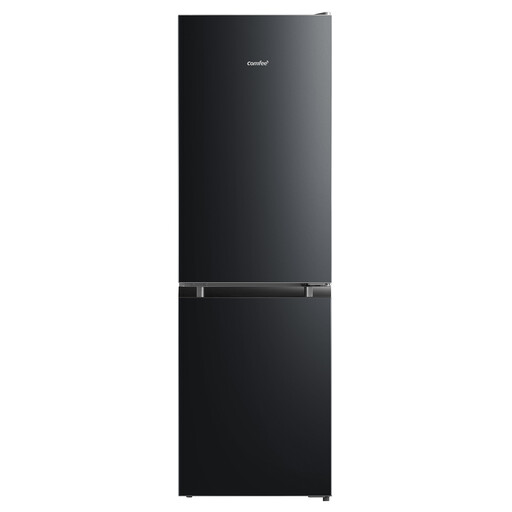 Image unavailable
Comfee' by Midea RCB230BL2EU(E), 174 L fridge-freezer
Its total capacity of 174 L is worth comparing with the amount of fresh and frozen food you store between shops. This freestanding model features Low Frost, an adjustable thermostat and a reversible door. Check its dimensions, door opening and kWh/year on the energy label.
View on Joybuy
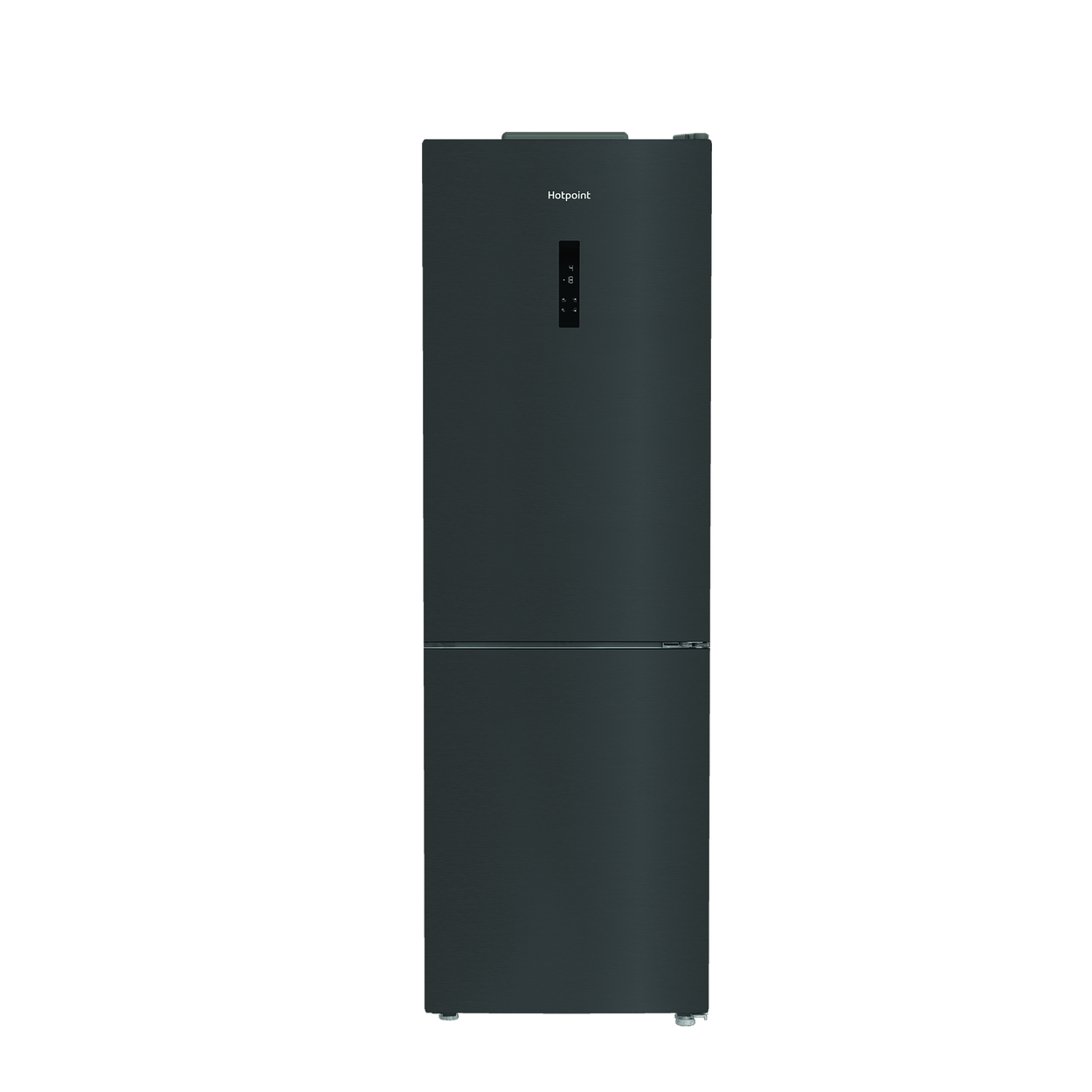 Image unavailable
Hotpoint HPK26363XBR5E, 316 L fridge-freezer
Its total capacity of 316 L may suit a household that stores more of its weekly shop; check how much of that space is in the freezer. The model is listed with Double No Frost and a D energy rating. Check its full dimensions, door opening and kWh/year to assess whether it will fit your kitchen and how much energy it uses.
View on Joybuy
 Image unavailable
CHiQ JR227LSE, 227 L silver fridge-freezer
Its listed width of 54 cm may catch your eye if your kitchen is narrow, but that alone doesn't confirm it'll fit. The model has 153 L of fridge capacity and 74 L of freezer capacity, plus Low Frost and an E energy rating. Check the height, depth, clearances and kWh/year before comparing it with other appliances.
View on Joybuy
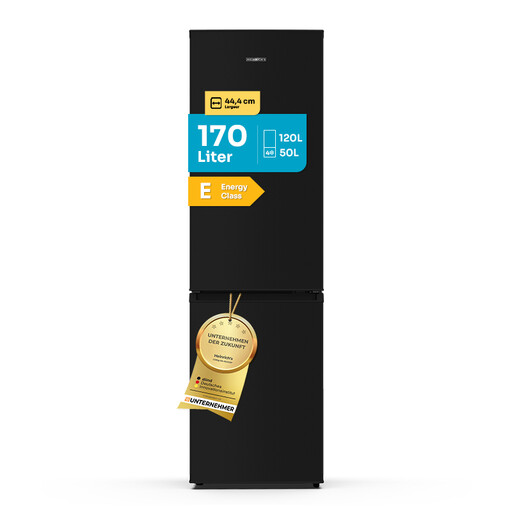 Image unavailable
Heinrich´s, 170 L black fridge-freezer
This fridge-freezer has 120 L for fresh food and 50 L for frozen food, so compare this split with your weekly shop. Its name indicates an E energy rating and a stated noise level of 40 dB. Check its dimensions, clearances and kWh/year before deciding whether it will suit your kitchen.
View on Joybuy
Frequently asked questions
What should I measure before ordering a fridge for a small kitchen?
Measure the height, width and depth of the space, then check how much room you'll need to open the door and access the storage. Check the clearances and ventilation requirements in the manual for the exact model. For an integrated appliance, also check the housing unit dimensions and door-panel fixings.
How can I compare the energy use of two fridges?
Check their stated annual energy use in kWh and compare appliances of a similar type and capacity. The European Commission gives an energy label scale from A to G. The letter alone tells you neither how much storage is available nor how much energy the models you're considering use in comparison with each other.
Is a small freezer compartment enough for a week's frozen food?
Not necessarily if you regularly store a lot of frozen food: Que Choisir distinguishes this need from what a simple freezer compartment can accommodate. Check the capacity and specifications of the model's freezer compartment separately from its total capacity.
Can you change which way the door opens after buying?
Only if the model has a reversible door. Check whether it's reversible and how to do this in the product information and manual, then make sure the door will open far enough on the side you choose.


