Studio flat or small-kitchen dweller
If space is tight, check the depth, delivery route and clearance needed to open the door too. Even if an appliance fits into the alcove, it could still obstruct the way through.


In a small kitchen, first choose a fridge that will fit and whose door can open without getting in the way. Then check that its capacity suits your shopping and the amount of food you need to store. An under-counter fridge is a good choice when space is very limited, while a single-door fridge without a freezer devotes all its capacity to fresh food. Consider a fridge freezer if you regularly buy frozen food. Whatever the style, the right temperature and food storage are essential for keeping everything fresh.
If space is tight, check the depth, delivery route and clearance needed to open the door too. Even if an appliance fits into the alcove, it could still obstruct the way through.
If you prepare meals in advance, focus on the fridge capacity and shelf layout rather than the total capacity alone. You’ll need enough room to store your containers without overcrowding the appliance.
If frozen food is a regular part of your shopping, compare the fridge and freezer capacities separately. A small built-in compartment may not meet the same needs as a separate freezer.
Que Choisir compares fridge styles based on factors such as available space, how often you shop and whether you need a freezer. These three questions can help narrow down your options before you look at the features of individual models.
Consider this if: space under the worktop or in a studio flat is your main constraint, and you don’t buy much food at a time.
Bear in mind: capacity is limited and, depending on the model, there may be no freezer compartment.
Consider this if: fresh food and prepared meals make up most of what you need to store.
Bear in mind: a model without a freezer won’t replace a separate freezer space.
Consider this if: you regularly buy frozen food and need a separate freezer compartment.
Bear in mind: some of the appliance’s capacity is given over to frozen food rather than fresh food.
| Factor | What to check | Who it matters to |
|---|---|---|
| Space needed for installation | Measure the height, width and depth, as well as the door clearance. Check the required clearances in the model’s manual. | In a kitchen where every bit of space matters, I want to install and open the appliance without blocking access. Around 36% of consumers put this first. |
| Capacity and storage | Compare fridge and freezer capacities separately, then check whether there’s room for the containers you usually use. | When shopping and leftover containers start to pile up, I need enough room to store them without crowding the shelves. This is a priority for around 29% of consumers. |
| Temperature control | Check the temperature setting or display and, depending on your needs, the type of air circulation. | If I often store home-cooked food, I want to monitor the temperature and organise food properly. Around 21% of consumers prioritise this. |
| Noise and energy use | Compare the dB(A) ratings and energy-label information of appliances with a similar style and capacity. | In a studio flat or open-plan kitchen, I consider how noticeable the noise will be in the room. I may also prioritise energy use. Around 14% of consumers put one of these two factors first. |
The depth, door clearance or ventilation requirements could prevent installation, particularly under a worktop or in an alcove.
Measure the space and delivery route, then compare them with the dimensions and installation instructions for the model you’ve chosen.
A built-in compartment takes up space that could otherwise be used for fresh food, and may not meet your needs if you regularly buy frozen food.
Compare the capacity of both compartments, and consider a fridge freezer if frozen food makes up a significant part of your shopping.
Que Choisir points out that the stated noise level alone isn’t enough to predict how disruptive an appliance will be: the type of sound and any vibrations matter too.
Use the dB(A) rating to compare models, then look for reviews or test results that discuss noise if the appliance will be near your living space.
A feature designed to distribute cold air doesn’t replace temperature control or storage that allows air to circulate.
According to Anses, check the coldest part regularly and keep it between 0 and +4 °C. Avoid overcrowding the shelves.
Two built-in models offer different configurations to compare if you have a suitable alcove.
Under-counter models to consider when you need a compact appliance, without overlooking its depth.
The TSE1504FN is an example of a freestanding under-counter fridge for those who mainly need fridge space.
These models include three fridge freezers for storing fresh and frozen food, as well as a compact single-door fridge with a small freezer compartment. Compare their capacity with your usual shopping, then check that the model you’re interested in will fit.
 Image unavailable
Worth considering if you need space for fresh and frozen food in a narrow kitchen.
The product title lists 153 l for the fridge and 74 l for the freezer, a width of 54 cm and a reversible door. Its Low Frost function doesn’t mean it’s completely frost-free.
Check the height, depth, door clearance and ventilation gaps before deciding where to put it.
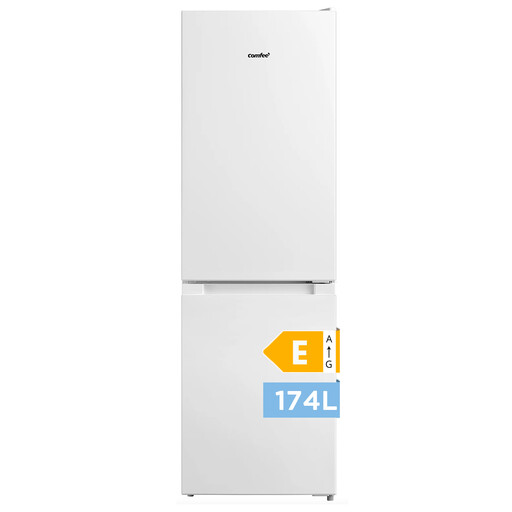 Image unavailable
This freestanding fridge freezer is aimed at shoppers who also want to store frozen food without choosing a particularly tall appliance.
The title lists a height of 150 cm, a reversible door, an adjustable thermostat and a Low Frost system. You may still need to defrost the appliance.
Check the door clearance and ventilation gaps in the manual before installation.
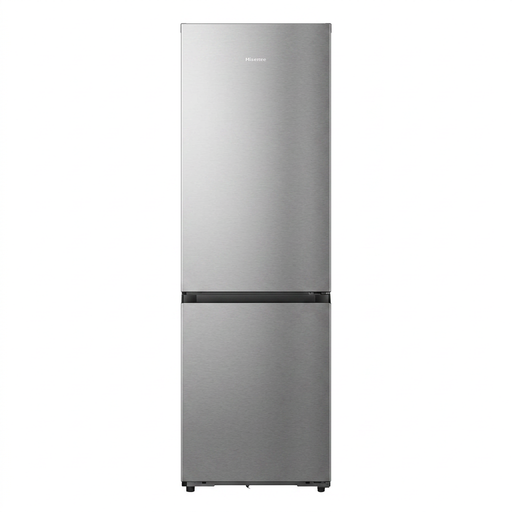 Image unavailable
Worth comparing if your kitchen can accommodate a larger-capacity fridge freezer for your shopping and frozen food.
The title describes a freestanding, frost-free fridge freezer with fan-assisted cooling and a noise level of 35 dB. Its 330 l capacity alone won’t tell you whether it will fit in your kitchen.
Measure the space and delivery route, then check the ventilation clearances specified for this model.
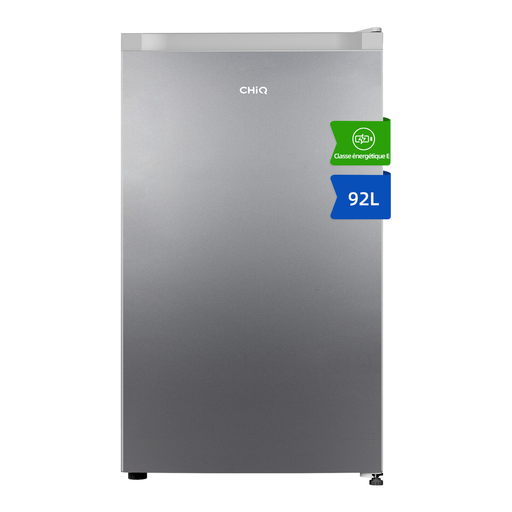 Image unavailable
Consider this when space is limited and you only store a small amount of shopping or leftovers at a time.
The title mentions a small freezer compartment. Check its capacity and temperature before relying on it for frozen food. The stated 92 l capacity could feel limiting if you don’t shop often.
Also check the model’s height, depth and installation requirements.
According to Anses, the coldest part of the fridge should be kept between 0 and +4 °C, and its temperature should be checked regularly. Store the most perishable foods there, especially homemade dishes containing animal products, and avoid overcrowding the shelves.
Compare its overall dimensions with the space you’ve measured, allowing for the delivery route, door clearance and the gaps specified in its manual. For a built-in model, also check the alcove dimensions and hinge system for the exact model.
No. More even air circulation doesn’t replace setting and checking the temperature. Que Choisir describes these cooling systems as ways to distribute air more evenly. Anses also stresses the importance of not overloading the fridge.