Who are these configurations suitable for?

One person or a couple with a small kitchen

If your appliance needs to fit under a worktop or in a low recess, consider under-counter and compact models. Their suitability depends on the exact dimensions of the unit, how the door opens and how much storage space you need.

Households that cook and freeze food regularly

If you store both fresh and frozen food, compare the capacity of each compartment rather than just the total capacity. The available height may determine whether you choose a fridge-freezer or two separate appliances.

Shoppers focused on everyday use

If you’re worried about choosing an appliance that’s too large or noisy for your new home, match its capacity to your shopping habits, then compare the kWh/year and noise levels of models with similar configurations and capacities. ADEME points out that refrigeration appliances run continuously.

What should you check before choosing?

Under-counter fridge

Consider it: if you only have a low recess available and your storage needs are limited.

The trade-off: capacity is more limited, and some models, such as the Bosch KUR21VFE0, don’t have a freezer compartment.

Fridge-freezer

Consider it: if you regularly store fresh and frozen food and have enough height for a single appliance.

The trade-off: it needs more height than an under-counter fridge; check that each compartment suits the food you buy.

Fridge with a separate freezer

Consider it: if you already have a suitable freezer or want to split your storage between two available spaces.

The trade-off: each appliance takes up space and both run continuously, as ADEME points out.

Criteria What to check before buying What matters to shoppers
Size and installation Measure the available height, width and depth. For a built-in model, also check the recess, hinges, door opening and ventilation requirements specified in the manual. If my kitchen has got smaller, I need to be able to open the door and use the appliance once it’s installed, not just fit it into the recess. Around 36% of shoppers rank installation constraints as their top priority.
Fridge and freezer capacities Compare the fridge and freezer capacities in litres separately, taking into account how often you shop and how much frozen food you store. When I stock up or cook ahead, the total capacity isn’t much help if there isn’t enough room in the compartment I use most. Around 36% of shoppers would prioritise how storage space is divided.
Energy use and noise For models with similar capacities and configurations, compare the kWh/year and noise emissions shown on the EU energy label. In a small home, I want to take into account that the appliance runs continuously and may be noisy near living areas. Around 28% of shoppers put these factors ahead of other criteria.

What mistakes should you avoid?

  • Looking only at the total capacity

    A suitable total capacity can hide a freezer compartment that’s too small for your frozen food, or leave less room for fresh food than you expected. UFC-Que Choisir recommends taking your shopping habits and frozen food consumption into account.

    Make a note of what you need to store in each compartment, then compare their capacities separately.

  • Assuming any under-counter model will fit the recess

    Unit dimensions and installation requirements vary by model: the term “under-counter” alone doesn’t confirm that it will fit.

    Before ordering, compare your kitchen measurements with the installation diagram, hinge type and door-opening direction for the exact model.

    If it doesn’t fit, you may need to modify the unit or you may be unable to install the appliance in the intended space.

  • Choosing a larger appliance based on its energy rating alone

    According to ADEME, size and extra features can affect the energy use of appliances that run continuously. The energy rating doesn’t replace checking the kWh/year for models that meet your needs.

    First choose a suitable usable capacity, then compare annual energy use and noise levels across similar configurations.

  • Leaving plans for your old appliance until delivery day

    Used fridges must be disposed of through a dedicated collection scheme. The French Ministry for Ecological Transition lists collection points, recycling centres, retailers and social and solidarity economy organisations as options.

    Check whether the retailer offers a take-back service, or arrange in advance to take the appliance to a suitable collection point.

    If you haven’t arranged a take-back, you’ll need to allow time and transport to drop it off.

Brands to consider for each configuration

Bosch

Bosch’s range in France includes one-door fridges and under-counter models worth considering.

  • Bosch’s product details for the KUR21VFE0 list an integrated under-counter format measuring 820 × 598 × 548 mm and a fridge capacity of 134 L.
  • This model has no freezer compartment, so it won’t meet your frozen food storage needs on its own.

Electrolux

The Electrolux models listed here let you compare a small built-in fridge with a built-in fridge-freezer when the available recess determines your choice.

  • Electrolux lists a total capacity of 111 L and an 820 mm recess for the ELB3AE82YY; the ENT6ME19S4 is listed with a fridge capacity of 207 L and a freezer capacity of 62 L.
  • These two models need different recesses: the one specified for the ENT6ME19S4 is 1894 mm high.

Beko

The Beko BCNA275E44SN built-in fridge-freezer is worth considering if you want both compartments in an integrated appliance.

  • Retailer BUT lists this model with a total capacity of 254 L.
  • Before choosing this capacity, compare the space for fresh and frozen food and check the recess dimensions for the exact model.

Joybuy models to compare for your kitchen

These models include fridge-freezers and a single-door built-in fridge. Compare their capacities with your habits, then check the space available; if you choose the fridge, you’ll need a separate freezer for frozen food.
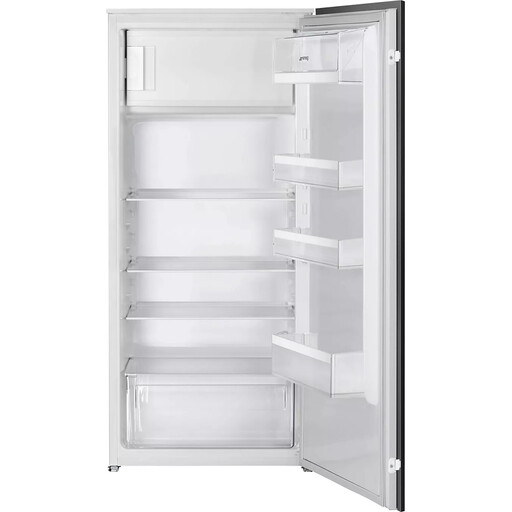
SMEG S4C122E built-in fridge-freezer

SMEG S4C122E, 188 L built-in fridge-freezer

Worth considering if you want fresh food storage and a small freezer compartment in one built-in appliance.

One-door model with a top-mounted freezer; listed total capacity of 188 L and energy rating E.

The listed freezer compartment holds 14 L and needs to be defrosted manually: check whether this capacity suits your frozen food storage needs. Check the recess, door system and ventilation requirements before installation.

View on Joybuy
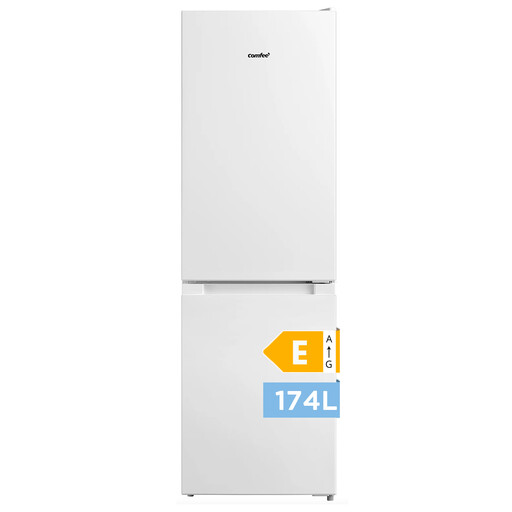
Comfee' RCB169WH2(E) freestanding fridge-freezer

Comfee' RCB169WH2(E), 174 L freestanding fridge-freezer

Compare this model if you want to store fresh and frozen food in a freestanding appliance, provided you have enough height.

Listed total capacity of 174 L; height of 150 cm, listed noise level of 39 dB, four-star freezer and energy rating E.

Check the kWh/year on the energy label as well as the installation clearances required for this model.

View on Joybuy

CHiQ JR227LSE fridge-freezer

CHiQ JR227LSE, 227 L fridge-freezer

Worth considering if you need separate compartments for fresh and frozen food and need to keep an eye on the appliance’s width.

Listed capacities of 153 L for the fridge and 74 L for the freezer; width of 54 cm and energy rating E.

Width alone doesn’t confirm that it will fit: also check the height, depth and ventilation requirements. Check the label for the kWh/year.

View on Joybuy
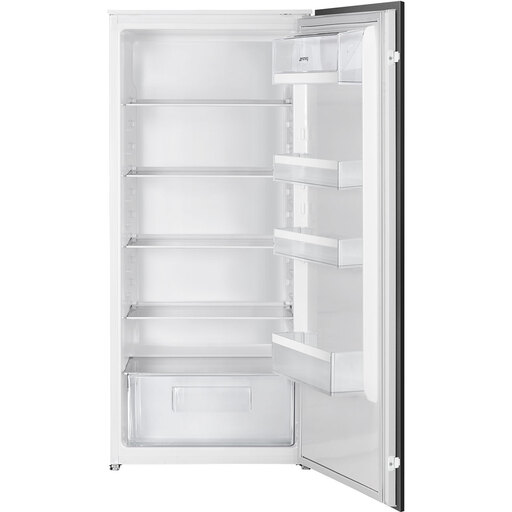
SMEG S4L120E built-in one-door fridge

SMEG S4L120E, built-in one-door fridge

Consider this for chilled storage if you already have a separate freezer that meets your needs.

Built-in fridge with energy rating E, listed without a freezer compartment.

The title lists 188 L, while the description gives 208 L: confirm the capacity on the product page for the exact model. Also check the recess and installation requirements.

View on Joybuy
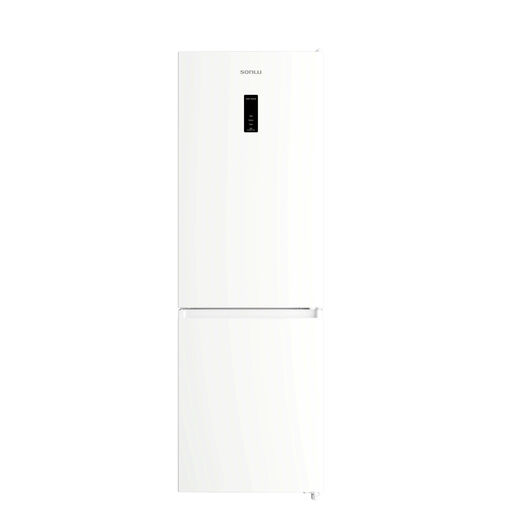
Sonlu CD‑350RW fridge-freezer

Sonlu CD‑350RW, 310 L fridge-freezer

Compare this model if your shopping needs justify a larger capacity, despite having less kitchen space.

Listed capacities of 211 L for the fridge and 99 L for the freezer; width of 60 cm and energy rating E.

Before choosing this capacity, check the appliance’s height, depth, installation clearances and kWh/year.

View on Joybuy

Frequently asked questions

What capacity should I look for after moving into a small home?

UFC-Que Choisir suggests 100 to 150 L for one person, then an extra 50 L for each additional person. Adjust this to how often you shop and check how much space you need for frozen food separately: the number of people in your household alone won’t tell you how to divide the capacity between compartments.

Can I use the same clearance for every fridge?

No: check the installation diagram for the model you’re considering rather than applying a standard clearance. For example, Electrolux lists recess heights of 820 mm for the ELB3AE82YY and 1894 mm for the ENT6ME19S4; also check the ventilation and door-opening requirements for the appliance.

How do I compare the energy use of two configurations?

Compare the kWh/year shown on the EU energy label for appliances with similar fridge and freezer capacities and configurations. If you’re considering a separate fridge and freezer, take into account that both appliances run continuously; one energy rating alone won’t tell you their combined energy use.

What should I do with my old fridge in France?

Arrange for it to be disposed of through a suitable collection scheme rather than treating it as ordinary waste. The French Ministry for Ecological Transition lists options including taking it to a collection point or recycling centre, returning it to a retailer, or handing it over to a social and solidarity economy organisation; check whether the retailer offers a take-back service before your new appliance is delivered.

How do I defrost an appliance that’s building up ice?

Follow your model’s manual and don’t use a sharp object to remove the ice. Electrolux recommends unplugging the appliance and letting the ice melt naturally; check the manufacturer’s instructions before you start.