Someone living in a studio flat
Check that the appliance fits in your kitchen without blocking the doorway or the required ventilation clearances. A compact design is no substitute for measuring the space.


In a small kitchen, first choose a fridge that fits the space available, allowing for the ventilation clearance specified in its instructions. If you shop frequently and store few frozen foods, consider an under-counter fridge. If you need room for a few frozen items, look at a fridge with a small freezer compartment. For regular frozen food storage, compare compact fridge-freezers. A built-in model is only suitable if the housing and installation are compatible.
Check that the appliance fits in your kitchen without blocking the doorway or the required ventilation clearances. A compact design is no substitute for measuring the space.
You mainly need enough chilled storage for your shopping, without giving up space for storage you won’t use. Que Choisir suggests 100 to 150 L as a starting point for one person, which you can adjust to suit your shopping habits.
You’ll need to compare the type and capacity of the freezer compartment. According to Que Choisir, a small freezer compartment may not be enough if you buy a lot of frozen food.
Start by choosing a format to suit your storage habits; then decide between freestanding and built-in, depending on the space available and the model’s installation instructions.
Consider it if: you shop frequently and need little or no freezer space.
Bear in mind: capacity is limited, and the balance between fridge and freezer space varies by model.
Consider it if: chilled storage is your priority and you only keep a few frozen items.
Bear in mind: the small freezer compartment may not suit regular storage, as Que Choisir points out.
Consider it if: you regularly store frozen food and want a separate freezer compartment.
Bear in mind: check it fits the space available rather than choosing based on total capacity alone.
| Factor | What to check | Who it matters to |
|---|---|---|
| Space and ventilation | Measure the appliance, access routes and clearances required in its instructions; for a built-in model, check the housing dimensions too. | In a very narrow kitchen, I need to be able to install the appliance and open its door without compromising ventilation. Around 40% of consumers would make this their top priority. |
| Fridge capacity | Compare the usable fridge capacity in litres with how often you shop. Que Choisir suggests 100 to 150 L as a guide for one person. | If I cook and leave time between shops, I want enough room for fresh food without choosing an oversized appliance. Fridge capacity would come first for around 30% of consumers. |
| Freezer capacity | Check the type and net capacity of the compartment, especially if you regularly buy frozen food. | To keep food in stock from one week to the next, I rely more on a suitable freezer compartment than a small freezer. Around 20% of consumers would prioritise this need. |
| Noise and energy use | Compare the declared dB(A) and kWh/year figures for the models you’re considering, and take their position in your home into account. | When the kitchen opens onto the living area, I pay attention to the noise and energy use of an appliance that runs constantly. These factors would be priorities for around 10% of consumers. |
The capacity may be right, but that won’t help if the appliance blocks access, its door can’t open properly or the housing doesn’t meet the installation requirements.
Measure the space and access routes, then compare your measurements with the model’s installation diagram, including its ventilation requirements and door-opening direction.
For a built-in model, adapting the cabinet or its door front may require extra work. Electrolux lists this separately from installing the appliance.
According to Que Choisir, a small freezer compartment may not meet your needs if you eat a lot of frozen food.
Think about what you want to store each week, then compare the type and net capacity of the compartments in the models you’re considering.
In a studio flat or open-plan kitchen, you may be able to hear the fridge from the living area.
If it’s near your sleeping area, compare the declared sound levels in dB(A) for the models you’re considering.
ADEME points out that a fridge’s size and features affect its energy use; the rating alone doesn’t tell you how much storage space you need.
Also compare the kWh/year figures on the labels of models with a format and capacity to suit your needs.
These models include built-in appliances, fridge-freezers and a single-door fridge. Before settling on a format, compare its stated capacity with your shopping habits and check that its installation requirements suit your kitchen.
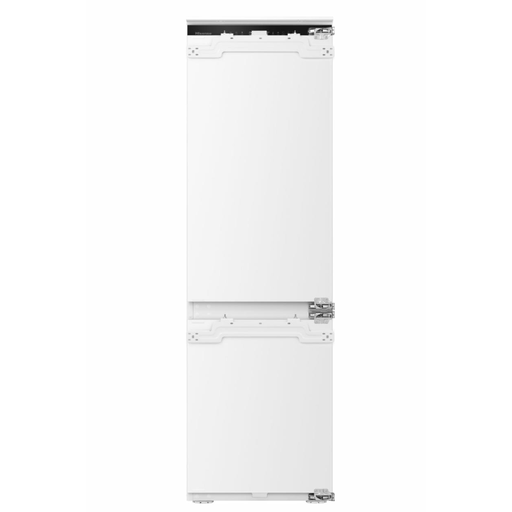 Image unavailable
Worth considering if your kitchen has a compatible housing and you need both fridge and freezer space.
Stated capacity of 252 L, No Frost technology, C energy rating and an Inverter compressor. Check the housing dimensions, ventilation clearances and whether this capacity suits your needs.
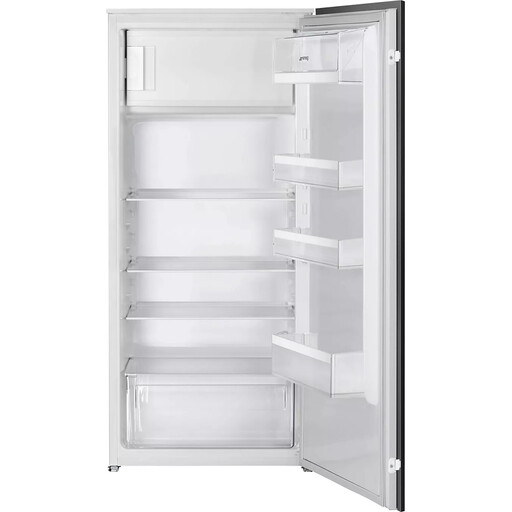 Image unavailable
Consider it if you mainly need chilled storage in a built-in installation, with a freezer compartment at the top.
Stated capacity of 188 L and E energy rating. Check the housing dimensions and door installation before choosing this model.
 Image unavailable
Compare it if you want a separate freezer compartment but need to keep an eye on the available width.
The model name indicates 153 L of fridge space, 74 L of freezer space, a width of 54 cm, a reversible door, Low Frost and an E energy rating. Also check the height, depth and installation clearances.
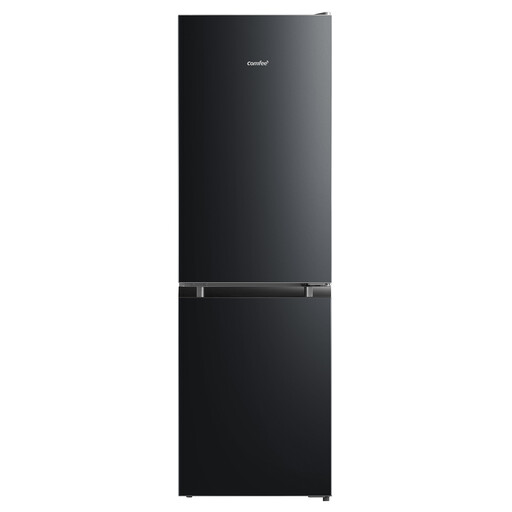 Image unavailable
Worth considering if you’d prefer a freestanding fridge-freezer to a built-in model.
The model name indicates a capacity of 174 L, Low Frost, an adjustable thermostat, LED lighting and a reversible door. Check its dimensions and the clearances required in your chosen spot.
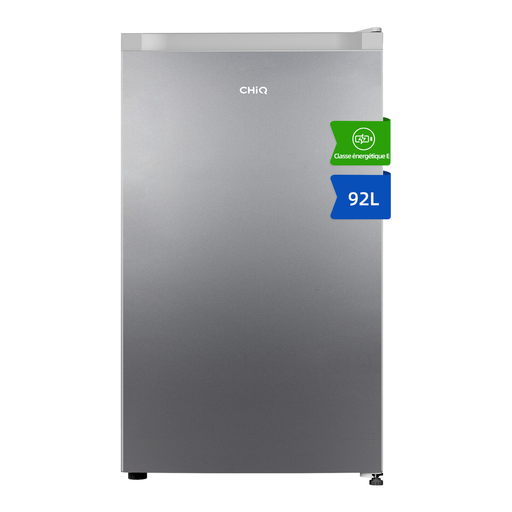 Image unavailable
Worth considering if you shop frequently and can manage with limited storage space.
The model name indicates a capacity of 92 L, a compact freezer compartment and an E energy rating. Its 92 L capacity is below the 100 to 150 L guide Que Choisir gives for one person. Check that the fridge space and freezer compartment suit your shopping habits.
Que Choisir suggests 100 to 150 L as a starting point for one person. Adjust this to suit how often you shop, the food you store and the space available; its guide suggests allowing around 50 L more for each additional person.
A small freezer may be fine for occasional use, but not necessarily for regular storage. Que Choisir advises taking into account how much frozen food you eat. Check the compartment’s capacity and type before choosing between a single-door fridge and a fridge-freezer.
Check the dimensions, access route and ventilation requirements in the model’s instructions. For a built-in model, also check that the housing dimensions and door system comply with the installation instructions. Electrolux recommends allowing air to circulate around the appliance.
No. The French Ministry of the Economy explains that any commercial warranty does not take away the buyer’s legal rights. For a fridge bought from a professional seller in France, the legal guarantee of conformity covers faults with the product. The Ministry states that you have two years to invoke it, including for new goods.