Someone who shops for one for the week
Que Choisir suggests a useful capacity of 100–150 L for one person. In a small kitchen, compare this with the space you actually have and how much frozen food you keep.


For a weekly shop, first choose a fridge capacity that suits your household, then check separately how much room you need for frozen food. A freestanding fridge-freezer provides freezer space if it fits in your kitchen; a table-top fridge is better suited to smaller shops and less frozen food, while a built-in model requires a compatible housing unit. Then compare the noise level and annual energy consumption in kWh on the energy label.
Que Choisir suggests a useful capacity of 100–150 L for one person. In a small kitchen, compare this with the space you actually have and how much frozen food you keep.
A fridge-freezer with a separate freezer compartment makes it easy to assess the space available for fresh and frozen food separately. Check both capacities, then make sure the appliance will fit.
For a built-in model, compare the housing unit and door-fixing system with the model’s installation diagram. In an open-plan kitchen, also check the noise level shown on the energy label.
Choose a format that suits your available space and how much frozen food you store, then compare the features of models that can actually be installed in your home.
Consider this if: space is very limited and your shopping, particularly frozen food, is modest.
Bear in mind: check the usable capacity and type of freezer compartment before relying on it to store a week’s shopping.
Consider this if: you regularly store fresh and frozen food and have a suitable space for the appliance.
Bear in mind: allow enough room to open the doors and for ventilation, as specified in the instructions.
Consider this if: your kitchen has a suitable housing unit or is designed for this type of appliance.
Bear in mind: the cabinet dimensions, ventilation and door-fixing system will determine which model is suitable.
| What to consider | What to check | To suit my needs |
|---|---|---|
| Fresh food capacity | Compare the fridge’s usable capacity in litres, not just the total capacity. Que Choisir suggests 100–150 L for one person, then an extra 50 L for each additional person. Use this as a guide and adjust it to suit your shopping habits. | I shop for several days at a time, so I need enough room for fresh food without choosing more capacity than I need. |
| Freezer capacity | Check the type of compartment and its usable capacity separately. A small freezer compartment and a separate freezer are not suited to the same storage needs. | I regularly buy frozen food, so I need to be able to store it until my next shop. |
| Installation | Measure the width, height and depth, as well as the doorway. Check which way the door opens and the clearance required; for a built-in model, also check the housing unit and fixings. | In my small kitchen, the appliance needs to fit in its space without obstructing doors or walkways. |
| Noise | According to the European Commission, the EU energy label shows noise emissions and their class. Compare the dB ratings of the models you’re considering. | If my kitchen opens onto the living area, the stated noise level matters just as much as capacity. |
| Energy use | The European Commission says the label shows the energy class and annual consumption in kWh. Compare these with the capacity and format you need; ADEME points out that these appliances run continuously. | I want to compare running costs without choosing an appliance that’s bigger than I need. |
Two appliances may have different amounts of space for fresh and frozen food. The total capacity won’t tell you whether your usual shop will fit in each compartment.
Compare the usable fridge and freezer capacities separately with what you store between shops.
In a small kitchen, depth, door clearance and the space needed for ventilation also matter.
Measure the space and delivery route, then check them against the dimensions and installation instructions for the model you’ve chosen.
A model that’s close to the cabinet height isn’t necessarily compatible with the housing unit or door fixings.
Measure the internal dimensions, check the ventilation and the type of hinges or sliding fittings, then consult the model’s installation diagram.
If the model isn’t compatible, you may need to modify the cabinet or fixings before installation.
The energy class doesn’t replace checking the annual consumption and capacity. ADEME highlights the importance of size and features for an appliance that runs continuously.
Check the kWh/year figure on the label and compare appliances that meet your storage needs.
Bosch offers freestanding and built-in fridge-freezers. Features vary by model, so check the specifications for each one.
Whirlpool offers built-in fridge-freezers, with product information that includes installation requirements.
The Electrolux range includes built-in fridges in different heights for fitted kitchens.
These models are freestanding or built-in fridge-freezers. For a weekly shop in a small kitchen, compare their stated capacities with your needs, then check that they can be installed in your space. This selection doesn’t include table-top models.
 Image unavailable
Worth considering if your shopping includes fresh and frozen food. Check that its dimensions and the clearance it needs are suitable for your kitchen.
 Image unavailable
One to consider for a fitted kitchen. Before choosing this built-in fridge-freezer, compare the housing unit and door fixings with the model’s installation diagram. Also check the separate compartment capacities on its label.
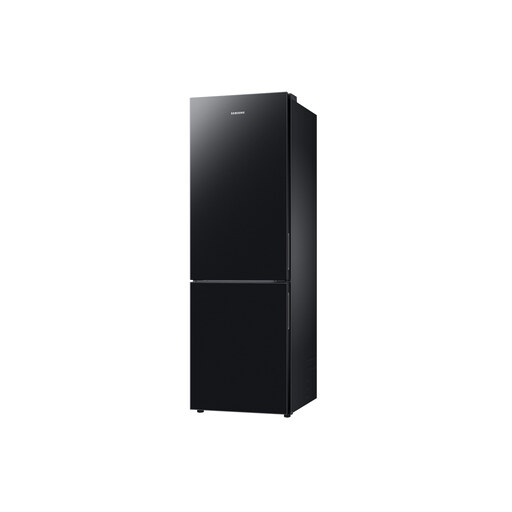 Image unavailable
Consider its stated capacity in relation to the size of your household and the space available. Before choosing this fridge-freezer, also measure the space, door clearance and ventilation gaps.
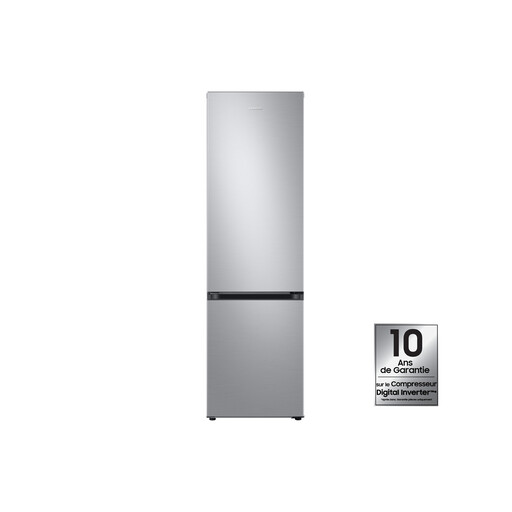 Image unavailable
If you’re in a small household, consider whether you’ll make use of the stated capacity. Check the height, depth and door clearance in your kitchen before choosing this model.
 Image unavailable
This format combines fridge and freezer space for shops that include frozen food. Compare the separate capacities with your habits, and check the dimensions, clearance and noise level if your kitchen is open-plan.
Que Choisir recommends a usable capacity of 100–150 L for one person. Use this as a starting point, then check freezer capacity separately if frozen food is part of your weekly shop.
Yes, if you don’t buy much and store very little frozen food. Check the model’s usable capacity and freezer compartment: a small freezer compartment may not meet your needs if you regularly store frozen food.
The European Commission says the label includes the energy class, annual consumption, storage capacities and noise level. When choosing, check the kWh/year figure alongside the capacity you actually need, rather than looking at the class alone.
Don’t assume you can: follow the clearance guidelines in the instructions for your chosen model. Beko recommends leaving at least 5 cm between its fridge-freezers and the wall in its installation advice. This doesn’t replace the instructions for your own appliance.