In a small kitchen, choose based on the tasks you do most often. A food processor is suitable for a range of preparation tasks without cooking, while a cooking robot makes sense if you also want to cook in the appliance regularly. If you mainly blend soups or sauces, a blender and the utensils you already own may be enough. In every case, check how much space the appliance and its accessories take up, and how easy the model you’re considering is to clean.
Who is each option for?
You cook often but are short on storage space
You’ll need an accessible place for every bowl, disc and lid. Before choosing an appliance for its functions, think about where you’ll put it while you’re preparing food and where you’ll store all its parts afterwards.
You want to prepare and cook food in the same appliance
If you often make meals that involve slow cooking or steaming, a cooking robot can bring together steps you currently do separately. You’ll also need to be happy cleaning and storing the parts you use.
You already own small appliances
A blender or hand blender may cover the preparations you make most often. Before adding another appliance, compare the tasks you still need help with against the functions and accessories of a more versatile food processor.
How do the appliances compare?
Compact food processor
Worth considering if: you often chop, grate, slice or knead, and already have a way to cook food.
Bear in mind: it doesn’t cook; its bowls and accessories need separate storage from the base.
Cooking robot
Worth considering if: your meals often involve preparing ingredients and then cooking them in the appliance.
Bear in mind: built-in cooking doesn’t mean you can overlook the space it takes up, its accessories or how easy your chosen model is to clean.
Blender and separate appliances
Worth considering if: you mainly make soups or sauces, or already own the tools you need for other tasks.
Bear in mind: blending alone won’t replace grating, kneading or cooking.
To choose an appliance for a small kitchen, start with your main need, then compare the useful functions with the space you have available. UFC-Que Choisir recommends checking how much space the food processor takes up and how its accessories can be stored.
| Criteria |
What to check |
Who this matters to |
| Space and storage |
Measure the available height, width and depth, then set aside space for every bowl and accessory. |
I need to be able to take the appliance out to cook, then put it away without cluttering the worktop. Around 27% of consumers prioritise this space constraint. |
| Built-in cooking |
Check that it has the cooking modes you need for your meals and that the bowl capacity suits the quantities you prepare. |
I regularly make dishes that go from preparation to cooking, and want to combine those steps. Built-in cooking is the main priority for around 27% of consumers. |
| Food preparation tasks |
Compare the food you usually prepare with the accessories actually included for chopping, blending, grating, slicing or kneading. |
I often do several of these tasks and want to avoid switching appliances for each one. This versatility is the priority for around 26% of consumers. |
| Cleaning and services |
Check the instructions for cleaning the parts and accessing recipes; make sure the right parts are available for your model. |
I want an appliance that will remain easy to use, without overlooking cleaning or related services. Around 20% of consumers put these practical considerations first. |
Mistakes to avoid
-
Assuming a food processor replaces every appliance
What it can do depends on the accessories supplied with the model you choose; a food processor without a cooking function won’t replace an appliance that cooks. UFC-Que Choisir assesses some additional functions only when the corresponding accessory is supplied.
Make a note of a few dishes you prepare each week, then check that the accessories needed for each one are included.
-
Measuring the base but forgetting the accessories
Even a single appliance may come with several bowls, discs or blades that need storing. Accessories that are difficult to find may end up being used less often.
Choose a drawer or cupboard for each part in advance, and measure the space available on your worktop too.
-
Assuming recipes and accessories are provided on the same terms
Recipe access and the parts included vary by model. A function you plan to use may depend on a separate accessory or service.
Check what comes with the model being sold and the terms for the recipe service you’re interested in.
-
Assuming every part is dishwasher-safe
Cleaning instructions vary by component and model; Moulinex, for example, distinguishes between parts that are dishwasher-safe and those that are not.
Check the instructions for the exact model, including those for the bowl, blades, lid, seals and locking parts.
Brands to know
Magimix
The CS 3200 XL is an example of a food processor designed for preparation tasks without cooking.
- Magimix lists grating, slicing, blending, kneading and chopping among the functions of this model, with a usable capacity of 1 L.
- Its stated dimensions of 396 × 205 × 266 mm don’t, on their own, tell you how much space you’ll need to store all the accessories.
Moulinex
The Companion HF80DB10 combines food preparation and cooking, with accessories to factor into your storage plans.
- Moulinex lists a 4.5 L bowl, five accessories and a storage box for this model.
- The bowl capacity doesn’t tell you how much space the appliance takes up; you should also check the cleaning instructions for the exact model.
Vorwerk Thermomix
The TM7 is aimed at people interested in guided cooking and recipes available through Cookidoo.
- Vorwerk highlights cooking modes and recipes that you can view on the TM7 screen.
- Before choosing this model for regular use, check the terms for accessing Cookidoo and which parts need cleaning.
Appliances for different needs
These appliances suit different needs: two cooking robots combine food preparation and cooking, a multi-cooker focuses on cooking modes, while a countertop blender and a hand blender are designed for specific preparation tasks. Start by choosing the type of appliance, then check how much space you’ll need for the model and its accessories.
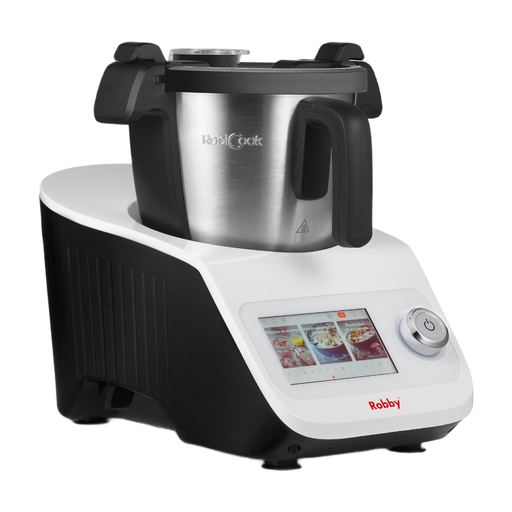 Image unavailable
Robby Multifunction, built-in scales and touchscreen, 680 recipes
Worth considering if you want to bring food preparation and cooking together in one robot. Check where you’ll store the accessories and the cleaning instructions for this model.
View on Joybuy
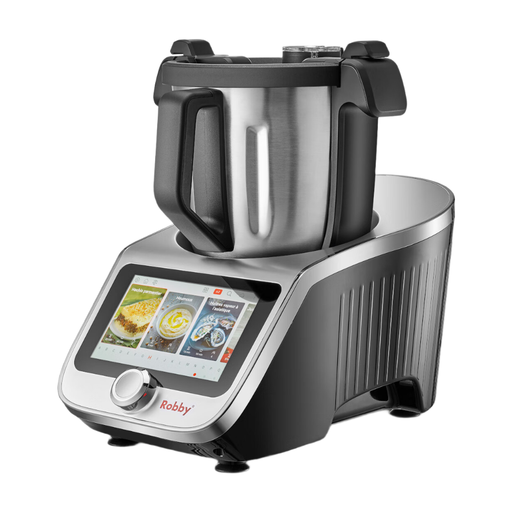 Image unavailable
Robby Smart, XL bowl, built-in scales and large touchscreen
Worth considering if you want to prepare and cook food with a robot that has an XL bowl. Make room for the bowl and accessories; if the built-in recipes matter to you, confirm how many are available with the model being sold.
View on Joybuy
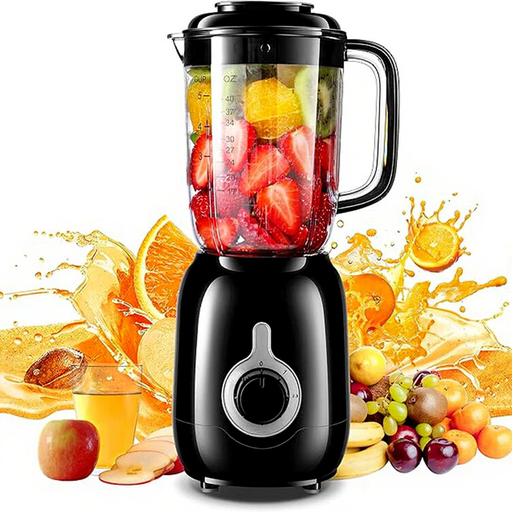 Image unavailable
Bear LLJ-B12K1, 1.2 L, 500 W countertop blender
Worth considering if blending is your main need rather than cooking with a robot. The product title lists two speeds, a pulse function and four stainless-steel blades; also check where you’ll store the jug.
View on Joybuy
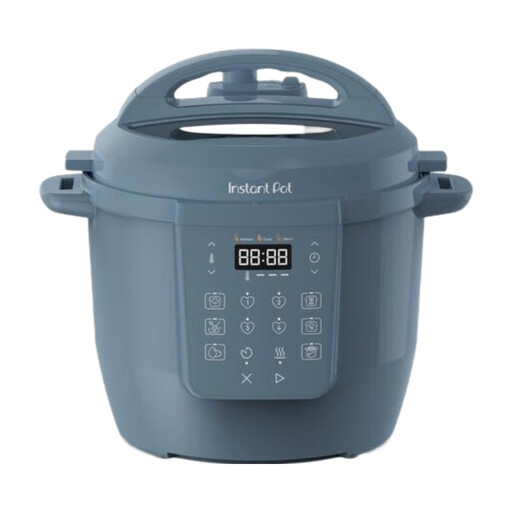 Image unavailable
Instant Pot Classic, 5.7 L multi-cooker, Daydream Blue
Worth considering if your meals mainly call for different cooking modes: this 7-in-1 multi-cooker includes slow cooking and steaming, among other functions. It shouldn’t be chosen as a substitute for grating or kneading; measure the space you have before buying.
View on Joybuy
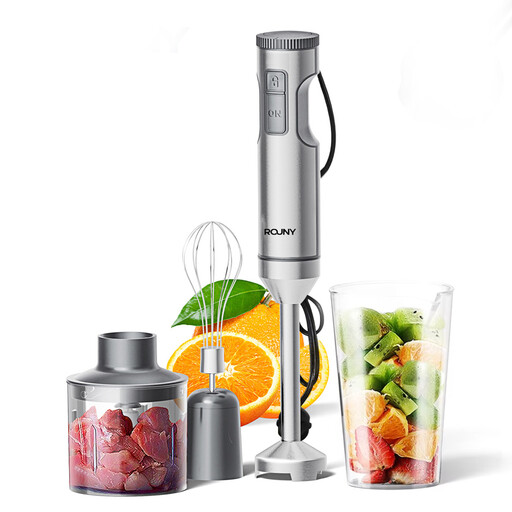 Image unavailable
ROUNY H1, 4-in-1 hand blender with chopper
Worth considering if you want to blend and chop without choosing a cooking robot. The product title mentions a 700 ml beaker, a 500 ml chopper and a whisk; make room to store them and keep another way to cook food.
View on Joybuy
Frequently asked questions
Is a cooking robot better for a small kitchen?
Not necessarily: a cooking robot is most useful for meals where you’ll regularly use its built-in cooking function. If you mainly want to chop, grate or blend, compare the accessories of a food processor with the appliances you already own. In either case, measure the appliance and the storage space you’ll need for its parts.
Do guided recipes require a subscription?
It depends on the service linked to the model. Vorwerk makes access to the TM7’s Cookidoo recipes subject to its subscription terms, while Moulinex offers a recipe app for the Companion HF80DB10. Check the access terms for the model you’re considering.
Can you put every part of a cooking robot in the dishwasher?
No, you’ll need to follow the instructions for the exact model. Moulinex says that some parts of its cooking robots are dishwasher-safe, but the instructions vary by model and component. Check the guidance for the bowl, tools and locking parts in particular.
What warranty applies to a new cooking robot bought in France?
The legal guarantee of conformity applies to new goods sold to a consumer by a professional in France, as the Ministry of the Economy explains. Any commercial guarantee is in addition to this and doesn’t replace it; if the product doesn’t conform, contact the seller.


