No space on the floor
If you wash small loads and can’t set aside a 45 or 60 cm space, consider a compact countertop model. You’ll still need a suitable surface for it, and to plan its connections in line with the instructions.


Start by considering the space you actually have and how much washing-up you need to do. A compact countertop model suits smaller loads when you don’t have room for a floor-standing appliance. A 45 cm model offers more capacity for everyday use while taking up less width, while a 60 cm model is still a good option if you have a suitable space and will make use of its capacity. Before buying, measure the depth and height, as well as the door clearance, and check the connections and Eco programme figures for the model you’re considering.
If you wash small loads and can’t set aside a 45 or 60 cm space, consider a compact countertop model. You’ll still need a suitable surface for it, and to plan its connections in line with the instructions.
If you have room for a floor-standing appliance but not much width to spare, a 45 cm model is worth considering when your everyday washing-up exceeds what a compact model can comfortably handle. Check the depth too, along with the space needed in front of the door.
If you already have the space and connections, keeping a full-size model could make sense for regular loads. Compare the amount of washing-up you have with the stated capacity rather than choosing based on width alone.
Consider it: for small loads when there’s no floor space available.
Bear in mind: its capacity is limited and it will take up worktop space permanently; the water supply method depends on the model.
Consider it: when your everyday washing-up calls for more capacity, but you don’t have room for a 60 cm model.
Bear in mind: you’ll still need to set aside floor space, with enough depth and clearance to open the door.
Consider it: if you have a suitable space and your household can regularly fill a larger dishwasher.
Bear in mind: it takes up more width; an integrated model must also fit the unit and its door panel.
| Consideration | What to check | Who is this for? |
|---|---|---|
| Available space | Measure the width, depth and height, as well as the door clearance. For a countertop model, check how much worktop space it will take up too. | Without a floor-standing space, I want to keep the kitchen easy to move around while still finding somewhere for the appliance; around 42% of consumers would put footprint first. |
| Everyday capacity | Compare the stated place settings with the washing-up you usually have, especially larger dishes and utensils. | When washing-up builds up every day but space is limited, I’m looking for a dishwasher that’s less restrictive than a small compact model; around 33% of consumers would prioritise capacity in a narrower model. |
| Using a 60 cm space | Check that the space is suitable, then compare the water, energy and noise figures for the programme shown on the label. | With a 60 cm space and regular loads, I’d look at how easily the larger model can be filled and how much it uses; around 25% of consumers would prioritise this need. |
A 45 cm appliance can still be deep, while a compact model takes up worktop space permanently. Hoses, the plinth or the open door can also get in the way of installation.
Measure all the available dimensions, the space behind the appliance and the door clearance, then compare them with the installation diagram for the exact model.
A countertop design doesn’t determine how it gets its water. For example, Candy states that the CP 6E51LS connects directly to the water supply.
Check the instructions to confirm the water supply, drainage and what’s actually possible in your chosen location.
If the existing connections aren’t suitable, adapting them may require work before the appliance can be used.
Having a socket nearby doesn’t necessarily mean it’s suitable for a dishwasher. Promotelec says that a socket for this appliance must be supplied by a dedicated circuit.
If you’re having a new installation fitted or renovating, plan for a suitable circuit. If you have any concerns about the existing installation, ask a qualified professional to check it.
The rating doesn’t tell you everything about water use or noise, and it won’t tell you whether the dishwasher’s capacity will suit your usual loads. ADEME describes the energy label as a way to compare these features.
Check the figures for the Eco programme, then consider the stated capacity alongside how often you wash up and how full you’ll be able to load it.
Its countertop, slimline and standard models give you several installation options to explore.
A brand to consider if you’re looking for a floor-standing slimline model in particular.
Integrated models to consider if you already have a suitable kitchen unit.
These models cover two situations: placing a compact dishwasher on a worktop, or fitting a 60 cm integrated model into a suitable space. If you’re looking for a slimline floor-standing model, bear in mind the 45 cm criteria above as you search.
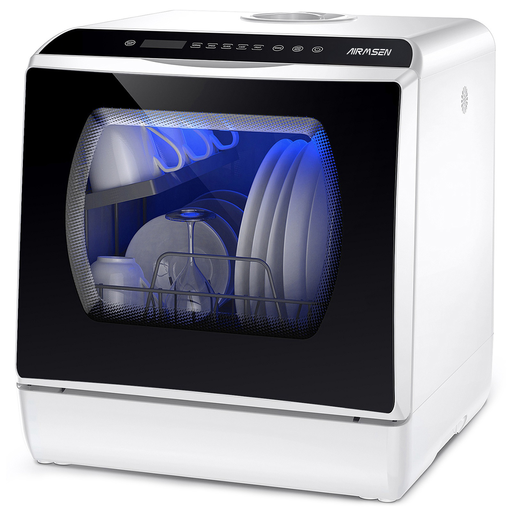 Image unavailable
Worth considering for small loads on a worktop if you want to avoid a permanent connection to the water supply. The product name specifies a built-in 5 L tank and 5 + 1 wash cycles. Check the instructions for filling, drainage and the power supply at your chosen location.
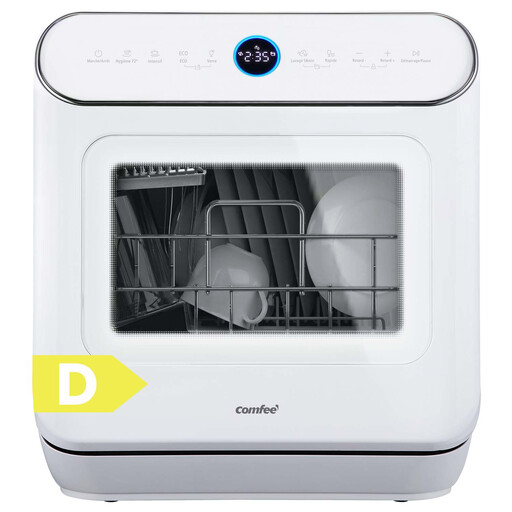 Image unavailable
This countertop model is designed for small loads when floor space is limited. The product name lists 7 programmes and a D energy rating. Measure the available surface and check the instructions to confirm the dimensions in every direction and the installation requirements.
 Image unavailable
Compare this model if you’re looking for a stated capacity of 6 place settings without installing a floor-standing appliance. Its name lists 7 programmes and 47 dB; check how much worktop space it will actually take up, as well as the connections specified in the instructions.
 Image unavailable
Worth considering if you have a 60 cm integrated space and regularly fill a large dishwasher. The product name lists 13 place settings and a B energy rating; check the space dimensions, compatible door panel and Eco programme figures before choosing.
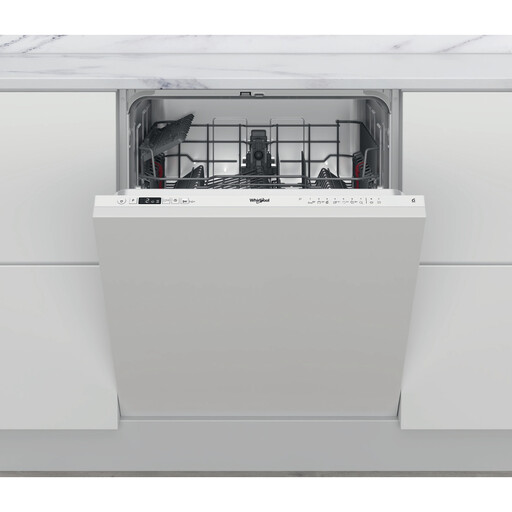 Image unavailable
Consider this model if a 60 cm integrated space can accommodate an appliance for regular loads. The product name lists 14 place settings and an E energy rating; check the space, door panel, connections and Eco programme figures for the exact model.
A compact countertop model saves you from setting aside floor space, but it takes up worktop room. If you have a narrow space on the floor, compare it with a 45 cm model too. In either case, measure the depth and height, as well as the space needed to open the door.
It depends on the model: a compact design doesn’t necessarily mean it works without a direct water supply. Candy states that its CP 6E51LS connects directly to the water supply. For any model you’re considering, check the instructions to see how it gets its water and drains the wastewater.
Check that the electrical supply is suitable for the appliance rather than relying on the fact that there’s a socket nearby. Promotelec says a dishwasher socket should be on a dedicated circuit. If you’re having the installation fitted or renovated, plan for this with a professional, and have an existing installation checked if you’re unsure.
Compare the figures shown on the labels for the same programme conditions, rather than assuming you can work out consumption from width alone. ADEME says the energy label helps you compare water use, energy use and noise. Also consider the capacity you’ll be able to fill regularly.