Households replacing an under-counter appliance
If your kitchen already has a space for a dishwasher, its dimensions and the door swing will determine which models can replace your old appliance.


In a small kitchen, first choose a dishwasher that fits the available space, cabinet door and connections. A semi-integrated model keeps the controls visible, while a fully integrated one hides them behind a cabinet door. If fitting a built-in model would mean adapting your kitchen, and you’re happy with a smaller capacity, consider a compact freestanding dishwasher.
If your kitchen already has a space for a dishwasher, its dimensions and the door swing will determine which models can replace your old appliance.
A visible control panel gives you access to the controls at the front. On a fully integrated model, they’re on the top edge of the door and accessible when the door is open.
A compact freestanding model is worth considering if the space or cabinet door isn’t suitable, and its capacity meets your needs between wash cycles.
Consider this if: you want to keep the controls visible and have a compatible space.
Bear in mind: you’ll need a cabinet door that fits the area below the control panel and the model’s door system.
Consider this if: you want a cabinet door to conceal the entire appliance.
Bear in mind: the controls are accessible when the door is open, and you’ll need a compatible cabinet door.
Consider this if: fitting a built-in model would mean adapting the cabinet or door, and you’d rather not do that.
Bear in mind: check that the capacity suits your needs, and make sure you have enough space and the necessary connections.
Once you’ve chosen the type of installation, check each model against your actual kitchen units, then compare its capacity and energy label.
| Priority | What to check | To suit my needs |
|---|---|---|
| Space and door | Measure the usable width, height and depth. Check the model’s installation diagram, plinth, door clearance and hinges. | I’m replacing an under-counter appliance: the new model needs to fit the cabinet and its door must be able to open. |
| Cabinet door and controls | Check the area to be covered, how the cabinet door is attached and where the controls are, depending on the type of integration. | If I want to see the controls from the front, I’ll look at semi-integrated models. If I want a continuous run of cabinet doors, I’ll check fully integrated models. |
| Capacity | Compare the stated number of place settings with the space available for pots and pans. Check the actual dimensions rather than relying on the width category alone. | Does dirty crockery build up between wash cycles? I’ll check that a compact model can handle my usual load before ruling out a compatible narrow built-in model. |
| Water, energy and noise | Compare the models’ labels for kWh per 100 cycles, litres per cycle, Eco programme duration and noise level in dB. | In an open-plan kitchen, noise matters just as much as running costs. According to ADEME, an increase of 3 dB corresponds to almost twice the noise level. |
The width category won’t tell you whether the height beneath your worktop, the depth or the door will fit. Bosch recommends checking the installation diagram for the specific model.
Measure the three usable dimensions of the space, then check the plinth and the clearance needed for the door to open.
A semi-integrated model has a visible control panel; a fully integrated one is concealed behind a cabinet door. Your existing door may not be suitable for both.
Decide whether you want the controls to remain visible, then check that the cabinet door and its fixings are suitable for your chosen model.
A freestanding design can overcome some kitchen-unit constraints, but its capacity needs to suit the amount of crockery you use between wash cycles.
Allow for the space taken up by pots and pans, too. Compare the compact model’s capacity with that of a narrow built-in model that fits your space.
A marketing term doesn’t give you a consistent basis for comparison. In a small room, noise levels can have a real impact on everyday use.
Check the water, energy and noise figures on each model’s label, comparing like with like.
Information from Bosch France helps you distinguish between appliances with visible control panels and check the door systems required for installation.
The KDIS28122 is an example of a 45 cm fully integrated model to consider for a narrow space.
The KESC7300L is an example of a fully integrated model designed to be covered by a cabinet door.
Whirlpool France’s advice offers a guide to the difference between narrow models and wider appliances.
These models are 60 cm integrated dishwashers. Before choosing one for a small kitchen, compare its installation diagram and door system with your available space and cabinet door.
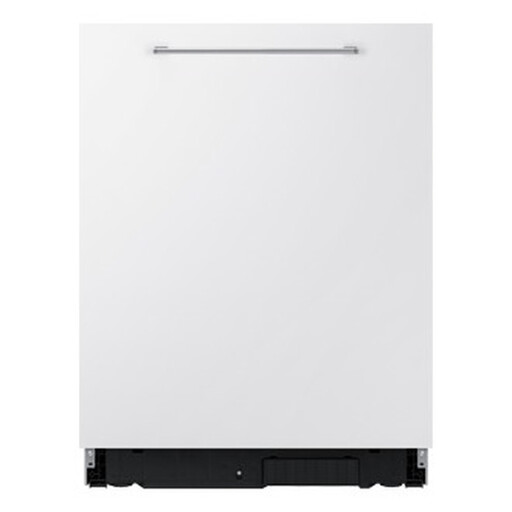 Image unavailable
Designed for a kitchen where the appliance needs to be hidden behind a cabinet door, this model has 13 place settings and a C energy rating. Check the installation dimensions and door system: the available information mentions both a fixed hinge and a Kitchen Fit sliding door.
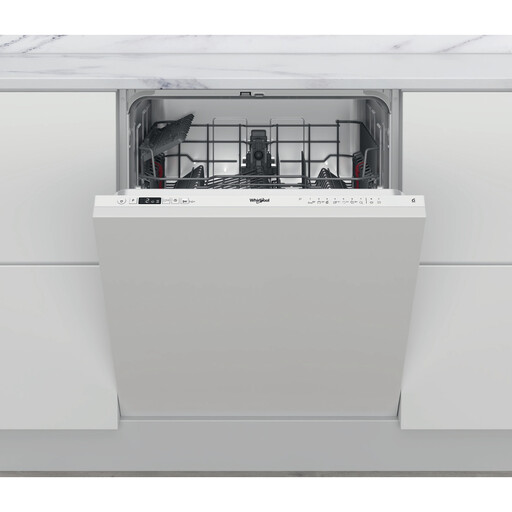 Image unavailable
This fully integrated model has 14 place settings and an E energy rating. Before choosing it for existing kitchen units, compare its installation diagram, cabinet-door fixings and door clearance with your kitchen.
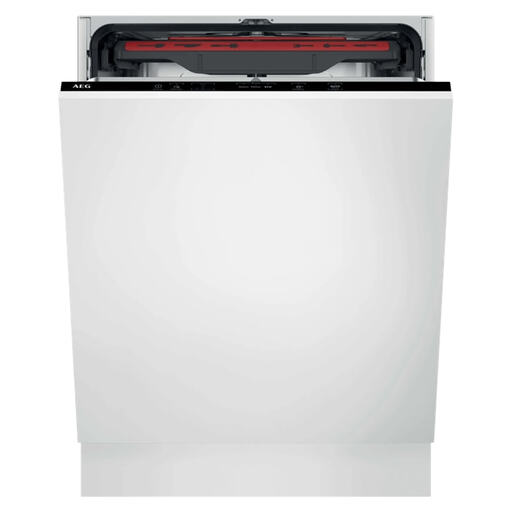 Image unavailable
This fully integrated model has 14 place settings and a C energy rating. The stated appliance dimensions don’t clearly match the advertised 60 cm format. Check the installation diagram for the FSB34707Z before deciding whether it will fit your space.
 Image unavailable
Designed to be concealed behind a cabinet door, this model has 13 place settings. The door information refers to both a fixed hinge and a Kitchen Fit sliding system. Confirm the mechanism and installation dimensions for the exact model before planning your cabinet door.
Measure the usable width, height and depth of the space, then compare them with the installation diagram for your chosen model. Also check the plinth, adjustable feet, connections and the clearance needed to open the door.
Yes, if its dimensions, weight, fixings and movement are suitable for your chosen model. A fully integrated dishwasher needs a door that covers the appliance, while a semi-integrated one leaves the control panel visible. Check the hinge system in the instructions.
Choose a semi-integrated model if you want visible controls at the front and its door is suitable for your kitchen units. A fully integrated model is a good choice if you want a continuous cabinet-door finish, with the controls accessible when the door is open.
Compare the models’ labels on the same basis: kWh per 100 cycles, litres per cycle, Eco programme duration and noise level in dB. ADEME says that an increase of 3 dB corresponds to almost twice the noise level, so check the figures rather than relying on a general promise of quiet operation.
Not necessarily. Check exactly what’s included in the service before delivery. Electrolux says its installers don’t carry out carpentry, plumbing or electrical work. If your kitchen needs these adaptations, you’ll need to arrange them separately.