You mainly reheat meals
You’re looking for an appliance for leftovers and defrosting, without giving up space for functions you’ll rarely use. UFC-Que Choisir outlines the uses of microwaves and their different types.


Start by thinking about the meals you prepare most often: a solo microwave is best for reheating and defrosting, while a mini oven is designed for oven cooking. A multi-cooker, air fryer or combination appliance will suit different needs. A combination appliance is only worth considering if you’ll genuinely use its functions and, with the door open, it fits in the available space while allowing for the clearances specified in the manual.
You’re looking for an appliance for leftovers and defrosting, without giving up space for functions you’ll rarely use. UFC-Que Choisir outlines the uses of microwaves and their different types.
You want to bake or brown food in a countertop appliance. The available functions, dimensions and size of your dishes can help you choose between a mini oven and a combination appliance. Severin and Panasonic product pages describe examples of these options.
Depending on the meals you prepare, you can compare the functions and capacity of a multi-cooker with those of an air fryer, without assuming they do the same job. Moulinex and Philips describe the features of their respective models.
Start with the cooking or reheating function you use most often, then check the appliance’s actual footprint and the instructions in its manual.
| What you need | What to check | Who it suits |
|---|---|---|
| Reheating and defrosting | Check that it has a microwave function, its external dimensions, turntable size and the space needed to open the door. | If I mainly reheat leftovers and defrost food regularly, I’d rather choose an appliance suited to those tasks than pay for cooking functions I rarely use. Around 25 % of consumers prioritise reheating or defrosting. |
| Oven cooking without a built-in oven | Check the cooking functions you need, the external dimensions, the size of your dishes and the stated power. | If I want to bake or brown food without a built-in oven, reheating alone won’t meet my needs. Around 25 % of consumers prioritise oven cooking. |
| Combining several uses | Check which functions it actually has, its dimensions with the door open and whether you have space to store the accessories. | If I want to combine reheating and cooking in one spot, I weigh up the useful functions against the space the appliance and its accessories take up. Versatility is a priority for around 19 % of consumers. |
| Slow cooking or steaming | Look at the functions, cooking bowl capacity, lid-opening instructions and care requirements for removable parts. | If I mainly prepare slow-cooked or steamed dishes, I look for a cooking bowl and functions suited to those recipes rather than relying on oven cooking. Around 19 % of consumers prioritise these uses. |
| Cooking small portions with hot air | Compare the usable basket size, the space needed to remove the drawer and the ventilation instructions in the manual. | If I mainly prepare small portions to brown or cook with hot air, I check what will actually fit in the basket. This is a priority for around 12 % of consumers. |
Internal capacity, external dimensions and the space needed to open the appliance or allow ventilation answer different questions. An appliance may fit on your worktop but still lack the space it needs for its intended use.
Measure the space and your dishes, then check the external dimensions and instructions for the exact model in its manual.
An appliance or dish that’s too large for the space available may not be suitable for the intended use.
A microwave with a grill doesn’t necessarily have a fan-assisted cooking function, and an air fryer’s reheating mode is not the same as reheating with a microwave.
Make a list of the meals you prepare and check the model’s product page for the specific function you need.
If the function you need isn’t available, you may have to get another appliance for that task.
A combination appliance is only useful if its functions suit the meals you prepare. The appliance and its accessories also take up space: Panasonic lists a width of 52 cm for the NN-CD58RSEPG.
Check the functions, compatible cookware and available space before choosing a combination appliance.
Accessories may need to be stored somewhere, even if you rarely use some of the functions.
These examples illustrate the uses and features of specific models; they are not recommendations for the brands’ entire ranges.
The MS23K3515AK/EF is an example of a solo microwave for those who prioritise reheating.
The brand offers mini ovens and combination microwaves, among other appliances, which you can compare according to the functions you’re looking for.
The examples featured cover two different uses: the 19 L Optimo mini oven OX444810 and the Cookeo Mini multi-cooker CE880410.
The Series 2000 Airfryer NA211/00 is an example of a model with a smaller-capacity basket.
Panasonic describes the NN-CD58RSEPG as a combination appliance with microwave, convection, grill and air-frying functions.
This selection includes cooking and reheating appliances for a small kitchen, from microwaves and mini ovens to basket-style and bowl-style appliances.
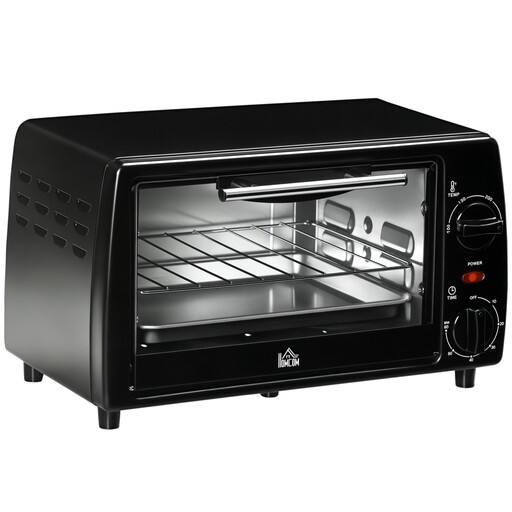 Image unavailable
For cooking small dishes when you don’t have a built-in oven.
Capacity of 10 L; adjustable temperature from 100 to 230 °C and a 60-minute timer. Listed dimensions are 36,5 × 26 × 22 cm; the description says it fits a 22 cm pizza or four slices of bread.
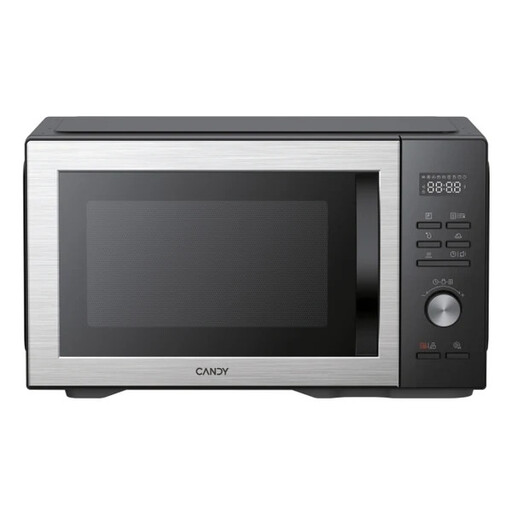 Image unavailable
For combining reheating and several cooking functions in a single countertop appliance.
Capacity of 29 L, a 31,5 cm turntable and external dimensions of 52,3 × 44,9 × 30 cm. The product name lists a 1 000 W microwave function, a 1 000 W grill and steam cooking.
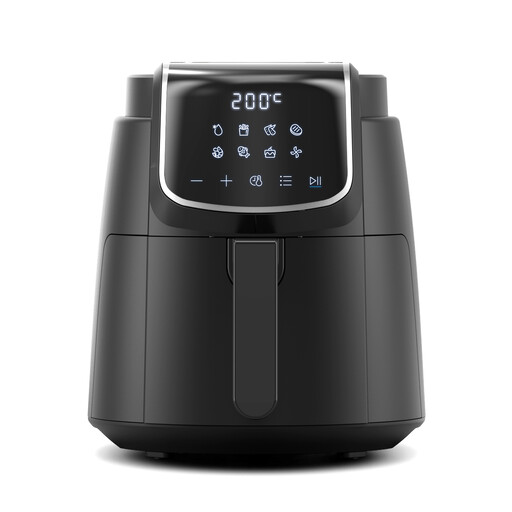 Image unavailable
For cooking or browning portions with hot air; the description says the basket is suitable for 1 to 4 people.
The title lists a power rating of 1 500 W and a temperature range of 35 to 200 °C. The description mentions eight functions and a dishwasher-safe basket.
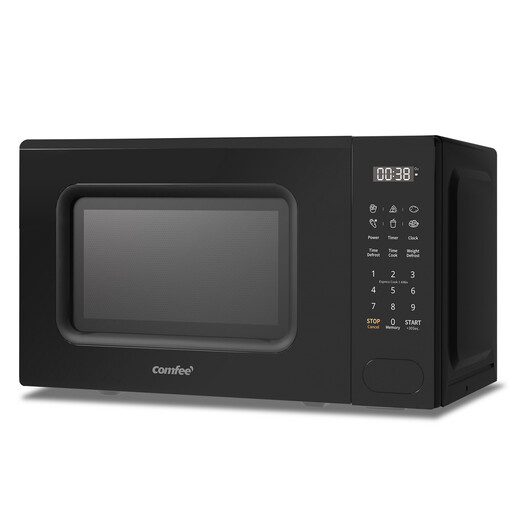 Image unavailable
For reheating meals and defrosting food in a 20 L appliance.
Listed power rating of 700 W, 11 power levels and external dimensions of 440 × 319 × 259 mm. The description mentions defrosting by weight or time.
 Image unavailable
For cooking rice and porridge, among other dishes, with a steam basket included according to the description.
The title lists a capacity of 2 L, a power rating of 500 W and seven cooking functions. It’s described as suitable for 2 or 3 people; the description mentions a removable inner pot.
Not necessarily: having a grill doesn’t mean the appliance has a fan-assisted cooking function. The Severin MW 7771 product page lists a grill, but no fan-assisted cooking function. Check which mode you need for the dishes you prepare.
Not based on that alone: ventilation clearances and the space needed to open the door vary by model. Severin publishes clearance requirements for certain specific models; check the manual for the appliance you’re considering rather than using the requirements for another model.
Check the manual to find out which parts can be removed and how to clean them. For the Cookeo Mini CE880410, Moulinex says the cooking bowl and steam basket are dishwasher-safe; this doesn’t apply to the entire appliance.
No: the stated power rating and length of use aren’t enough on their own to compare annual energy consumption for the same use. The category averages published by ADEME, including those for a 63 L electric oven, don’t measure the compact models featured here.
For appliances covered by the European Low Voltage Directive, the European framework requires CE marking and a conformity assessment by the manufacturer. The DGCCRF explains that the marking applies to products covered by the relevant European rules; it is not an independent performance test of a model.