Tenants with a small fitted kitchen
First, take stock of the hob and oven or microwave already in the kitchen, and check that they’re in working order. That way, you can choose an appliance that complements what you have rather than duplicating it.


Start by choosing the appliance you’ll use for your most frequent cooking tasks: a hob for saucepan or frying-pan cooking, a combination microwave if you often reheat food but also want to grill or cook with convection, or a multicooker for meals prepared in a pot. A compact oven can round out your setup if you regularly cook in the oven and already have a suitable space, power supply and clearances. In a small kitchen, check these requirements before adding an appliance with functions that overlap with those of your existing equipment.
First, take stock of the hob and oven or microwave already in the kitchen, and check that they’re in working order. That way, you can choose an appliance that complements what you have rather than duplicating it.
A portable hob is ideal for cooking in a saucepan or frying pan, while a multicooker is better suited to dishes made in a pot, such as soups and stews. Your choice will also depend on the cookware you have and the available socket.
If reheating and defrosting are part of your daily routine, but you also want to grill or cook with convection, a combination microwave is worth considering. Measure the space needed for the appliance, its door and ventilation.
Start with the meals you actually prepare, then match the functions you need to the space and connections available.
| Priority | What to check | Everyday need |
|---|---|---|
| Main cooking tasks | Work out whether you mainly use a saucepan or frying pan, reheat food, cook in the oven or prepare meals in a pot. Compare the functions of your existing appliances. | I want to cover my usual cooking needs without leaving several appliances with similar functions on the worktop. |
| Available space | Measure the space, the door or lid opening, and the clearances specified in the instructions. A built-in oven requires a compatible housing that’s already in place. | In a narrow kitchen, I need enough room to use the appliance, not just to put it down or fit it into a cupboard. |
| Power supply | Check that the model’s power rating and connection are compatible with your existing installation. For a fixed hob or oven, check the designated circuit; Promotelec advises that an extension lead does not replace the correct connection for an oven. | If the property can’t accommodate the required connection without building work, I need to choose an appliance that’s compatible with the existing installation. |
| Capacity and energy use | Choose a capacity that suits the portions you usually prepare. For an oven, check the energy label: ADEME says that ovens sold in France carry one. The rated power alone doesn’t tell you how much energy your meals will use. | I want to compare appliances that suit the size of my dishes and how often I use them, rather than assume the smallest or most powerful one will always use less energy. |
| Cookware and ventilation | Check the base of your saucepans before choosing induction, as UFC-Que Choisir highlights the need for compatible cookware. Keep air inlets and outlets clear, and follow the clearances in the instructions. | My saucepans need to work with the hob I choose, and I need to be able to use the appliance without blocking the kitchen’s ventilation. |
Promotelec distinguishes between the circuits intended for hobs and those for ovens. Adding an extension lead won’t solve a connection incompatibility.
Before buying, compare the model’s instructions with your existing circuit and socket. Rule out appliances that would require unplanned building work.
A combination microwave adds features such as grilling and convection to reheating, while a multicooker is mainly for dishes prepared in a pot. These functions suit different types of meals.
Make a note of the meals you prepare most often, then add a second appliance only if it offers a function you genuinely need.
The figures published by ADEME describe average appliances and usage; they can’t predict how much energy a particular model will use in your kitchen.
For an oven, check its energy label. Also consider the amount of food you cook, the setting you use and how often you use it.
An appliance placed too close to a cupboard may not meet the clearances in its instructions. The property’s existing ventilation must also remain unobstructed.
Measure the usable space, including around and above the appliance, before deciding where to put it.
These models illustrate different types of appliance; their features don’t apply to every product in each brand’s range.
The WCS7A9PHTSBAF is an example of a compact built-in oven for kitchens that already have a suitable space.
The MC35R8088LC/EF is an example of a combination microwave for anyone looking to combine reheating with convection cooking.
The Multicook & Fry is an example of an appliance designed for meals prepared in a pot.
The Everyday Slim is an example of a portable induction hob for cooking on a single zone.
This selection includes portable induction hobs for cooking on a single zone, a microwave with a grill for reheating and browning food, and a multicooker for dishes prepared in a pot. Choose according to your usual cooking habits and the space you actually have.
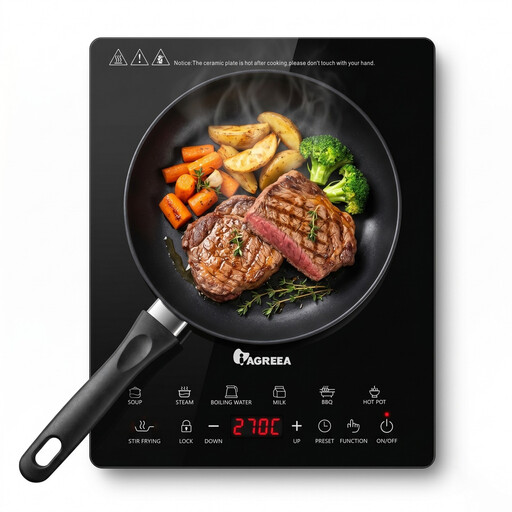 Image unavailable
For cooking in a saucepan or frying pan on a single zone. The product name lists eight power levels, seven preset functions and cookware suitable for sizes from 12 to 26 cm. Check that your saucepans are induction-compatible, and that you have a suitable space and socket.
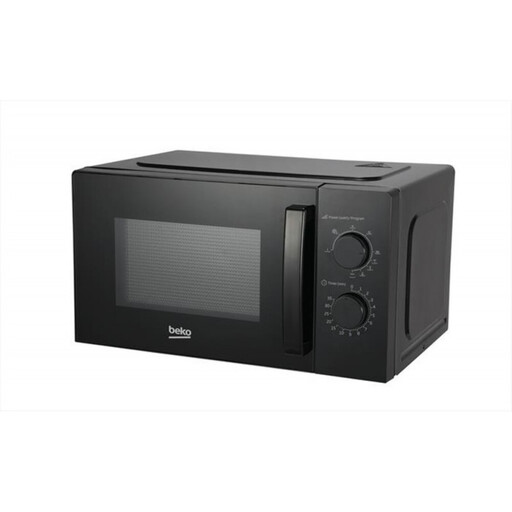 Image unavailable
For reheating meals, with the added option of grilling in a freestanding appliance. The product name lists a microwave power rating of 700 W. If convection cooking is important to you, check the settings on the model you choose. Allow for the clearances specified in its instructions.
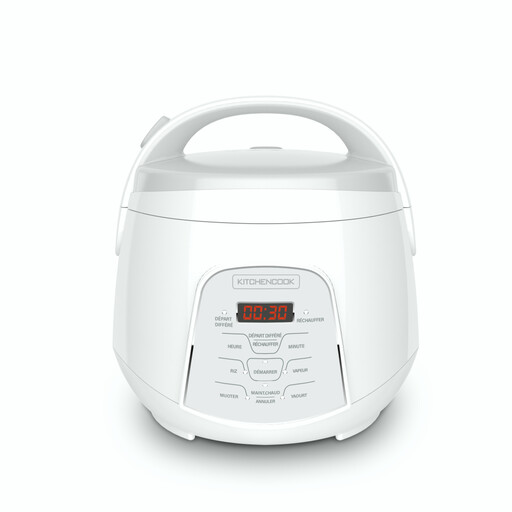 Image unavailable
Worth considering if most of your meals are prepared in a pot. Before setting aside a space for it, check the clearance needed above and at the sides. When opening it, keep your hands and face away from the hot steam.
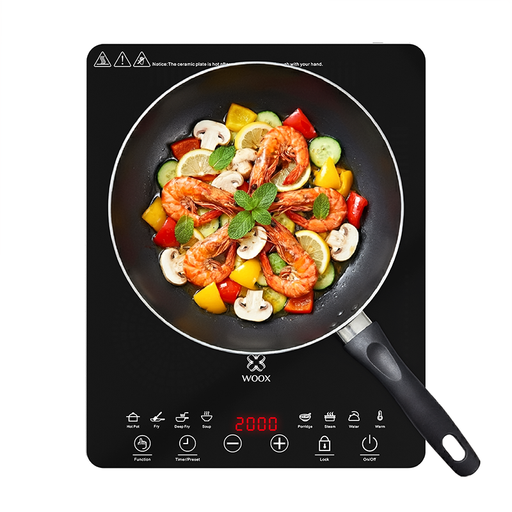 Image unavailable
Another option for cooking on a single zone with induction-compatible cookware. The product name lists eight heat settings, four programmes and a 1.5 m cord. Check the dimensions and required clearances before deciding where to put it.
 Image unavailable
For cooking in a saucepan or frying pan with a portable appliance. The product name lists ten power settings and six functions. Check that your cookware is compatible, that your power supply meets the requirements and that you have space for it before buying.
Start by taking stock of the hob and oven or microwave already there, then check that they work. This will help you identify which function your meals require, without buying an appliance that duplicates what you already have.
An extension lead doesn’t replace the connection required for a fixed appliance. Promotelec advises against plugging an oven and another large appliance into an extension lead connected to a single socket, and outlines the dedicated circuits required for fixed cooking appliances. Check the appliance instructions against your existing installation before choosing a model.
Don’t block existing air inlets or outlets, and follow the clearances given in each appliance’s instructions. Measure the space around a freestanding model or inside a housing before buying; the space taken up by the appliance alone isn’t enough to determine whether it will fit.
No. ADEME lists ovens and cooker hoods among the appliances covered in France. To compare a portable hob, microwave or multicooker, look instead at the available specifications, including capacity, power and the settings that suit your cooking, without assigning an energy rating where none is provided.
No. ADEME’s annual figures are based on average appliances and usage scenarios, not the promised energy use of a specific model. For an oven, check its energy label too; for any appliance, consider the amount of food you cook and how often you use it.