What should you look for?
Start with the recipes you make most often, then measure the available space. An extra function only saves space if it genuinely means you don’t need another appliance.
| Priority |
What to check |
Who this suits |
| Reheating and cooking without doubling up |
Compare the functions actually available on the model you’re considering, along with any accessories needed for your dishes. |
If I often reheat meals, I also want to be able to cook some dishes without adding a second appliance. Around 33% of consumers prioritise this dual use. |
| Making one-pot dishes |
Check that the programmes suit your recipes and that the pot’s capacity is right for the portions you prepare. |
For regular soups, rice or stews, I’d rather have everything cooked in one pot than have an oven function. Around 25% of consumers share this priority. |
| Baking and browning |
Check the oven and grill functions, as well as the usable internal dimensions for your dishes. |
When I make quiches or bakes, an oven that suits the portions I cook comes first. Around 25% of consumers put this need at the top of their list. |
| Keeping space and cleaning to a minimum |
Measure the appliance and its recommended clearances. Also consider which parts need washing and where you’ll store the accessories. |
If my worktop is already full, I’d rather avoid an appliance I’ll rarely use that adds to the storage and cleaning. For around 17% of consumers, this concern outweighs cooking functions. |
Appliance available on Joybuy
This microwave with grill is for households that regularly reheat and defrost meals and would also like to brown some dishes. If you need convection oven cooking, check the model’s functions before choosing.
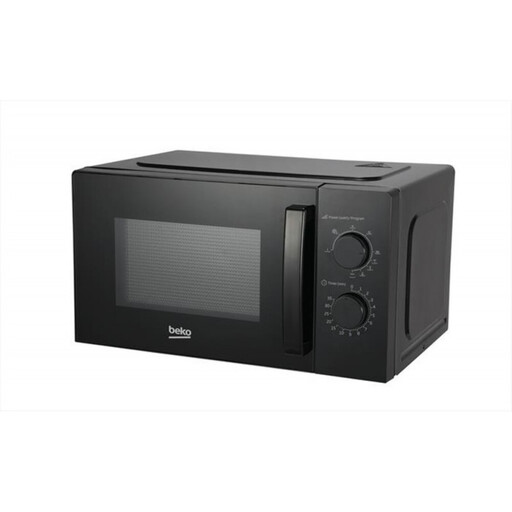 Image unavailable
Beko MGC20100B1 microwave with grill, 20 L, black
For reheating or defrosting meals and browning some dishes without a separate grill.
- 700 W microwave and 800 W grill.
- Stated dimensions: 45.2 × 35.3 × 26.2 cm. Allow for the 10 cm clearance recommended at the sides and rear, as well as enough space to open the door.
- If your recipes call for convection or hot-air cooking, check that the model has these functions.
View on Joybuy
Frequently asked questions
Can a combination microwave also replace an air fryer?
Yes, if the model has a hot-air cooking function that suits the way you cook. Panasonic says the NN-CT55RW combines microwave, grill, convection and air frying. However, compare its capacity and accessories with your usual portions before getting rid of another appliance.
Does the smallest appliance necessarily use less energy?
No. Size alone doesn’t tell you how much energy your meals will use. ADEME notes that size and unnecessary features can affect energy use, so compare the programmes, how long they take and how often you’ll use them.
What should I check before installing a countertop appliance?
First, make sure the space lets you follow the model’s instructions, especially the clearance and ventilation guidance. Use a flat, heat-resistant surface if the instructions require one, and leave enough room to open the door or remove accessories easily.
Does the CE marking guarantee cooking quality?
No. The DGCCRF clarifies that the CE marking indicates the manufacturer’s commitment to meeting the applicable requirements, but it isn’t a certification of quality or performance. Choose the functions and dimensions to suit your recipes and available space.


