If width is limited
A top-loading washing machine could work in a narrow passage or alcove, as long as there’s enough room to open the lid. UFC-Que Choisir gives a width of 40 to 46 cm for top-loading models.


Start by identifying the measurement that’s really limiting your installation: a top-loading washing machine needs less width, while a slimline front-loader mainly saves depth. If you also need to dry your laundry, a stacked setup requires two compatible front-loading machines, a suitable stacking kit and a stable floor. A washer-dryer takes up just one space, but its drying capacity may be lower than its washing capacity. Choose a mini washing machine for small loads only when installing a standard machine isn’t possible.
A top-loading washing machine could work in a narrow passage or alcove, as long as there’s enough room to open the lid. UFC-Que Choisir gives a width of 40 to 46 cm for top-loading models.
A slimline front-loader can reduce how far the machine projects into the room, provided there’s enough width for a front-loading model. Remember to measure with the door open, too: a machine may fit into the alcove but still obstruct the walkway.
Compare a stacked setup, if there’s enough height and the machines are compatible, with a washer-dryer if you only have room for one appliance. Either way, check the installation requirements and the amount of laundry you want to dry.
First measure the usable space, including the machine when open and connected, then compare the washing capacity—and, if needed, the drying capacity—with your usual loads. For a stacked setup, kit compatibility and floor stability are part of choosing the right option, not just the installation.
| Criteria | What to check | What matters to consumers |
|---|---|---|
| Overall size and access | Width and depth with connections; space needed to open the door or lid. | In a narrow room, I want to load the laundry without blocking the way through. Around 28% of consumers would prioritise the appliance’s footprint and ease of access. |
| Drying without taking up extra floor space | Height and access to the controls for a stacked setup; compatibility of the machines and kit, or the drying capacity of a washer-dryer. | If I can’t leave a clothes airer out, I want to dry laundry without using more floor space. This would be the priority for around 22% of consumers. |
| Usable capacity | Washing and drying capacity separately; whether they suit your usual loads, especially bulky items. | For my regular washing, I’d rather not have a small drum force me to run extra cycles. Around 22% of consumers would prioritise this usable capacity. |
| Small, occasional loads | Capacity, spin speed, available temperatures, and water supply and drainage requirements. | If I can’t install a standard washing machine, I mainly need to wash small loads. Around 11% of consumers would put this option first. |
| Stability and noise | The model’s spin-cycle noise level; a suitable floor, correct levelling and the clearance specified in the instructions. | In a flat, I want to minimise vibration and disturbance during the spin cycle. Stability and noise would be priorities for around 17% of consumers. |
A slimline front-loader may fit in the space but not leave enough room to open the door. A top-loader, meanwhile, could end up beneath a shelf that prevents the lid from opening.
Measure the space with the connections in place, then check there’s room to open the machine and handle your laundry.
According to UFC-Que Choisir, the tumble dryer must go above the washing machine. Both appliances must be front-loading, of a similar size, and installed on a flat, rigid and sturdy floor.
Check the exact model numbers in the instruction manuals and confirm the kit is compatible before choosing a stacked setup.
You may need a kit designed for the specific appliance models.
A washer-dryer may be able to wash more laundry than it can dry in one go. You may need to reduce the load before drying or split it across several cycles.
Compare both capacities for the model with the amount of laundry you usually want to dry.
UFC-Que Choisir describes mini washing machines with capacities of 2 to 3 kg. Their capacity—and, depending on the model, their spin speed or available wash temperatures—limits the loads they can handle.
Choose this size for small loads when installing a standard appliance isn’t possible, and check what the model can wash.
Candy France’s collection of slimline front-loading washing machines offers a choice of capacities.
Beko France highlights 45 cm-deep washing machines for smaller spaces and also offers top-loading models.
Bosch stacking kits are worth considering for a stacked setup using compatible appliances.
The Electrolux EW7IW2856BG washer-dryer shows how one appliance can handle both washing and drying.
These washer-dryers combine washing and drying in one appliance. The two Samsung models and the Roborock Zeo Lite are worth considering for larger loads than the Roborock Marshmallow Zeo Mini, which is designed for very small loads. In every case, check the installation space and drying capacity.
 Image unavailable
Worth considering if you want to wash and dry with one appliance rather than set aside space for two.
Stated dimensions: 600 × 850 × 590 mm; stated drying capacity: 6 kg. Check the washing capacity for this model and allow extra space for connections and opening the door.
 Image unavailable
This configuration combines washing and drying if you only want to set aside space for one appliance.
Stated dimensions: 60 × 85 × 60 cm; stated drying capacity: 6 kg. Confirm the washing capacity for this model and measure the depth, allowing for connections and clearance.
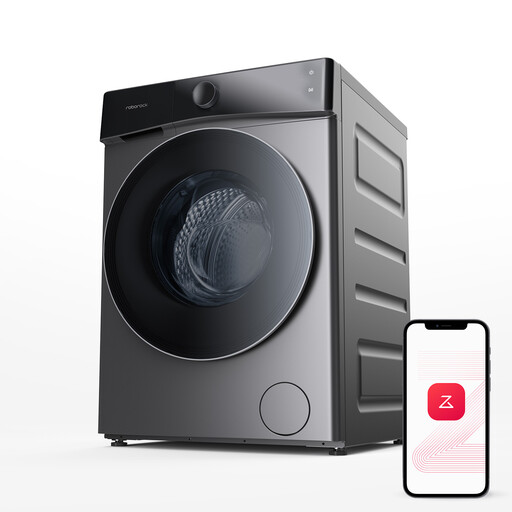 Image unavailable
A combined appliance to consider if you need to wash and dry without installing two machines.
Stated capacities: 10 kg for washing and 6 kg for drying. Check its dimensions, connections and required clearance before deciding whether it will fit in your room.
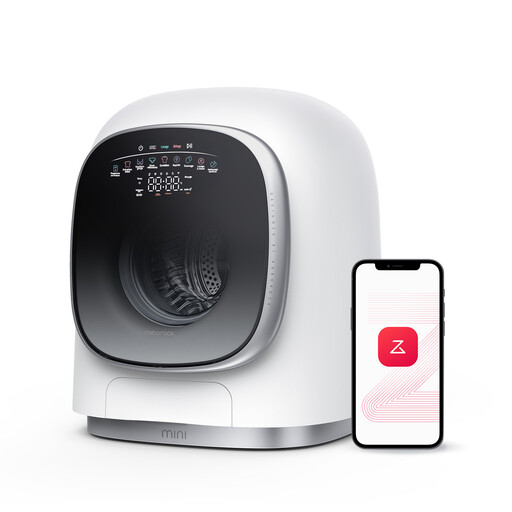 Image unavailable
This model is worth considering if you need a backup option for very small loads, but it shouldn’t be treated as a like-for-like replacement for a standard washing machine.
Stated capacities: 1 kg for washing and 0,5 kg for drying. Check its dimensions, as well as its water supply, drainage and installation requirements.
Choose according to the space you’re short on: a top-loader mainly saves width, while a slimline front-loader reduces depth. UFC-Que Choisir gives a width of 40 to 46 cm for top-loaders and a depth of 33 to 45 cm for slimline models. Also check the space needed to open the lid or door.
No. The kit must be compatible with the model references and dimensions of both appliances. Check their instruction manuals and the manufacturer’s compatibility information. The tumble dryer must be installed above the washing machine, and the stacked appliances must stand on a suitable floor.
According to UFC-Que Choisir, a vented tumble dryer needs an opening to the outside or access to an air duct. For a condenser model, including a heat pump dryer, check the installation and room ventilation instructions in the manual instead.
Not if the load exceeds the model’s drying capacity. UFC-Que Choisir distinguishes between the two capacities. For example, the Electrolux EW7IW2856BG product sheet lists 8 kg for washing and 5 kg for drying. So compare your usual loads with the drying capacity, not just the washing capacity.