Renters and new occupants of small homes
You have one space for laundry and need to choose between a washer-dryer and an airer, without being able to add a second floor-standing appliance.


Choose a washer-dryer when you only have one floor-standing space available and are happy to dry smaller loads using cycles that are often longer. If it is safe to install a stacked appliance setup, two separate machines are better suited to frequent washing; otherwise, a washing machine with an effective spin cycle and an airer in a well-ventilated room can help keep clutter to a minimum.
You have one space for laundry and need to choose between a washer-dryer and an airer, without being able to add a second floor-standing appliance.
You do not have much width in your utility room or bathroom, but have enough height to consider stacking the appliances after checking compatibility, the stacking kit and the installation requirements.
You use the appliances in an occupied home and want to limit indoor drying times, cycle noise and the humidity that needs to be removed.
Start by measuring the actual space available, then compare drying capacity, laundry frequency and ventilation conditions before choosing a solution.
| Priority | Points to check | Your needs |
|---|---|---|
| Space and usable capacity | Compare washing and drying capacities separately. Measure the width, height, depth, door opening and required clearances. | I only have one floor-standing space, but I want to avoid having to remove some of the laundry before drying. |
| Laundry frequency | Check the length of the wash-and-dry cycle and whether two appliances can run at the same time. Compare drying technology on a like-for-like basis. | I do several loads one after another: having a single drum occupied during a long cycle can become inconvenient. |
| Humidity and installation | For an airer, choose a well-ventilated room. A vented tumble dryer requires an outlet to the outside; for a stacked setup, check the kit and the manuals. | I want to dry laundry without adding lasting humidity to living areas or choosing an appliance that is incompatible with my home. |
| Noise, spin performance and use | Check the energy label for noise, spin performance, water and energy use. For relevant washing machines, also look at the durability index. | My appliance will be close to living areas; I am looking for effective spinning before air-drying and comparable information about day-to-day use. |
A washer-dryer may be able to wash a full load without being able to dry it all in the following cycle, because its drying capacity is lower.
Compare both capacities for the exact model and plan your laundry around the drying capacity, not just the washing capacity in kilograms.
Depth and compatibility are not universal. A tumble dryer placed on top without a suitable fixing system may move or fall.
Check both appliance manuals, the required dimensions and the kit recommended or approved by the manufacturer before ordering.
The stacking kit may need to be purchased separately, depending on the models selected.
This type of appliance needs to vent moist air outside, which may rule out certain locations in a flat.
If a suitable external vent is not possible, consider condenser or heat-pump models and confirm the requirements in the manual.
Wet laundry increases humidity in the room and can encourage mould when ventilation is inadequate.
Choose to dry laundry outdoors whenever possible; otherwise, use a well-ventilated room, avoid blocking air inlets and make sure the ventilation is working properly.
These Joybuy options include washer-dryers for a single floor-standing space and washing machines designed to be paired with well-ventilated indoor drying.
 Image unavailable
Suitable when a single appliance needs to handle both washing and drying, provided you adjust the load sizes.
Advertised capacity: 11 kg for washing and 6 kg for drying, class A. A full washing load may require more than one drying cycle.
 Image unavailable
A combined option for washing and drying in a single floor-standing space.
Advertised capacity: 10 kg for washing and 6 kg for drying, class D. Check the full cycle duration, noise level, spin performance and energy and water consumption for the model before buying.
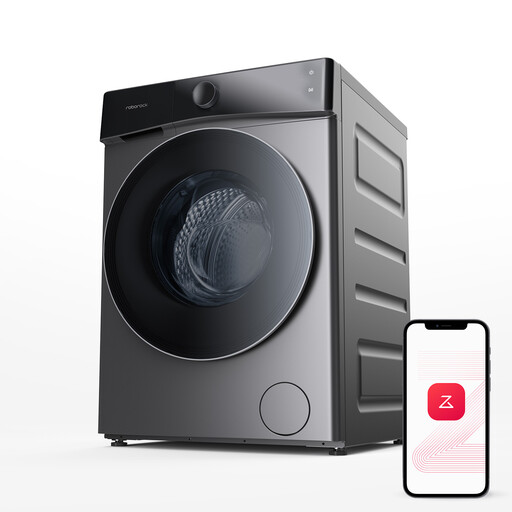 Image unavailable
Combines washing and drying in one appliance for homes where space is limited.
Advertised capacity: 10 kg for washing and 6 kg for drying. Check the dimensions, noise level, cycle times and energy and water consumption before confirming the installation.
 Image unavailable
Worth considering for a shallow recess with an airer installed in a genuinely well-ventilated room.
Advertised capacity: 8 kg; maximum spin speed: 1,400 rpm. Plan a separate drying solution and check your home's ventilation.
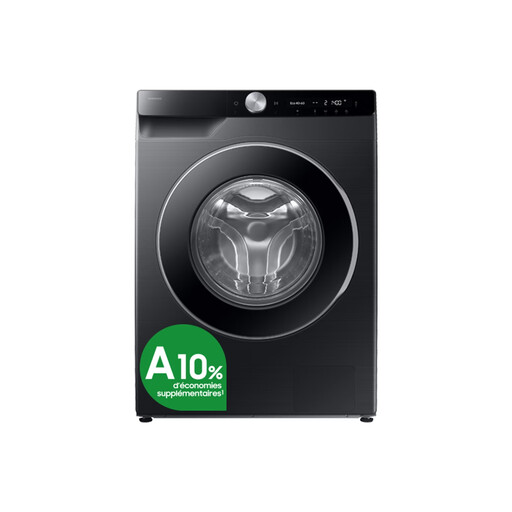 Image unavailable
Could suit a household planning to dry laundry on an airer in a well-ventilated room.
Advertised capacity: 9 kg, class A. Check the depth with the door open and the clearances required before choosing its location.
No. A vented tumble dryer needs an opening to the outside so that moist air can be expelled through a duct. Check what is physically possible in your home and read the model's manual before buying.
No. Both appliances must be designed for stacking, with compatible dimensions and a kit suitable for the models concerned. Consult the manuals before ordering or assembling the stacked setup.
No. Anses recommends drying laundry outdoors whenever possible or in a well-ventilated room. Check that the ventilation is working properly and avoid blocking air inlets.
Compare spin efficiency, noise level, capacity suited to your household and the consumption of the reference programme. ADEME recommends choosing a class A spin rating when laundry will be dried indoors or in a tumble dryer.