Students in studio flats or kitchenettes
If you mainly reheat portions and defrost food, start by looking at solo models. Measure the space you have in mind, remembering to allow room for ventilation.


For reheating leftovers and defrosting food in a studio flat or holiday home, start with a solo microwave. A model with a grill is worth considering if you occasionally want to brown a dish; choose a combination microwave if you’ll genuinely use its fan oven for some oven cooking. Whichever type you choose, check its dimensions, the ventilation clearances specified in the manual and the electrical requirements for the exact model.
Que Choisir highlights student accommodation and holiday homes as situations where you might need to choose a microwave. What you plan to use it for matters just as much as the space you have available.
If you mainly reheat portions and defrost food, start by looking at solo models. Measure the space you have in mind, remembering to allow room for ventilation.
For occasional stays where you mostly need to heat leftovers and prepare quick meals, choose functions you’ll actually use. A grill or combination model may be useful if you’ll need those cooking modes for meals during your stay.
A combination microwave is worth considering if you plan to use its fan oven as well as its microwave function. Que Choisir notes that this type of appliance can save space, but you’ll still need to check the dimensions of each model.
Start with the meals you actually prepare, then make sure the appliance and the clearances required by its manual will fit in your chosen space.
Consider it: if you mainly need to reheat and defrost food.
Keep in mind: it doesn’t have a grill or a fan oven.
Consider it: if you’d also like to brown a portion now and then.
Keep in mind: a grill alone won’t give you fan oven cooking.
Consider it: if you’ll use the grill and fan oven for some oven cooking.
Plan for: Check its depth and installation instructions carefully; Whirlpool lists a depth of 49.4 cm for its MCP349WH.
| What to consider | What to check | Think about your needs |
|---|---|---|
| Functions | Look for reheating and defrosting modes. Check for a grill if you want to brown food, or a fan oven if you plan to cook some dishes in the oven. | If I almost always reheat meals, I don’t need to choose a combination model just for its extra functions. |
| Size | Compare the appliance’s external width, height and depth with the space you’ve measured. Check the manual for ventilation clearances and make sure your dishes will fit inside the cavity. | I have limited worktop space: the capacity in litres alone won’t tell me whether the appliance and my plate will fit. |
| Electricity and use | Check the difference between microwave output power and total electrical power, and check the connection requirements for the model too. Follow the power and cooking time on microwaveable packaging, as recommended by Anses. | I want to check my electrical setup and heat food according to its packaging, rather than relying only on the wattage figure highlighted in the product details. |
| Cleaning and disposal | Check the instructions for cleaning the cavity. In France, look into reuse options or electrical equipment collection schemes when the appliance is no longer in use. | In temporary accommodation, I’d rather plan ahead for cleaning and what to do with the appliance when I leave. |
A grill and a fan oven serve different needs from simple reheating. A combination model can also be quite deep: Whirlpool lists a depth of 49.4 cm for the MCP349WH.
Make a note of the meals you plan to prepare. If you’ll almost always reheat and defrost, compare solo models first and only add a cooking mode if you expect to use it.
An appliance that fits across the front may still be too deep, or lack the clearances specified in its manual.
Measure the available width, height and depth, then compare them with the exact model’s external dimensions and installation instructions.
These figures describe different things. Electrolux lists microwave output power of 800 W and total power of 1,270 W for the EMZ421MMK; these figures apply to this specific model.
For the appliance you’re considering, check the connection details on its product page and in the manual, rather than looking only at the microwave output power.
According to Anses, heating food at high power can increase the migration of substances from some packaging into food.
Check that the packaging or container is suitable for microwave use, and follow the product’s recommended power setting and cooking time.
These models illustrate features worth comparing; their inclusion doesn’t mean that the whole range has the same functions or dimensions.
Samsung describes its solo microwaves as suitable for tasks such as reheating and defrosting.
The freestanding MCP349WH combination microwave is a useful example when considering how much space several cooking modes in one appliance may need.
The EMZ421MMK is an example of a freestanding model with a grill, worth considering if you plan to brown food.
Panasonic France presents the NN-CT56RB as a combination microwave with several cooking modes.
These options are for reheating and defrosting in a small home, with a grill on models whose name specifies one. If a fan oven is essential for you, check that the model you’re considering has this mode rather than assuming it from this selection.
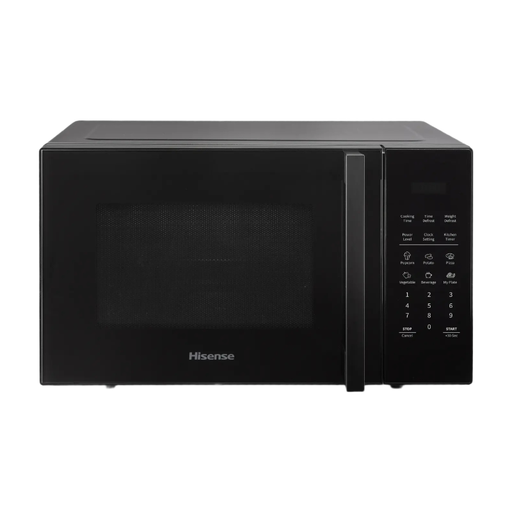 Image unavailable
Worth a look if you need to reheat portions in a small home. The product name specifies 25 L and 900 W, but also describes the model as “Solo”. If browning food matters to you, check the H25MOBS7H product details to confirm it has a grill. Before installation, also check the ventilation clearances in the manual.
 Image unavailable
Consider this model if you’d like to brown food occasionally as well as reheat meals. The product name specifies a grill, a 20 L capacity and 700 W. Check the manual for the ventilation clearance required and the appliance’s electrical specifications.
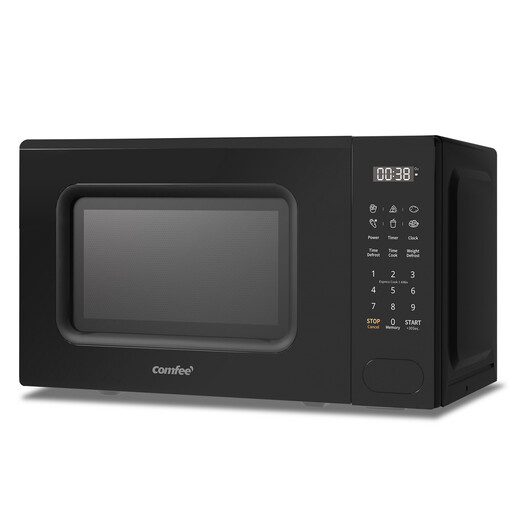 Image unavailable
Worth considering if you want a microwave for reheating with digital controls. The product name specifies 20 L, 700 W, six pre-set menus and eleven power levels. Compare its dimensions with your available space, then check the manual for ventilation and connection requirements.
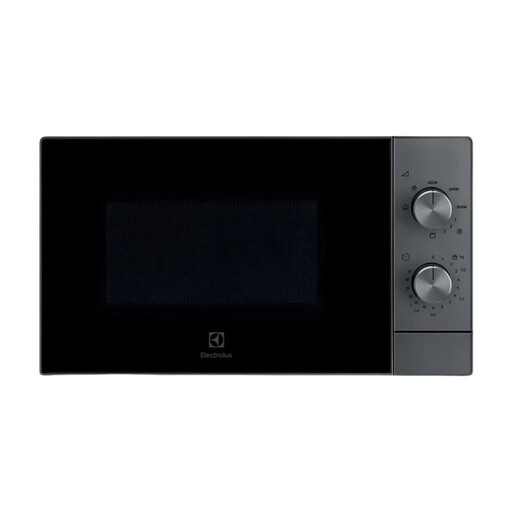 Image unavailable
Worth a look if you want to reheat portions without a built-in installation. The product name specifies 21 L and 800 W. If you also want a grill, check the EMZ421MMTI product details to confirm this function. Check the electrical specifications for this exact model; figures for a different Electrolux model won’t apply.
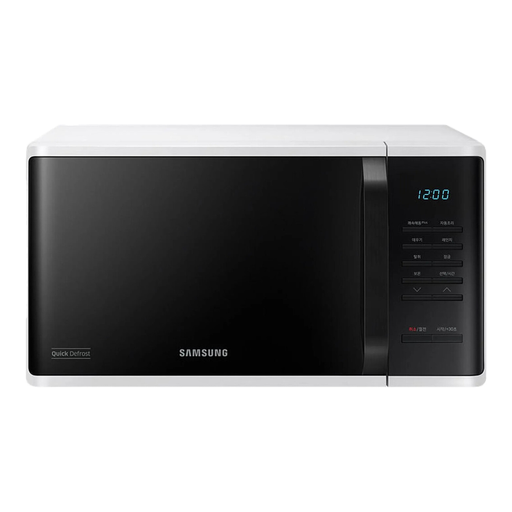 Image unavailable
Consider this if you mainly need to reheat and defrost meals: the product name mentions a quick defrost mode and a 23 L capacity. It also lists 1,150 W; check the product details and manual to find out which electrical specification this figure refers to and confirm the required clearances.
Yes, if you mainly plan to reheat and defrost food. A grill is useful if you also want to brown food; a combination model makes sense if you’ll genuinely use its other cooking modes.
Don’t assume so. Check the manual for the exact model to find out which surfaces it can stand on and what ventilation clearances it needs. Its external dimensions alone aren’t enough to confirm that it can be installed safely.
No. This figure may refer to microwave output power rather than total electrical power. For the EMZ421MMK, Electrolux France lists 800 W and 1,270 W respectively, as well as 230 V and 10 A. Check the specifications for the appliance you choose.
First, check that the packaging is microwave-safe. Anses recommends following the power and cooking time shown for microwaveable products: heating food at high power can increase the migration of substances from some packaging.
If it’s still in working order, consider passing it on for reuse. Otherwise, take it to a suitable collection point for electrical and electronic equipment waste. The French ministry responsible for the ecological transition describes a dedicated collection scheme for household appliances in France.