If a temporary clothes airer fits in your home and you’re happy with the ventilation and drying time, start with that option. If you do laundry often, a separate tumble dryer is worth considering if you have room to install one. When you only have space for a washing machine, a washer-dryer means you won’t need a second appliance. However, its drying capacity is usually lower than its washing capacity, as UFC-Que Choisir points out.
Which option is right for you?
Small home with space for just one appliance
A washer-dryer combines both functions in a single space. However, check that your usual load doesn’t exceed its drying capacity. UFC-Que Choisir notes that these appliances have a lower drying capacity than washing capacity.
Household that dries laundry frequently
A separate tumble dryer lets you dry clothes without tying up the washing machine during the drying cycle. You’ll need extra space and an installation that’s suitable for the model you choose.
Someone who can put up a clothes airer when needed
Air-drying is still an option if you can leave your laundry out long enough without it getting in the way. Keep your home’s ventilation running; ADEME recommends, in particular, that you don’t switch off the mechanical ventilation system (VMC).
What should you compare before choosing?
Start by considering the space you have and how often you do laundry. Then compare appliance capacities and usage information to narrow down your options.
Temporary clothes airer
Consider it if: you can make room for it while your laundry dries and don’t mind waiting for it to dry.
Bear in mind: your laundry will take up space for longer, and you’ll need to keep the ventilation clear.
Separate tumble dryer
Consider it if: you dry laundry regularly and have space for an extra appliance.
Bear in mind: you’ll need to transfer laundry between two appliances and maintain the water collection system, depending on the model.
Washer-dryer
Consider it if: you need to use the same space for washing and drying.
Bear in mind: you may need to reduce a full wash load before drying it, as UFC-Que Choisir highlights the difference between the two capacities.
| What to compare |
What to check |
My needs |
| Drying capacity |
Compare the washing, drying and full-cycle capacities in kg. UFC-Que Choisir notes that a washer-dryer’s drying capacity is lower than its washing capacity. |
I want to wash and then dry a load without taking any clothes out: my usual load needs to fit within the stated drying capacity. |
| Energy and water use, and cycle time |
For a washer-dryer, distinguish between information for washing alone and for the wash-and-dry cycle. The European Commission’s energy label includes figures such as energy use per 100 cycles and water use per cycle. |
If I often use the machine to dry clothes, the full cycle time and its energy and water use matter more to my choice than the washing figures alone. |
| Space and installation |
Measure the space, access routes and clearance needed to open the door. The European Commission says that vented tumble dryers need an outlet to the outside. |
Can I leave a clothes airer up for as long as it takes to dry, or do I have enough room to add another appliance? |
| Noise and maintenance |
Compare the noise levels of the models you’re considering. Check that filters are easy to access and find out how condensed water is handled, where applicable. |
If the appliance is near my living space, I want to take noise and regular maintenance into account. |
What should you watch out for?
-
Confusing washing and drying capacity
UFC-Que Choisir says that washer-dryers have a lower drying capacity than washing capacity. This means you may need to take some clothes out of a full wash load before starting the drying cycle.
Choose based on how much laundry you need to dry in one go, not just the washing capacity.
-
Comparing the wash cycle alone
If you use the dryer regularly, figures for washing alone won’t tell you what to expect from a full cycle. UFC-Que Choisir’s testing separately records water and electricity use, as well as cycle times, for washer-dryers.
On the energy label and product information, look for the figures for the wash-and-dry cycle you plan to use.
-
Choosing a tumble dryer before measuring the space
If the appliance is too deep or its door can’t open properly in the space available, you may not be able to install it. The European Commission also notes that vented models need an outlet to the outside.
Measure the appliance and the space around it, then check how the model handles water.
-
Ruling out a clothes airer without trying it out
A temporary clothes airer may be enough for some loads, but it takes up space while your laundry dries. ADEME recommends keeping your home’s ventilation running.
Check whether you’re happy to have it out for as long as it takes to dry, and make sure it doesn’t block air inlets or ventilation vents.
A guide to a few brands
Bosch
Bosch offers tumble dryers in France for households with space for a separate appliance.
- Bosch lists capacities of 7 to 9 kg across its models.
- Check the capacity, dimensions and care instructions for the specific model rather than assuming they’re the same across the range.
LG
LG’s washer-dryer range is worth exploring if you’re looking for a two-in-one appliance and only have space for one.
- LG lists a 9 kg washing capacity and a 6 kg drying capacity for the F964R71WRST model. These figures should be considered separately.
- These figures apply to this model, not to every LG washer-dryer.
Miele
Miele’s range includes the TWD640WP, a 9 kg heat-pump tumble dryer designed for a separate space.
- Miele’s TWD640WP product information includes energy use per 100 cycles and noise emissions, which you can compare with other models.
- Before choosing this model, check its dimensions and maintenance requirements to make sure it’s right for your home.
Appliances for two ways to dry your laundry
These Joybuy models include washer-dryers for homes with space for just one appliance, and separate tumble dryers for homes that can accommodate a second one. A clothes airer is another option to consider, depending on how much space and time you have.
 Image unavailable
Samsung WD10HG6U34BEU3, washer-dryer, 10 kg / 6 kg
Combines washing and drying in one space. Its stated capacity is 10 kg for washing and 6 kg for drying. Check that your laundry load fits within the drying limit, and make sure the dimensions and connections are suitable for your home.
View on Joybuy
 Image unavailable
Samsung WD11DG6B85BEU3, washer-dryer, 11 kg / 6 kg
A two-in-one option if you don’t have room for a separate tumble dryer. The model is listed with an 11 kg washing capacity and a 6 kg drying capacity. Plan your loads around the latter figure and check that the full cycle time suits your routine.
View on Joybuy
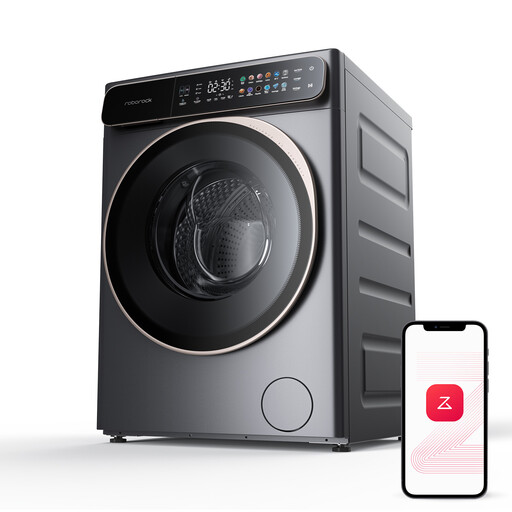 Image unavailable
Grey Roborock Zeo One, washer-dryer, 10 kg / 6 kg
Wash and dry with a single appliance, with a stated washing capacity of 10 kg and a drying capacity of 6 kg. Check the model’s dimensions, energy and water use, and cycle times before comparing it with other options.
View on Joybuy
 Image unavailable
Hotpoint CHD84MWBSEE, 8 kg heat-pump tumble dryer
Worth considering if you have space for a separate tumble dryer. Its stated capacity is 8 kg. Measure the space and check the model’s product information for noise levels, energy use and cycle times that suit your needs.
View on Joybuy
 Image unavailable
Comfee CD08EHP05W-HR, 8 kg heat-pump tumble dryer
An 8 kg separate tumble dryer to consider if you have room for a second appliance. Before choosing, check its dimensions, how it handles condensed water, and the energy use and cycle times of the programmes you’ll use.
View on Joybuy
Frequently asked questions
Can a washer-dryer dry a full load straight after washing it?
Yes, as long as the load doesn’t exceed the stated drying capacity or the capacity for a full wash-and-dry cycle. UFC-Que Choisir says these appliances have a lower drying capacity than washing capacity. For a larger load, you’ll need to remove some clothes or split the drying into more than one load.
What information should I check on a washer-dryer’s energy label?
Look at the figures that match how you’ll use the appliance, distinguishing between washing alone and the wash-and-dry cycle. The European Commission’s label includes energy use per 100 cycles and water use per cycle. Also compare the stated cycle times and noise levels of the models you’re considering.
Does a separate tumble dryer need a vent to the outside?
Not all types of tumble dryer do. The European Commission says that vented models need an outlet to the outside. For a condenser model, check how the collected water needs to be emptied or drained away.
Is a clothes airer still an option in a small home?
Yes, if you can leave it out while your laundry dries and the drying time works for your routine. Keep your home’s ventilation running, and don’t block air inlets or extraction vents. ADEME recommends that you don’t switch off the mechanical ventilation system (VMC).


