If you only have room for one appliance and want dry laundry without using a drying rack, a washer-dryer could be the answer, provided you keep the load within its drying capacity, which is generally lower than its washing capacity, according to UFC-Que Choisir. If limited depth is your main concern, consider a compact washing machine and a drying rack in a room suitable for managing moisture, as recommended by ADEME. Stacking two separate appliances is another option, as long as you check the available height and depth, and confirm that the stacking kit is compatible.
Who are these options right for?
Homes with space for just one appliance
If you have the necessary connections but can only fit one appliance, a washer-dryer lets you wash and dry your laundry without needing a permanent drying rack. You’ll need to keep your load within the drying capacity, which is different from the washing capacity.
Studio flats short on depth
A compact or slim washing machine could work if you’re short on depth. You’ll also need to plan where to dry your laundry. For indoor air-drying, ADEME recommends a large, well-ventilated room or one with an extraction vent.
Homes with enough vertical space
A washer and tumble dryer stacked in a column could be a good option if both appliances and the kit are explicitly compatible. Width alone isn’t enough to determine whether they can be stacked. Bosch, for example, says you should check the depth and the specific models supported by its kits.
What should you check before choosing?
Start with the space you can actually use, then consider how you dry your laundry alongside each option’s capacity and installation requirements.
Washer-dryer
Consider this if: you have room for just one appliance and want to finish your laundry without setting up a drying rack.
Bear in mind: according to UFC-Que Choisir, drying takes longer than in a conventional tumble dryer and uses water. The drying capacity is also lower than the washing capacity.
Compact washing machine and drying rack
Consider this if: there isn’t enough depth for a standard machine and you have a suitable space for air-drying.
Bear in mind: the drying rack takes up space while your laundry dries and releases moisture into the room, as ADEME points out.
Two appliances stacked
Consider this if: you can install a separate tumble dryer above a compatible washing machine.
Bear in mind: this setup needs enough height and a kit designed for the specific models. Similar-looking dimensions don’t guarantee that appliances can be stacked.
| Priority |
What to check |
What I need |
| Drying capacity |
For a washer-dryer, compare the washing and drying capacities in kg. If you want to run a continuous cycle, check the load capacity for washing and drying, not just washing. |
I want to run a load and get dry laundry without having to take some of it out between the two stages. |
| Space required |
Measure the height, width and depth, as well as access routes and the clearance needed to open the door. For a slim appliance, check the depth of the specific model: Electrolux generally places this category between 33 and 45 cm. |
The machine must fit in its space without sticking out or blocking access. If I choose a drying rack, I’ll need to make room for that too. |
| Air-drying |
Decide which room you’ll use for the drying rack. ADEME recommends a large, well-ventilated room or one with a mechanical ventilation (MVHR) extraction vent to manage moisture from indoor drying. |
If I choose not to use a tumble dryer, I want to be able to dry laundry in a suitable room without taking up my living space all the time. |
| Full cycle |
For a washer-dryer, check the duration and water and energy consumption of the wash-and-dry cycle, separately from the figures for washing alone. Compare like-for-like loads and cycles. |
I want to know what a full wash-and-dry load involves, rather than basing my choice solely on the washing energy rating. |
| Stacking |
Check the manuals for both appliances and make sure the kit is compatible. Bosch specifies that one of its kits requires a washing machine with a depth of more than 55 cm; this doesn’t apply to every setup. |
I have enough height for a stacked setup, but I need to confirm that it’s suitable for the appliances I’m considering and the space available. |
What pitfalls should you avoid?
-
Choosing a washer-dryer based only on its washing capacity
The load capacity for a continuous cycle may be lower. For example, Bosch lists 10.5 kg for washing and 6 kg for washing and drying on the WNG25402FR. So a load at the washing capacity limit may need to be dried in batches.
Compare both capacities in kg with your usual loads, then check the duration and consumption figures for a complete cycle.
-
Assuming a compact washing machine takes care of drying too
A shallower appliance can make installation easier, but a washing machine without a drying function leaves you with all your laundry to air-dry. According to ADEME, air-drying releases a lot of moisture indoors.
Before choosing this option, find a large, well-ventilated room or one with an extraction vent for your drying rack.
-
Stacking two appliances just because they’re the same width
Whether appliances can be stacked depends on the models, their depth and the kit designed for them. Bosch says one of its kits is suitable for a washing machine with a depth of more than 55 cm, and advises checking that the appliances are compatible.
Check the manuals and only choose a kit specified for the combination you’re considering.
You may need to budget for the kit on top of the cost of both appliances.
-
Judging drying performance by the washing figures alone
The duration and consumption figures for a wash-only cycle don’t tell you what to expect from a cycle that also includes drying. UFC-Que Choisir measures these uses separately in its test method.
When comparing washer-dryers, check the label and product information for the wash-and-dry cycle figures, using a comparable load.
A few brands to know
These product ranges can help you identify which features to compare. They don’t guarantee that every model will suit your home.
Bosch
Bosch Home Appliances France offers washer-dryers with different capacities, as well as stacking kits for certain two-appliance setups.
- Model specifications list washing and wash-and-dry capacities separately. The WNG25402FR is listed at 10.5 kg and 6 kg respectively.
- Check that a stacking kit is compatible with the specific models. The depth requirement published for one Bosch kit doesn’t apply to every stacked setup.
LG
LG France offers both all-in-one washer-dryers and WashTower models that combine washing and drying in a stacked unit.
- LG lists washing and drying capacities separately for the models it features, so you can check that each load suits the way you plan to use the appliance.
- A stacked unit won’t solve every space constraint. LG gives the WashTower F761TOWERB dimensions as 700 × 1 890 × 770 mm, so check these against the space available.
AEG
AEG France features a Series 9000 heat-pump washer-dryer, with stated capacities of 10 kg for washing and 6 kg for drying.
- The published drying capacity makes it easy to check whether a load can be washed and dried in one continuous cycle.
- A heat pump alone isn’t enough to compare this model with other appliances. Check the full-cycle figures and the dimensions of the model you’re considering.
Washer-dryers available on Joybuy
These three appliances combine washing and drying in one machine, making them suitable for homes with space for just one appliance. Compare their drying capacity with your usual loads, then check the dimensions and full-cycle figures for the model you’re interested in.
 Image unavailable
Samsung WD11DG6B85BEU3 — 11 kg wash, 6 kg dry
One machine for washing and drying when there’s no room for two appliances. To run both stages without removing any laundry, compare your usual load with the 6 kg drying capacity, not the 11 kg washing capacity. Check the dimensions and full-cycle figures before choosing.
View on Joybuy
 Image unavailable
Samsung WD10HG6U34BEU3 — 10 kg wash, 6 kg dry
This model combines washing and drying in one appliance. Its stated capacity is 10 kg for washing and 6 kg for drying, so you’ll need to adjust a larger wash load before running a continuous drying cycle. Measure the space available and check the duration, water and energy figures for the wash-and-dry cycle to see if it suits your needs.
View on Joybuy
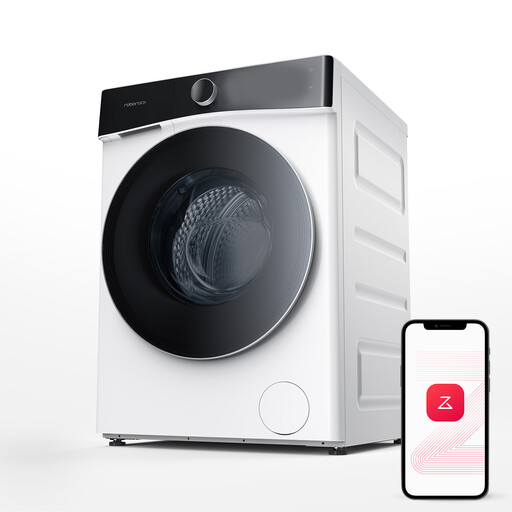 Image unavailable
White Roborock Zeo Lite — 10 kg wash, 6 kg dry
This washer-dryer combines both functions in one appliance, with a stated capacity of 10 kg for washing and 6 kg for drying. If you want to dry each load without splitting it, use the 6 kg capacity as your guide. Check the dimensions and full-cycle figures against your available space and how you plan to use it.
View on Joybuy
Frequently asked questions
Can you dry a full washing load in a washer-dryer?
Not necessarily. The drying capacity is different from the washing capacity. Bosch, for example, lists 10.5 kg for washing but 6 kg for the wash-and-dry cycle on the WNG25402FR. For a continuous cycle, keep the load within the relevant capacity or plan to remove some laundry after washing.
Can a compact washing machine replace a washer-dryer in a studio flat?
It can help with installation constraints, particularly limited depth, but a compact washing machine without a drying function won’t dry your laundry. Electrolux generally places its slim models between 33 and 45 cm deep. You’ll also need to make room for a drying rack and ensure the conditions are suitable for air-drying.
Where should you put a drying rack in a small home?
Choose a large, well-ventilated room or one with a mechanical ventilation (MVHR) extraction vent, in line with ADEME’s recommendations for indoor drying. Air-drying releases moisture, so where you put the drying rack matters just as much as where you put the washing machine.
Can you stack any washing machine and tumble dryer?
No. Check the appliance instructions and make sure the kit is compatible with the combination you have in mind. As one example that applies only to a specific Bosch kit, the manufacturer requires a washing machine with a depth of more than 55 cm and advises checking which models are compatible.
Which figures should you compare for a washer-dryer’s drying performance?
Check the capacity, duration and water and energy consumption for the wash-and-dry cycle, separately from the figures for washing alone. The European Commission distinguishes between these uses in its product information. Comparing equivalent cycles and loads helps you avoid judging drying performance based on washing figures alone.


