People living in a small flat without outdoor space
If an airer takes up valuable room, compare the space needed for a second appliance with the drying capacity of a washer-dryer. Also measure the depth and the clearance needed to open the door.


If you mostly dry your laundry on an indoor airer, start by checking your washing machine’s spin efficiency and how well your home is ventilated. If you do laundry frequently, a separate heat pump tumble dryer is worth considering if you have the space. If you only have room for one appliance, a washer-dryer saves space, but its drying capacity needs to suit the size of your usual loads.
If an airer takes up valuable room, compare the space needed for a second appliance with the drying capacity of a washer-dryer. Also measure the depth and the clearance needed to open the door.
For frequent loads, drying capacity, programme duration and stated energy and water consumption matter more than washing capacity alone. A dedicated tumble dryer does, however, need a permanent spot.
If you don’t want to add a tumble dryer, check your washing machine’s spin efficiency. ADEME recommends doing so when you need laundry to dry quickly indoors. Noise and ventilation are also worth considering.
Worth considering: if you already have somewhere to hang your laundry and want to avoid buying a second appliance. ADEME recommends checking the spin efficiency class to help speed up indoor drying.
Keep in mind: your laundry will still need to dry inside your home, so good ventilation is important, particularly if the room is already damp.
Worth considering: if you dry laundry often and can set aside space for a dedicated appliance. UFC-Que Choisir highlights the low electricity consumption of heat pump condenser models.
Keep in mind: check the space needed for the whole appliance, door clearance and the noise from having a second appliance.
Worth considering: if you only have room for one appliance and can keep each load for drying within its capacity. UFC-Que Choisir notes that drying capacity is lower than washing capacity.
Keep in mind: you may need to remove some laundry from a large load before drying. Compare complete wash-and-dry cycles, not just washing performance.
| Criteria | What to check | Think about your needs |
|---|---|---|
| Capacity and frequency | Compare washing and drying capacities in kg. Check the duration of the programme you’ll use and whether it can handle a small load. | I want to dry my usual loads without always having to remove some laundry or run another cycle. |
| Energy and water use | Compare the energy label and stated consumption for the same type of cycle and appliance. For a washer-dryer, check washing and wash-and-dry figures separately. | If I dry laundry often, I want to know how much electricity and, where applicable, water the programme I use will consume. |
| Space and noise | Measure the height, width, depth and door clearance. Compare noise levels for the same setting, particularly during the spin cycle. | The appliance needs to fit without obstructing the way through; noise matters if it’s near a living area. |
| Indoor air | Understand the difference between drying laundry on an airer, using a condenser appliance and using a vented tumble dryer. Check ventilation in your home and look out for persistent damp. | I often dry laundry in an occupied room, so I need to be able to ventilate it and keep an eye out for signs of damp. |
A washer-dryer may be able to wash a larger load than it can dry. UFC-Que Choisir highlights this difference, which is also reflected in the stated capacities of some AEG and LG models.
Compare both capacities with the amount of laundry you want to dry in one go.
If the load is too large, you’ll have to remove some laundry before drying or split it across several cycles.
This type of appliance vents moist air outside, unlike a condenser tumble dryer, as UFC-Que Choisir explains.
If you don’t have a suitable outlet, look at condenser models before choosing an appliance.
A washer-dryer takes up just one space, but UFC-Que Choisir says that its drying function does not match a dedicated tumble dryer in its tests.
Choose a washer-dryer for its space-saving design, and compare the capacity, duration and consumption of the wash-and-dry cycle you’re interested in.
The depth, door clearance and space around the appliance can all affect how practical it is to use. Noise is also worth considering if it’s near a living area.
Measure the full space, check the dimensions of your chosen model and make sure its connection requirements suit your planned installation.
These models show some of the different configurations available; their features aren’t representative of every appliance from each brand.
The Bosch Série 4 WQA23300FR heat pump tumble dryer is an example of a separate appliance, if you have room for one.
The AEG LWR98B166X heat pump washer-dryer combines both functions in one appliance.
LG describes the F952SR50WRS as a Slim washer-dryer, making it worth looking at if space is tight.
These models offer two ways to dry laundry indoors: a separate tumble dryer or a washer-dryer. If you’d rather keep using an airer, the spin efficiency and ventilation advice above can still help you choose a washing machine.
 Image unavailable
Worth considering if you have room for a separate tumble dryer. The product listing gives an 8 kg capacity, a C rating and a noise level of 64 dB. Check the dimensions and the energy consumption on the label before deciding where to put it and which programme to use.
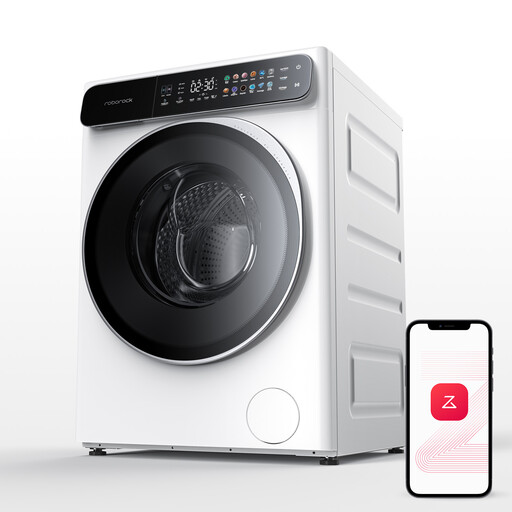 Image unavailable
This washer-dryer saves you from needing space for a separate tumble dryer. Its stated capacities are 10 kg for washing and 6 kg for drying, so if you want to run both functions in sequence, keep the load within the drying capacity. Also check the dimensions, noise levels and consumption for a full cycle.
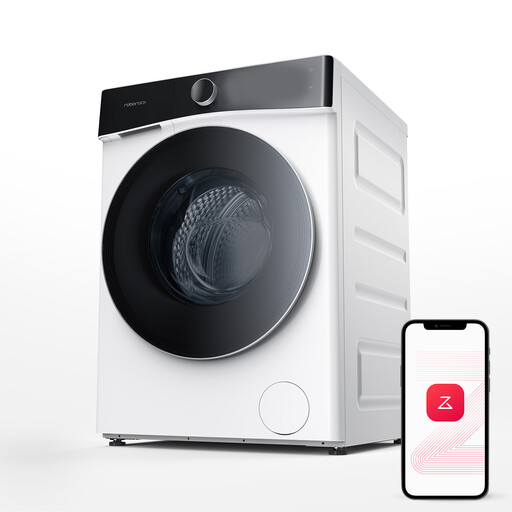 Image unavailable
This model combines washing and drying in one appliance, with a stated capacity of 10 kg for washing and 6 kg for drying. If you want to dry the whole load without stopping to remove laundry, stick to the 6 kg limit. Also check the space it needs, its noise levels and the figures for the wash-and-dry cycle.
 Image unavailable
If you have a dedicated space for drying, this model has a stated capacity of 8 kg and an energy rating of D. Check its dimensions, noise level and the consumption figures on the label. If a quick programme is important to you, confirm how long it takes.
 Image unavailable
This separate condenser tumble dryer has a stated capacity of 8 kg, an E rating, a noise level of 66 dB and dimensions of 60 × 65 × 85 cm. Measure the space and compare the consumption figures for the cycles you’ll use. Don’t assume this model has a heat pump.
Not necessarily. UFC-Que Choisir says these appliances have a lower drying capacity than washing capacity. To run both stages without removing any laundry, stick to the stated limit for the drying programme.
Look at a condenser model rather than a vented one. According to UFC-Que Choisir, a vented model needs a suitable outlet to the outside. Also check the installation requirements for the model you choose.
No. It can help you avoid hanging some loads of laundry in a room, but it won’t replace ventilation or identifying the cause of persistent damp. Qualitel highlights the importance of renewing the air indoors, while INRS recommends addressing the causes of damp if mould is present.
Check the dimensions, door clearance, appliance instructions and whether the electrical installation is suitable for the exact location. If you’re unsure about placing the socket near a bath or shower, have the installation checked before plugging in the appliance.
Compare the stated figures for similar cycles and appliance categories. For a washer-dryer, look at the wash-and-dry cycle separately from washing alone. The energy rating by itself doesn’t tell you how much the programme you’ll use consumes.