What should you check before choosing?
Start with the available space and what you store each week, then compare the features of appliances that meet both requirements.
| Priority |
What to check |
What I need |
| Installation |
Measure the height, width and depth, as well as the delivery route. Check the door opening and ventilation clearances specified in the model’s instructions. |
I need to be able to open the door and reach the shelves without blocking the way through my small kitchen. |
| Fresh food capacity |
Compare the capacity in litres for fresh food, not just the total capacity. Darty suggests 100 L for one person, then around 50 L for each additional occupant as a guide to adjust to your shopping habits. |
If I often cook at home or shop once a week, I need enough space for the food I usually buy. |
| Freezing |
Check whether there’s a freezer compartment and its separate capacity on the energy label. Compare this with the amount of frozen food you actually keep. |
I regularly keep prepared portions or frozen food; a small compartment may limit how much I can store. |
| Energy and noise |
For appliances of a similar type and capacity, compare the energy rating, kWh/year, dB and noise class. This information is shown on the label described by the European Commission. |
The fridge will be close to my living area, so I want to compare its stated noise level as well as its annual energy consumption. |
| Care and repair |
Check the model’s product information and instructions for defrosting and maintenance guidance. Ask which spare parts are available for the model you’re considering. |
I’d like to know what maintenance is needed and what repair options are available before choosing. |
Brands and ranges to consider
These examples illustrate different formats and features to check; specifications vary between models.
Beko
Beko’s French range includes table-top fridges with an upper freezer compartment and, on some models, a reversible door.
- Beko describes MinFrost as a technology that reduces frost build-up on models that feature it.
- Check the capacity of each compartment, the energy label and the installation instructions for the model you choose.
Liebherr
Liebherr offers freestanding table-top fridges as well as integrated models, with housing dimensions listed for each model.
- Product information for the models mentioned includes details such as dimensions, capacity or noise level, depending on the appliance.
- The housing dimensions for one integrated Liebherr model shouldn’t be used for another model.
Bosch
Bosch offers small fridges for compact spaces, with models to consider based on the space available and how the appliance will be installed.
- Its installation FAQ specifies a ventilation clearance of at least 200 cm² behind and beneath the fridge.
- Use the instructions for the model you choose; Bosch’s guidance isn’t a universal measurement.
Electrolux
Electrolux offers integrated fridges, including a Series 600 model measuring 81.9 cm tall, which the brand says is designed to fit beneath a hob.
- This range is worth considering if your kitchen has a unit designed for an integrated appliance.
- Installation beneath a hob depends on the model and its instructions. Check the housing, ventilation and door fitting.
Fridges to consider on Joybuy
These models include freestanding fridge freezers and integrated appliances. Compare their capacity with your needs, then check the installation requirements for each model.
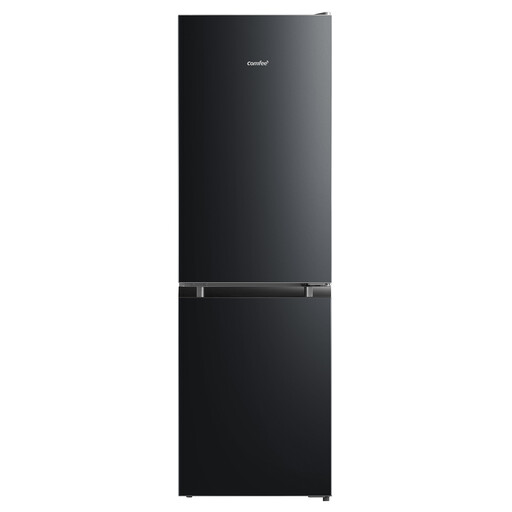 Image unavailable
Comfee' by Midea RCB230BL2EU(E), 174 L
A freestanding fridge freezer to consider if you want to store fresh and frozen food in one appliance. The model name indicates a reversible door and Low Frost technology; measure the space and check the required clearances in the instructions.
View on Joybuy
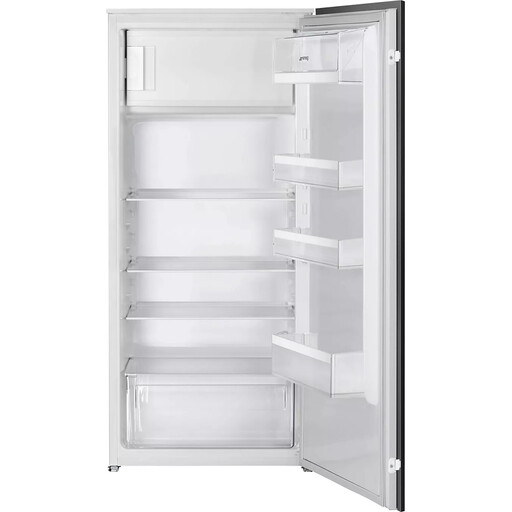 Image unavailable
SMEG S4C122E integrated, 188 L
This model with an upper freezer is only suitable if your kitchen unit is designed for its installation. It’s listed as having one door and an energy rating of E; check the housing dimensions, ventilation and door fitting against the instructions before choosing it.
View on Joybuy
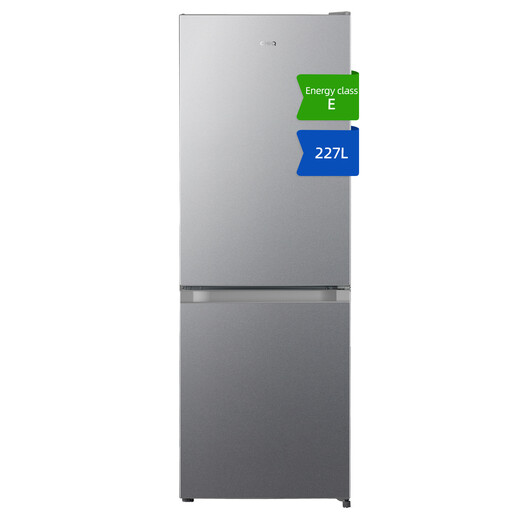 Image unavailable
CHiQ JR227LSE, 227 L, silver
Worth considering if you regularly store both fresh and frozen food: the model is listed with 153 L for the fridge and 74 L for the freezer. Its stated width is 54 cm; also check the height, depth, reversible door opening and ventilation. Its name specifies an energy rating of E and Low Frost technology.
View on Joybuy
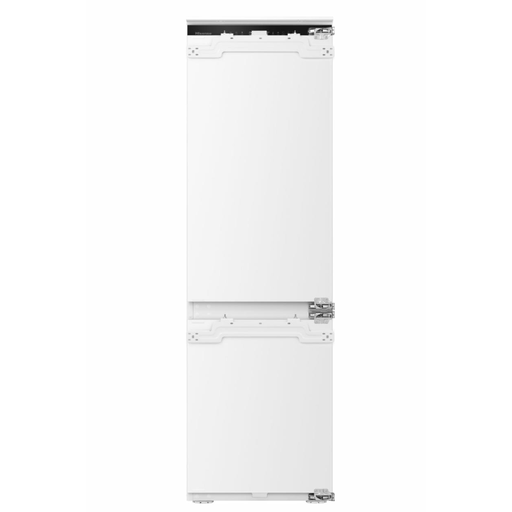 Image unavailable
Hisense RB3B250SAWC integrated, 252 L
Consider whether this capacity suits your needs in a studio flat. The model is listed with No Frost and Inverter technologies, as well as an energy rating of C; check the housing dimensions, ventilation and door fitting before planning its installation.
View on Joybuy
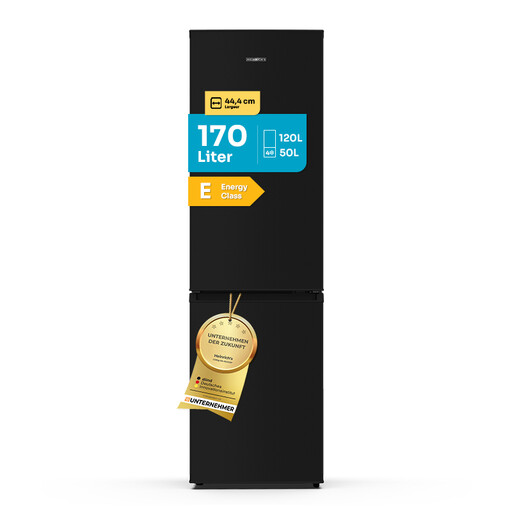 Image unavailable
Heinrich´s 170 L fridge freezer, black
Worth comparing if you need both compartments: the product name lists 120 L for the fridge and 50 L for the freezer. It also states 40 dB and an energy rating of E; check the dimensions, door opening and ventilation requirements for your space.
View on Joybuy
Frequently asked questions
What capacity should one person look for in a studio flat?
Darty suggests 100 L as a general starting point for one person, then around 50 L for each additional occupant. Adjust this guide to how frequently you shop, how often you eat at home and how much room you need for frozen food; compare the fresh and frozen capacities separately.
How much space should you leave around a compact fridge for ventilation?
Follow the clearances specified in the model’s instructions rather than leaving the same amount of space around every appliance. Bosch’s FAQ calls for at least 200 cm² of clear space behind and beneath the fridge; for an integrated model, also check the ventilation requirements set by its manufacturer.
How should you compare the energy labels of two compact models?
First compare appliances of a type and capacity that suit the same needs. According to the European Commission, the label shows details including the energy rating, annual consumption in kWh, storage capacities and airborne noise emissions. This lets you compare energy use, capacity and noise separately.
What should you do with your old fridge?
Ask the retailer about collection when your new appliance is delivered, or find out about local collection services for electrical and electronic equipment. The Ministry for the Ecological Transition points out that this type of equipment may contain components that pose a risk to the environment.


