Someone living alone and cooking in a studio flat
If you keep fresh food, leftovers and drinks, check the fridge’s net capacity before choosing a mini fridge just because it takes up less space.


If you cook regularly in a studio flat, compare the fresh-food capacity of a table-top fridge with that of a mini fridge, which is better suited to keeping a small amount of food. Choose a freezer compartment based on how often you actually use frozen food, then check the dimensions, ventilation clearances and stated noise level—especially if you sleep in the same room.
If you keep fresh food, leftovers and drinks, check the fridge’s net capacity before choosing a mini fridge just because it takes up less space.
A compact appliance needs to fit in its space without compromising the clearances specified in the manual. Electrolux recommends allowing air to circulate around the fridge, keeping it away from heat sources and observing its climate class.
Compare the stated noise levels of the models you’re considering: a small fridge isn’t necessarily unobtrusive in the room.
Start by working out how much space you have and how much food you need to store. The freezer compartment and noise level can then help you choose between the models that will fit your setup.
Worth considering: if space is very limited and you only need to keep a small amount of fresh food and drinks.
The trade-off: check that the net capacity will be enough between shopping trips.
Worth considering: if you cook and want to use all the interior space for fresh food.
The trade-off: it won’t keep frozen food.
Worth considering: if you use frozen food, once you’ve checked the capacity of the specific compartment.
The trade-off: the compartment takes up some of the interior space and needs suitable care.
| What to consider | What to check | What I need |
|---|---|---|
| Installation | Measure the height, width and depth, then check the door clearance, ventilation gaps and climate class in the manual. | I need to be able to open the door and allow air to circulate around the appliance, even in a narrow kitchenette. |
| Usable capacity | Distinguish the fridge capacity from the total capacity when there’s a freezer compartment. Check there’s enough shelf space for your usual shop. | I keep meals and leftovers for several days, so fresh-food capacity matters more to me than the word ‘mini’ on the label. |
| Freezer compartment | Check the compartment’s capacity and the uses specified for the particular model; don’t assume it can freeze food just because it’s described as having a ‘freezer’. | If I buy frozen food regularly, I want to know the conditions in which I can store it. |
| Noise | Compare the stated noise levels in dB(A) for appliances with similar configurations and capacities. | I sleep or work in the same room as the fridge, so its stated noise level is part of my decision. |
| Temperature | Check the actual temperature after installation and avoid overloading the shelves. Anses recommends a temperature of between 0 and +4 °C in the coldest part of the fridge for storing food. | I want to be able to check the temperature my fresh food is kept at, rather than just adjust a dial. |
| Energy use | Compare the energy rating and annual energy consumption stated for each model rather than estimating them from its size. | The fridge runs continuously, so I want to take its energy consumption into account when choosing. |
| Refurbished | Identify the exact model and check its dimensions, condition, operation and the terms offered by the seller. | For temporary accommodation, I’d also consider a refurbished appliance if I can check the specifications of the exact product. |
A narrow width doesn’t tell you how much depth you need to open the door or how much space to leave for ventilation. Electrolux also recommends keeping the fridge away from heat sources.
Measure the space, access route and door clearance, then compare them with the model’s dimensions and installation instructions.
The compartment takes up interior space that could otherwise be used for fresh food.
Think about what you usually buy: if you use frozen food, check the compartment’s capacity; if not, compare the fridge capacity of models without a freezer.
In a room used for everything, the fridge will be close to your bed or desk. The specifications for the Beko TSE1504FN, Liebherr KTe500 and Bosch KTL15NWEB list noise levels of 37, 35 and 39 dB(A) respectively, but this doesn’t tell you how noisy they’ll seem in your home.
Compare the stated figures for the models you’re considering and install the appliance according to its manual.
The right capacity isn’t enough if fresh food isn’t kept at the correct temperature. Anses recommends a temperature of between 0 and +4 °C in the coldest part of the fridge and advises against overfilling it.
Check the temperature regularly, using a thermometer if needed, and leave space for cold air to circulate between the food.
These models show different table-top fridge configurations. Their inclusion doesn’t mean they’re available on Joybuy.
The French product pages for the TSE1504FN and TSE1264FMGN let you compare a table-top fridge without a freezer with a model that has a freezer compartment.
The KTe500 is worth comparing if width and stated noise levels matter in a room used for everything.
The KTL15NWEB is an example of a table-top fridge with an integrated freezer compartment.
These two options suit different storage needs: a mini fridge for a small amount of food and a larger-capacity compact model. Check the space available and how you plan to use the freezer compartment before choosing.
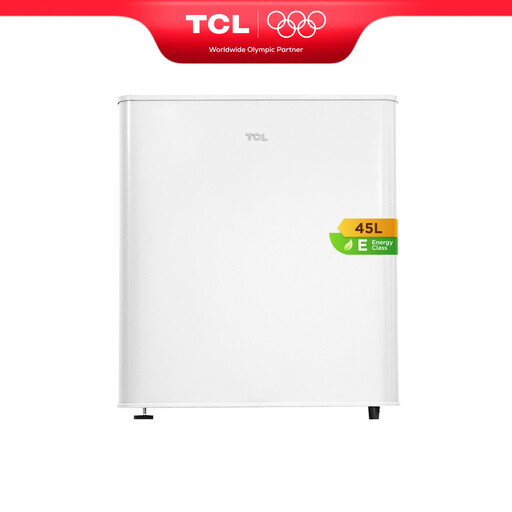 Image unavailable
Worth considering if you need to keep a small amount of food and drinks in a limited space. The product description lists a tempered glass shelf and an E energy rating. Check the installation dimensions and the temperature it reaches for the food you want to store. Don’t assume its chiller compartment is suitable for frozen food.
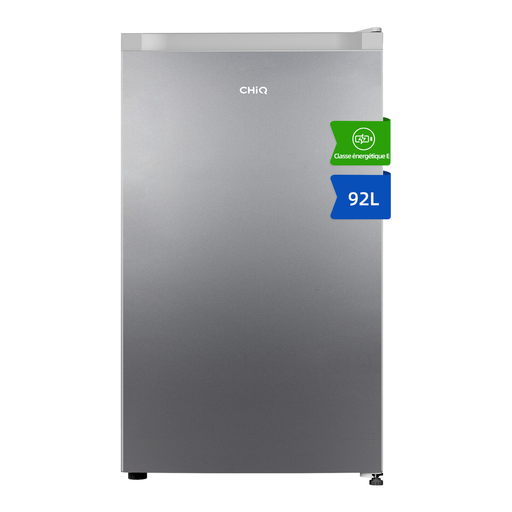 Image unavailable
Worth considering if a mini fridge doesn’t offer enough space for your fresh food. The product description mentions a freezer section and an E energy rating. Check the full dimensions, stated noise level and the section’s specifications if you plan to store frozen food in it.
Anses recommends a temperature of between 0 and +4 °C in the coldest part of the fridge for storing food. Check the temperature regularly, using a thermometer if needed, and avoid overfilling the appliance so cold air can circulate.
Not if you only store fresh food. If you buy frozen food or want to freeze food yourself, check the capacity of the compartment in the model you choose. Beko says the TSE1264FMGN has a 4-star compartment designed to store frozen food at −18 °C and freeze fresh food down to −24 °C.
First, check the clearances specified for the appliance. Electrolux recommends allowing air to circulate around the fridge, keeping it away from heat sources and observing the ambient temperature specified by its climate class.