Someone living in a studio with a measured space
You’re looking for a freestanding appliance for your kitchenette. Before choosing its capacity, check that it will fit the available space without restricting ventilation or blocking the door.


Choose a small fridge that fits the space available, allowing for ventilation clearance and the door swing. A mini fridge is suitable for storing a few essentials, while a table-top model offers more storage options if it fits. An under-counter built-in fridge needs a compatible cabinet and installation. If you’ll be sleeping in the same room, compare the stated noise levels too; and if you store frozen food, check the freezer compartment specifications.
You’re looking for a freestanding appliance for your kitchenette. Before choosing its capacity, check that it will fit the available space without restricting ventilation or blocking the door.
If the fridge will be near your bed or desk, compare the stated noise levels in decibels for the models you’re considering, rather than relying on the word “quiet” alone.
If frozen food is part of your regular shop, distinguish a four-star freezer compartment from a simple ice box. Also check how much space is set aside for frozen food and how much remains for fresh food.
Start with where the fridge will go and what you’ll actually store in it. Freestanding and built-in models have different installation requirements, so they need to be chosen with different constraints in mind.
| Feature | What to check | Who is it for? |
|---|---|---|
| Space and ventilation | Measure the available width, height and depth, then allow for the clearances specified in the manual and enough room to open the door. For a built-in model, also check the cabinet niche and door fixing. | In a narrow kitchenette, I need to be able to open the door and let air circulate around the appliance. Around 33% of consumers would put this physical fit at the top of their list. |
| Noise | Compare the stated noise level in dB for the exact models you’re considering, and make sure the floor is stable and level. | If I sleep or work in the same room, fridge noise matters in my day-to-day life. For around 27% of consumers, keeping noise down would be the main priority. |
| Freezing | Check the compartment’s star rating and net capacity, as well as the defrosting instructions if you want to store frozen food. | If my shopping includes frozen food, an ice box may not meet my storage needs. Freezing would be the top priority for around 20% of consumers. |
| Fresh food capacity | Compare the net capacity of each compartment, then check the shelf layout and whether there’s room for bottles. | To store my meals and drinks without moving up to a family-sized appliance, I need fresh food space that works for everyday use. Around 20% of consumers would prioritise this capacity. |
Anses recommends keeping an eye on the temperature in the coldest part of the fridge, aiming for 4 °C, and avoiding overfilling it so air can circulate inside. This is especially important when every shelf is in heavy use.
The appliance’s dimensions alone don’t tell you how much space you’ll need. As a guide for its advice on freestanding fridges, Whirlpool France recommends 5 cm above and 10 cm behind; the manual for your chosen model is the final word.
Measure the width, height and depth, check the required clearances and make sure the door has room to swing open before ordering.
You may need to modify a cabinet or move the appliance, which can make installation more complicated.
A freezer compartment takes up some of the stated capacity. The shelves and door balconies also affect which containers will actually fit.
Compare the net capacities of the separate compartments and check where your bottles, dishes and usual groceries will go.
In a single-room home, a stated noise level is more useful than this label alone when comparing two appliances. Darty’s French catalogue, for example, distinguishes between models rated below 36 dB and those rated above 40 dB; these categories don’t tell you how noticeable the noise will be in your home.
Compare the dB ratings of models that fit your space, and install the appliance level on a stable floor.
A built-in fridge depends on the dimensions of the niche, airflow and door fitting. Beko specifies a sliding-hinge fixing system for the B1904N, while Liebherr describes a sliding drawer installation for the URPd 365i Prime.
Compare the installation manual with your existing cabinet, and check compatibility if you’re unsure about the fixing system or ventilation.
Adapting the cabinet or fitting the door panel may require additional work.
The range includes freestanding table-top models and built-in options. Your choice will depend in part on the space available and whether you need a freezer compartment.
Its table-top and under-counter models offer different configurations to consider, provided you compare the dimensions of each model.
The ARZ0051 is an example of the brand’s under-counter built-in format. Consider it only if your cabinet is suitable for the installation.
This selection features a table-top mini fridge for keeping a small supply of food and drinks in a compact space. Check the installation requirements before placing it in your kitchenette.
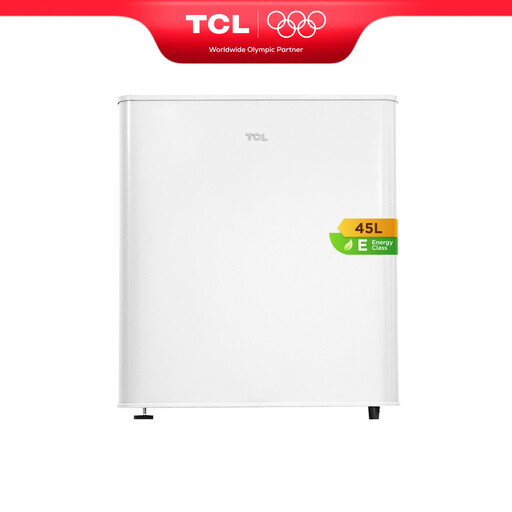 Image unavailable
This compact model is designed for keeping a small supply of food and drinks, provided the space and ventilation are suitable. The model name indicates a total capacity of 45 L, a toughened glass shelf, adjustable feet and an energy rating of E. If you plan to store frozen food, check the compartment’s rating and instructions for use. Also consult the manual to confirm the order of the dimensions and the required clearances.
Follow the clearances specified in the model’s manual. Whirlpool France gives 5 cm above and 10 cm behind a freestanding fridge as a guide; a built-in model must meet the requirements for its niche and ventilation.
Don’t assume it’s suitable for storing frozen food. If that’s how you’ll use it, look for a compartment specifically rated four stars and check its instructions. Beko lists this feature for the TSE1264FMGN.
Anses recommends keeping an eye on the temperature in the coldest part of the fridge, aiming for 4 °C, and not overfilling it so that air can circulate. The manual will help you find this area and adjust the appliance.
Check their energy labels and stated annual consumption in kWh/year, then take the capacity and type of installation into account. The ministry responsible for the environment states that fridges are among the appliances covered by the energy label scheme.
Contact the seller. According to the Ministry of the Economy, the legal guarantee of conformity applies to new, second-hand and refurbished goods sold by a business to an individual. Check with the seller what steps to take for the fault you’ve found.