Frequent fresh-food shopper
If you shop regularly and prefer fresh food, compare the fridge’s usable capacity rather than just its total capacity. Que Choisir highlights that storage needs vary according to shopping habits.


For a studio flat or a household of one or two, start by thinking about your habits. A fridge without a freezer compartment dedicates all its capacity to chilled food, while a model with a compartment or a fridge-freezer is a better fit if you regularly store frozen food. Que Choisir suggests allowing 100 to 150 L of usable capacity for one person, plus 50 L for each additional person, but how often you shop and how much frozen food you keep can change what you need. Before choosing, compare the capacity of each compartment, installation requirements and door clearance, then check the kWh/year and noise level for the exact model.
If you shop regularly and prefer fresh food, compare the fridge’s usable capacity rather than just its total capacity. Que Choisir highlights that storage needs vary according to shopping habits.
If you prepare meals to freeze or often buy frozen food, check whether a small freezer compartment will be enough or whether a fridge-freezer would suit you better. Bosch and Liebherr product information shows the different freezer configurations available.
If your appliance needs to fit under a worktop or in an alcove, installation, ventilation and door clearance matter just as much as its external dimensions. Candy and Bosch product information and installation advice distinguish between freestanding and built-in models.
| What matters to you | What to check before buying | Who prioritises it most |
|---|---|---|
| Capacity for fresh food | Compare the fridge’s usable capacity in litres, shelf layout and how often you shop. | If I shop often and mainly want to store fresh food, I check that the fridge compartment suits the food I buy. Consumers who prioritise fresh-food capacity are estimated to account for around 31%. |
| Freezer compartment | Check its capacity in litres and the specifications for the model; don’t assume you know its capacity just from the word “freezer”. | If I regularly store frozen food, I compare an internal freezer compartment with a separate one rather than assuming they offer the same amount of space. Consumers who prioritise frozen-food storage are estimated to account for around 31%. |
| Installation and space | Measure the width, height, depth and door clearance. Check whether the model is freestanding or built-in, then follow its installation instructions. | If my kitchen has an alcove or a narrow entrance, I need to know whether the appliance can be installed and opened properly. Consumers who prioritise whether a model fits their space are estimated to account for around 23%. |
| Energy use and noise | Compare the kWh/year, noise level in dB and compartment capacities listed for each exact model. | If the fridge is near my living or sleeping area, I consider its stated noise level and annual energy consumption, without confusing the latter with my electricity bill. Consumers who prioritise energy use and noise are estimated to account for around 15%. |
The space taken up by a freezer can reduce the room available for chilled food. Bosch lists the same external dimensions for two table-top fridges: the KTR15NWEB offers 134 L of fridge space with no freezer compartment, compared with 106 L for the KTL15NWEB, which has a freezer compartment.
Compare the usable capacity of the fridge and freezer separately, then consider how well they match your usual shopping.
Candy describes the CNLQ2S58EW as a freestanding under-worktop model and the CMLS59EW as a built-in under-worktop model. So the format name alone doesn’t tell you how the appliance should be installed or what ventilation it needs.
Check the installation type, alcove dimensions and instructions before fitting out the cabinet.
An internal freezer compartment and a separate freezer won’t necessarily suit the same storage habits. Que Choisir recommends choosing a capacity that matches your actual frozen-food needs.
Check the capacity and specifications of the exact compartment. If frozen food is a regular part of your shopping, compare fridge-freezers too.
A fridge runs continuously. ADEME points out that a larger model and unnecessary extra capacity can increase energy use, while the EU energy label includes details such as annual energy consumption and stated noise level.
Compare the kWh/year and decibels of specific models alongside their usable capacities. To estimate running costs, use the electricity tariff that applies to you.
The table-top models mentioned here let you compare a fridge dedicated to chilled food with one that has a freezer compartment.
Candy offers under-worktop models, but the installation method can vary depending on the model.
The CUele231-26 is an example of a compact fridge-freezer to consider if you want a separate freezer compartment.
This selection includes compact fridges, models with a freezer compartment and fridge-freezers, some of which are built-in. Compare how much space they offer for chilled and frozen food, as well as their installation requirements.
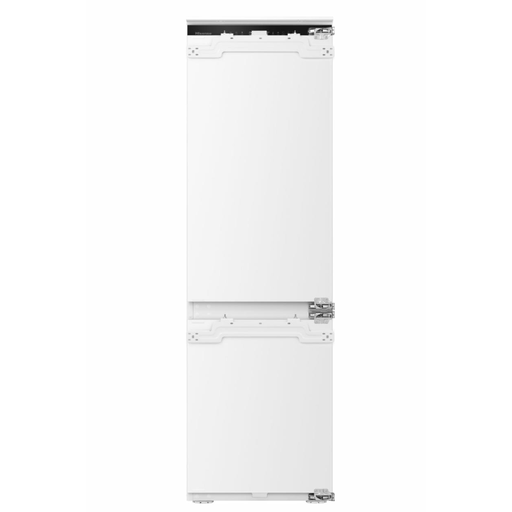 Image unavailable
Worth considering if you have a suitable alcove and want a built-in appliance with No Frost technology.
Listed total capacity: 252 L; energy rating C.
The alcove and the manufacturer’s ventilation instructions must be suitable for installation.
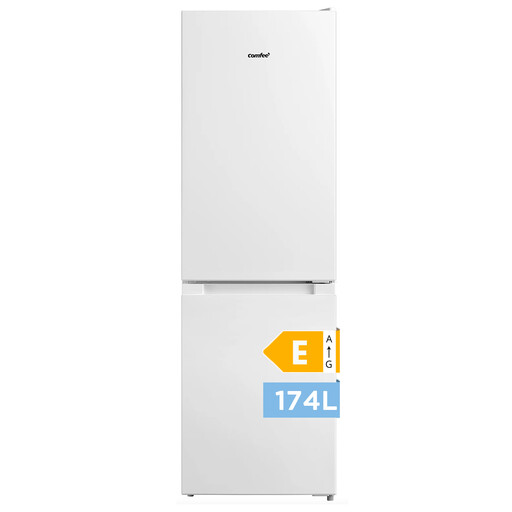 Image unavailable
Compare this model if you want a freestanding appliance with separate spaces for fresh and frozen food.
Listed capacities: 115 L for the fridge and 59 L for the freezer; stated noise level: 39 dB.
Low Frost technology reduces ice build-up, but doesn’t mean the appliance is frost-free.
 Image unavailable
Worth a look if you’re after a model described as compact and want a separate space for frozen food.
Listed capacities: 153 L for the fridge and 74 L for the freezer; stated width: 54 cm.
This model is listed as Low Frost, with 4-star freezer rating and a reversible door. Low Frost doesn’t remove the need to defrost.
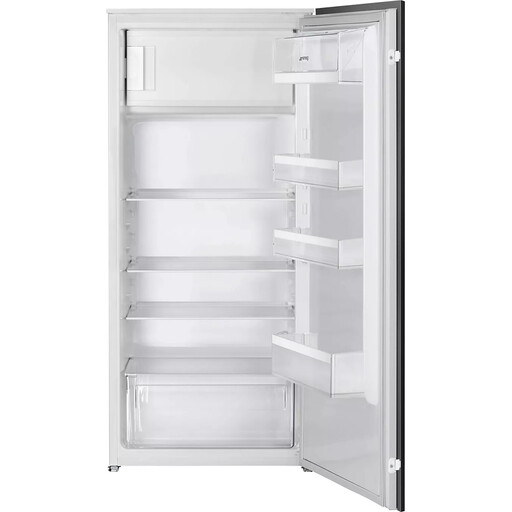 Image unavailable
Compare this model if you prioritise fridge capacity and have an alcove suitable for a built-in appliance.
Listed total capacity: 188 L; energy rating E.
The 14 L freezer compartment offers limited space if you regularly store large quantities of frozen food. Built-in installation requires a suitable alcove; the door panel is not included.
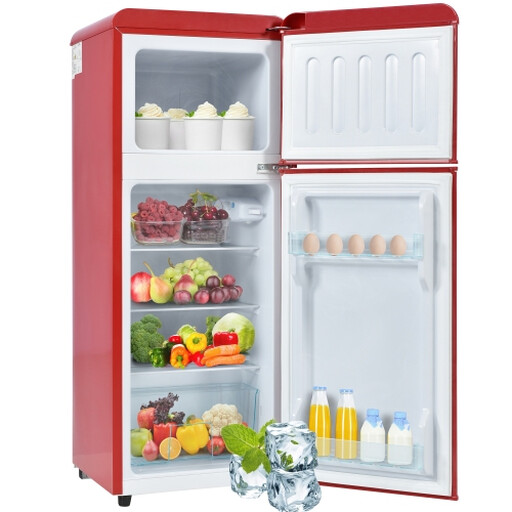 Image unavailable
Worth considering if you’re looking for a small freestanding appliance and its capacity suits your usual shopping.
Listed total capacity: 92 L, including a 28 L freezer compartment.
This is a small total capacity for a main fridge, particularly if you don’t shop often.
Que Choisir suggests a typical usable capacity of 100 to 150 L for one person, plus 50 L for each additional person. Use this as a starting point and adjust it to how often you shop. Remember to distinguish fridge capacity from freezer capacity; this isn’t a legal minimum.
No. Under-worktop models can be freestanding or built-in. Check the installation type, alcove dimensions, door clearance and ventilation requirements in the instructions for the model you choose.
Anses recommends keeping the temperature between 0 and +4 °C at the coldest point, checking it regularly and avoiding overfilling the appliance so that cold air can circulate. This food-safety advice isn’t a promise about any particular model.
The EU energy label includes standardised annual energy consumption in kWh, compartment capacities and stated noise level. The cost in euros then depends on the electricity tariff that applies to you.
When you buy from a professional seller, the legal guarantee of conformity applies to new, second-hand and refurbished goods. The Ministry of the Economy states that you have two years to claim under it. When a new appliance is sold, the DGCCRF highlights the free “one-for-one” take-back of an equivalent used appliance. Ask the retailer how to arrange this.