One person in a studio flat who shops frequently
If you buy fresh food regularly and keep few frozen items, a table-top or compact one-door model may be enough, as long as its usable capacity can genuinely hold your shopping between trips.


In a small kitchen, start by choosing a usable capacity that suits your shopping habits. Que Choisir’s general guide is 100 to 150 L for one person, plus 50 L for each additional person. A table-top or compact one-door model may be suitable if you shop for fresh food often and store few frozen items. If you regularly stock up on frozen food, compare the separate capacities of compact fridge-freezers instead. In every case, check the available space, delivery access and the model’s installation requirements.
How often you shop and how much frozen food you need to store are just as important as the space available.
If you buy fresh food regularly and keep few frozen items, a table-top or compact one-door model may be enough, as long as its usable capacity can genuinely hold your shopping between trips.
If you store prepared portions, regularly buy frozen food or shop less often, consider a compact fridge-freezer. Check the freezer’s net capacity separately from the fridge’s.
Before choosing a built-in or freestanding appliance, measure the space and the delivery route. Also check the model’s ventilation requirements and climate class; Electrolux’s pre-installation guide recommends flagging any difficult access.
Start by working out how much space you need for fresh and frozen food, then check that your chosen style will fit the practical constraints of your kitchen.
Consider it: if you live alone, shop frequently and keep few or no frozen items.
The trade-off: its limited capacity needs to be enough to see you through between shopping trips. Any small freezer compartment won’t replace a proper freezer if you regularly buy frozen food.
Consider it: if most of your shopping is fresh and you only freeze food occasionally.
The trade-off: according to Que Choisir, a small freezer compartment may not be enough if you eat a lot of frozen food.
Consider it: if you regularly buy frozen food or prepare portions to store.
The trade-off: check that both compartments offer enough space without exceeding the available space and clearance requirements.
| Consideration | What to check | Your needs |
|---|---|---|
| Fresh food capacity | Compare the fridge’s usable capacity, shelf layout and how often you shop. Que Choisir’s general guide is 100 to 150 L for one person, plus 50 L for each additional person. | I want to store my fresh shopping until my next trip without choosing a capacity just because it fits in my kitchen. |
| Freezing | Check the type of freezer compartment and compare its net capacity separately from the fresh food capacity. Que Choisir says that a small freezer compartment may not be enough if you eat a lot of frozen food. | I regularly buy frozen food, so I need enough space for the amount I usually keep in stock. |
| Space and delivery | Measure the space, door opening direction and route into the kitchen. For a built-in model, check the cabinet opening, door and ventilation requirements against the model’s instructions. | My fridge needs to fit into my home and open once installed, not just fit in the space in my kitchen. |
| Installation requirements | Check the instructions for ventilation clearances, proximity to heat sources and the model’s climate class. The required clearances vary between appliances. | If the appliance is in a cabinet opening or near a cooking area, I need to make sure the location meets its installation requirements. |
| Everyday use | Check the interior layout and stated noise level, especially if you live in a studio flat. To compare energy use, look at labels for appliances of a similar type and capacity. | In a room where I live and cook, storage and noise matter just as much as the appliance’s external dimensions. |
An appliance may fit in the space without offering enough usable capacity for your shopping, or the clearance required in its instructions.
Measure the space and access route, then compare the compartment capacities and installation requirements for the exact model.
Que Choisir points out that a small freezer compartment may not be enough if you eat a lot of frozen food.
Think about how much frozen food you usually buy and, if needed, compare the net freezer capacity of a fridge-freezer rather than looking only at its total capacity.
Electrolux advises leaving space for air to circulate around a fridge-freezer and following the model’s installation requirements.
Check the instructions for the required clearances and climate class, and make sure the appliance is not too close to a heat source.
The stated capacity doesn’t tell you what temperature the fridge will actually reach once installed. Anses recommends keeping food between 0 °C and +4 °C at the coldest point.
Check the temperature after setting up the appliance, and avoid overfilling the compartments so that cold air can circulate.
These models illustrate some options for a small kitchen: fridge-freezers that separate fresh and frozen food, a built-in model to consider if it suits your cabinet opening, and a one-door model for a diet based mainly on fresh food. Compare their dimensions and installation requirements before choosing a style.
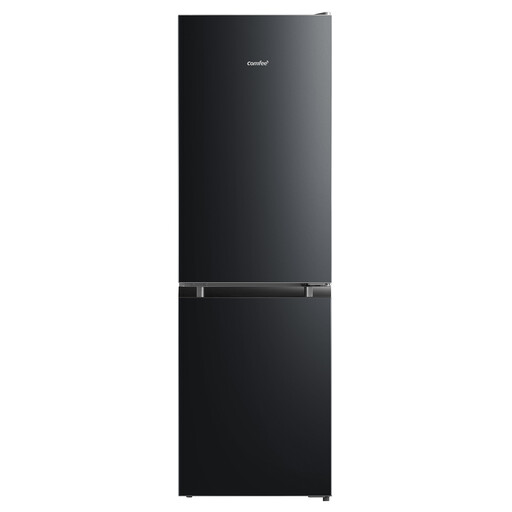 Image unavailable
This fridge-freezer gives you separate storage for fresh and frozen food. The product listing mentions Low Frost technology and a reversible door. Check the capacity of each compartment, dimensions, climate class and ventilation clearances before choosing where to put it.
 Image unavailable
For shopping that includes fresh and frozen food, the product listing specifies 153 L for the fridge and 74 L for the freezer. It also states a width of 54 cm and a reversible door. Check the height, depth and installation requirements before deciding that it will fit in your chosen space.
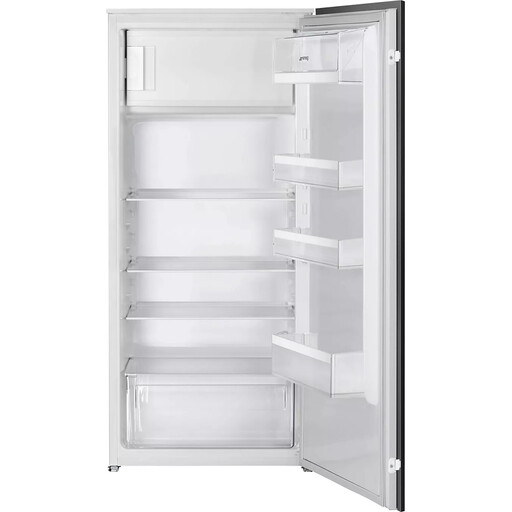 Image unavailable
This built-in model could suit a kitchen where the cabinetry dictates the appliance size. Check the cabinet opening dimensions, door system and ventilation requirements; the furniture door is not included. As its freezer compartment is limited for storing a large stock, compare its capacity with the amount of frozen food you usually buy.
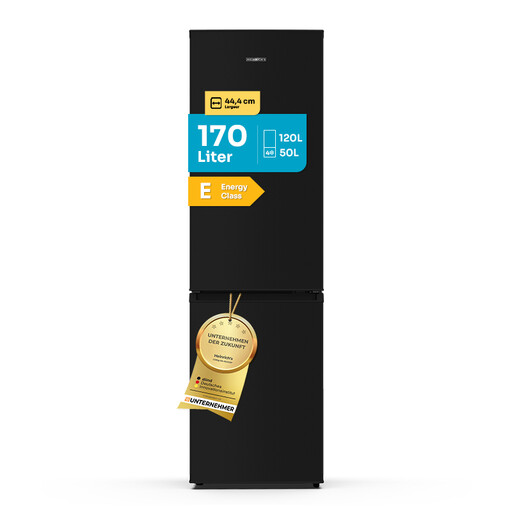 Image unavailable
The product listing gives separate capacities of 120 L for the fridge and 50 L for the freezer compartment, making them easy to compare. It also states a noise level of 40 dB. For a small kitchen, measure the external dimensions and check the model’s ventilation requirements and climate class.
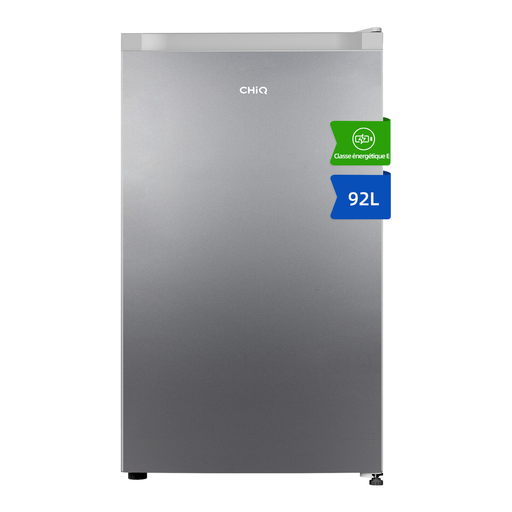 Image unavailable
This size is better suited to frequent fresh food shopping and storing few frozen items. Its stated capacity of 92 L is below Que Choisir’s general guide of 100 to 150 L for one person, so compare it with your usual shopping. Also check the freezer compartment’s capacity and temperature, then confirm the full dimensions and required clearances.
Que Choisir’s general guide is 100 to 150 L of usable capacity for one person, plus 50 L for each additional person. Adjust this according to how often you shop and how much you buy. If you buy frozen food, check the freezer capacity separately.
It may be suitable for occasional use, but Que Choisir says that a small freezer compartment may not be enough if you eat a lot of frozen food. If you regularly keep a stock, compare the net capacity of a proper freezer compartment with the amount you usually buy.
Measure the final space and the entire route to the kitchen, including doors, corridors, stairs, lifts and corners. Electrolux’s pre-installation guide recommends flagging any difficult access and clearing the route. For a built-in model, also check the cabinet opening and the model’s installation requirements.
No. Make sure air can circulate, but follow the clearances specified in the instructions for your chosen fridge. Also check its climate class and avoid placing it near a heat source, in line with the manufacturer’s guidance.
Anses recommends keeping food between 0 °C and +4 °C at the coldest point in the fridge. Check the temperature after setting up the appliance and regularly afterwards. Avoid overfilling it so that cold air can circulate.