If you regularly freeze portions in a small kitchen, an under-counter upright model with drawers can make food easier to organise, provided it fits in the space available with the door open and the recommended clearances in place. A cube freezer is suitable for more limited extra storage, while a small chest freezer needs enough room for its lid to open freely. If you live in a studio, compare the stated noise levels too, but don’t treat them as a guarantee of quiet operation.
Which size suits you?
Living in a studio with an open-plan kitchen
You want some extra freezer space without taking over your living area. Measure the space and check the noise level for the exact model: UFC-Que Choisir points out that a figure on the energy label alone isn’t enough to predict how noticeable an appliance will be.
Cooking in a small flat
If you often freeze meals in portions, usable capacity and easy access to food matter just as much as the appliance’s footprint. Drawers can help you keep different foods separate, as long as the door opens far enough to use them.
With a utility room or pantry
You could consider a small chest freezer outside the kitchen for limited extra storage, provided there’s enough room for its depth, access and lid to open freely.
Which features should you compare?
Cube freezer
Consider it: for a few frozen items, when saving space matters more than capacity.
Bear in mind: it offers limited capacity for pre-prepared portions or bulk buys.
Under-counter upright freezer
Consider it: for regularly storing portions in a space suited to a front-opening appliance.
Bear in mind: a few extra centimetres or a door that opens the wrong way could stop it fitting under the worktop.
Small upright freezer
Consider it: if you have enough height and prefer to access food from the front.
Bear in mind: its height, depth and door opening need to work with your kitchen layout.
Small chest freezer
Consider it: in a pantry or utility room where opening the lid won’t get in the way.
Bear in mind: finding a portion at the bottom can be less convenient than opening a drawer.
| Feature |
What to check |
Who it matters to |
| Fitting and positioning |
Measure the width, height and depth, then check the door opening and ventilation clearances specified in the manual for the model. |
In a narrow kitchen, I want to open the appliance without blocking the way or compromising its installation. Around 42% of consumers put this physical fit at the heart of their choice. |
| Capacity and access |
Compare the stated capacity with the amounts you usually freeze, then see whether drawers or a basket make food easier to reach. |
If I often freeze meals in portions, I want to find what I’ve prepared easily without taking up too much space. For around 33% of consumers, organisation and usable capacity come first. |
| Noise |
Compare the stated levels in dB(A) and look for reviews of the exact model. Also check that the floor provides a stable base. |
In a studio, I share my living space with the appliance and want to limit any noise that might bother me. Noise is the main concern for around 25% of consumers. |
Mistakes to avoid
-
Checking the width and nothing else
An appliance might fit in an alcove but still not have enough room for the door to open or for the recommended airflow. Depth matters too in a narrow walkway.
Measure the space and the delivery route, then compare these measurements with the dimensions and installation instructions for your chosen model.
-
Putting a chest freezer somewhere you need to reach for food often
The lid needs space above it, and finding small portions in a chest freezer can be less convenient for everyday use.
If easy access is a priority in the kitchen, consider a front-opening model instead. Keep a chest freezer for a more suitable spot, such as a pantry.
-
Assuming dB(A) means silent operation
According to UFC-Que Choisir, the noise level shown on the label alone can’t tell you whether a refrigeration appliance will be disruptive in a living space.
Use the figure to compare models, look for reviews of the exact model number and make sure the appliance sits level on a stable floor.
Small-freezer brands to know
Frigelux
E.Leclerc lists the Frigelux CTT91BE under-counter upright freezer, with a capacity of 88 L. It’s one option to consider if you’re looking for a front-opening model.
- The stated capacity helps you compare this model with the amount of food you need to freeze.
- Check the dimensions, noise level and door opening direction for the exact model before deciding where to put it.
Beko
BUT lists the Beko FSE1174N under-counter upright freezer, with a capacity of 95 L. Documentation for a different Beko model describes drawers and adjustable front feet.
- An under-counter upright model could be a good choice if you want to organise food and access it from the front.
- Features can vary between Beko models, so check the specifications and dimensions of the one you choose.
Haier
BUT lists the Haier CNUQ2L58EW under-counter upright freezer with a stated capacity of 90 L and a stated noise level of 37 dB(A).
- The stated noise level gives you a figure to compare with similar models.
- This figure doesn’t guarantee that the freezer won’t be disruptive in a studio, and it doesn’t apply to other Haier models.
Freezers to consider on Joybuy
These models include front-opening options for extra freezer space as well as small chest freezers. For a compact kitchen, start with the space available and how often you’ll need to access the contents. Consider a chest freezer where opening the lid from above is practical.
 Image unavailable
COMFEE' RCU60WH2(E), 60 L upright freezer with 3 drawers
Worth considering for storing portions in a small kitchen, if it fits your space. It has a reversible door and a stated temperature control setting. Check the ventilation clearance and noise level for the location you have in mind.
View on Joybuy
 Image unavailable
AUCMA, 95 L convertible chest freezer
Consider it for a pantry or utility room where the lid can open freely. This model is described as switchable between refrigeration and freezing, and comes with a removable basket, a seven-setting thermostat and a defrost drain. Check how much space you’ll need around the appliance.
View on Joybuy
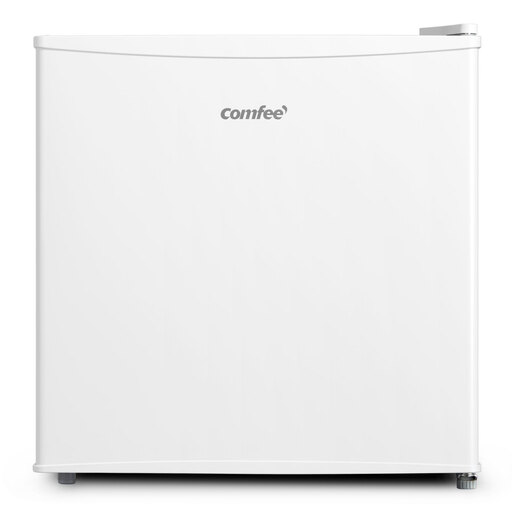 Image unavailable
COMFEE' RCU40WH2(E), 31 L mini freezer
Worth considering for a very small amount of extra freezer space, rather than for lots of pre-prepared portions. It has a reversible door hinge and adjustable feet, and its stated annual energy consumption is 147 kWh. Check the dimensions and noise level for the room you plan to use it in.
View on Joybuy
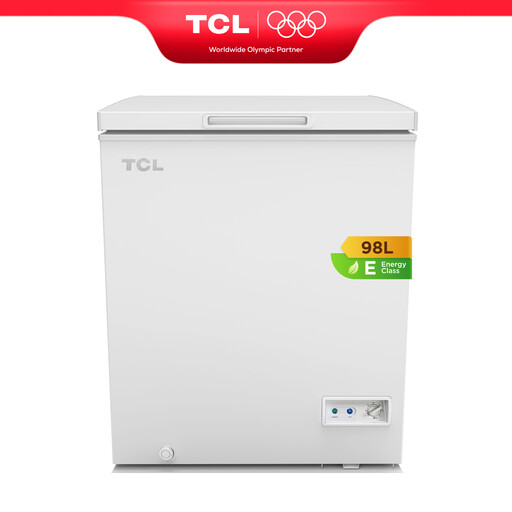 Image unavailable
TCL CF126EWE0FR, 98 L chest freezer
Consider it for limited storage in a separate room rather than somewhere you’ll need to check the contents often in the kitchen. It comes with a storage basket and a counterbalanced lid. Measure the space needed to open the lid.
View on Joybuy
 Image unavailable
TCL CF182EWE0FR, 140 L chest freezer
Best suited to a separate room if you need to freeze enough food to justify 140 L; this could be more capacity than you need for a small top-up. The model comes with a basket and a counterbalanced lid. Check the location, clearances and room needed to open the lid.
View on Joybuy
Frequently asked questions
Will an under-counter upright freezer fit beneath any worktop?
No. Height alone isn’t enough to check. Measure all three dimensions, check the model’s recommended ventilation clearances and allow enough room to open the door. E.Leclerc notes that even a few centimetres can prevent an appliance from fitting under a worktop.
Should you check which way the door opens?
Yes, especially if it’s near a wall or in a galley kitchen. The door needs to leave the walkway clear and allow you to pull out the drawers. Check the product details or manual to see whether the hinge on your chosen model is reversible.
Is a low dB(A) rating enough to choose a freezer for a studio?
No. The stated level is useful for comparing models, but it can’t predict on its own how noticeable the noise will be in a living space. UFC-Que Choisir highlights this limitation for refrigeration appliances. Look for reviews of the exact model too, and make sure it’s installed on a stable, level surface.
How can you compare the energy use of two small freezers?
Compare the annual energy consumption shown on their energy labels, taking the appliances’ capacity and format into account. A lower figure on its own doesn’t tell you whether the freezer will have enough space for your storage needs.


