
Livraison le jour même ou le lendemain

Qualité garantie

Débloquez vos offres de bienvenue: Livraison GRATUITE | Jusqu'à -80 % | 30 jours d'essai gratuits à JoyPlus
Téléchargez l'application
Whether you live in a studio, an apartment, or are simply looking for a supplement to your refrigerator, a lack of space for freezing food is a major challenge. Stocking up on homemade meals, taking advantage of deals on frozen goods, or preserving vegetables from your garden... all of this can quickly become mission impossible. A small freezer is the ideal solution to gain flexibility without having to redesign your entire kitchen.
At Joybuy, our mission is to help you navigate the multitude of available models. This guide focuses on the criteria that truly matter: footprint, noise level, energy consumption, and everyday convenience.
Before you start, take a moment to define your needs. Here are the key points to check to ensure you make the right choice.
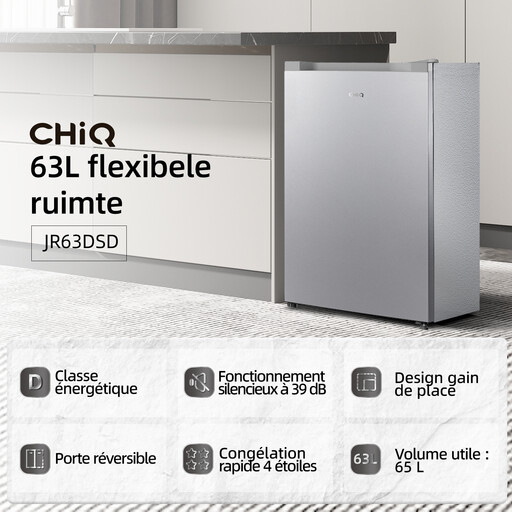
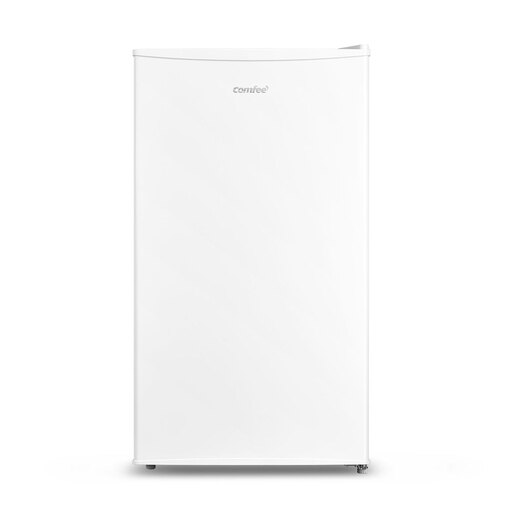
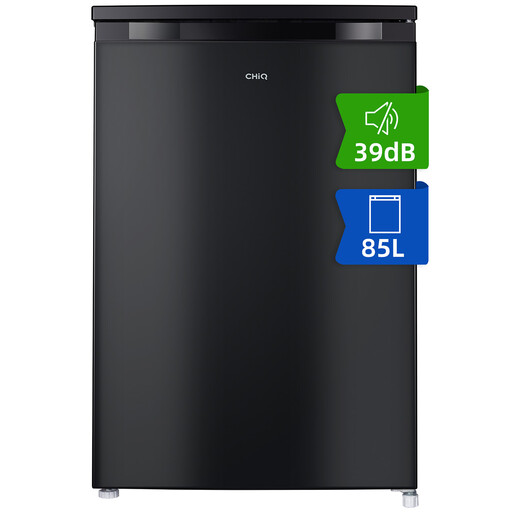
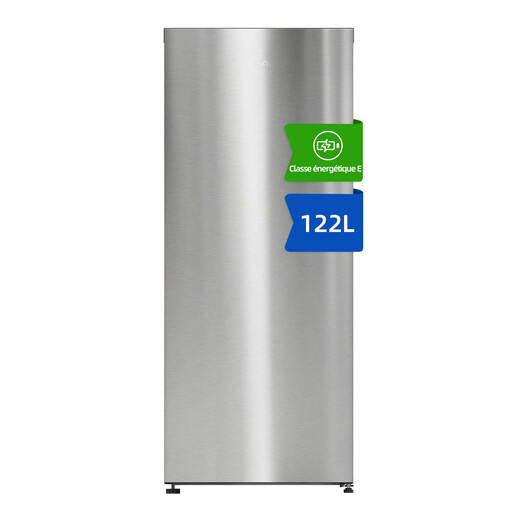
First things first: take out your tape measure and measure the available space. A slimline freezer (often less than 50 cm wide) can slip into a nook or under a countertop. Capacity, measured in litres (L), is just as crucial. For a single person or a couple, a supplementary freezer of 60 to 85 litres is more than enough. For a small family, a model over 100 litres will be more suitable. Also, consider the interior layout: an upright freezer with transparent drawers allows you to see everything and easily access your food, unlike a chest freezer where items tend to pile up at the bottom.
If the freezer is intended for an open-plan kitchen or a studio, noise becomes a primary concern. A freezer is considered silent if it's below 40 decibels (dB), equivalent to a library. Models around 38-39 dB are virtually unnoticeable.
When it comes to consumption, the European energy label (from A to G) is your best friend. A well-rated appliance (for example, D or E on the new scale) will lower your electricity bill in the long run.
The reversible door is a simple feature, but it can be a real lifesaver. It allows you to choose the opening direction (left or right) to perfectly fit your room's layout.
Finally, there are two main types of cooling:
Now for our top picks! Here are models that shine for their size-to-performance ratio and perfectly meet the needs of users looking for a compact and efficient freezer.
Our selection highlights compact and high-performing models, but perhaps your needs are different. If you're looking for more volume or specific features, feel free to explore our full catalogue.
? Discover our full range of upright freezers to find the perfect model for you.
It all depends on your household size and how you use it. For a single person or a couple using it as a supplementary unit, 30 to 60 litres is plenty. For a small family or for storing larger quantities of food, a capacity of 80 to 120 litres will be more suitable.
An appliance is considered silent under 40 dB. The models in our selection, between 38 and 39 dB, are particularly discreet and fit seamlessly into a living space.
Manual defrost (static cooling) is the standard for entry-level models, which are more compact and economical. It's an effective solution but requires a bit of elbow grease. No-Frost technology prevents frost build-up and offers unparalleled user comfort. It's the hassle-free choice, and worth prioritising if your budget allows.