People with a narrow alcove
Whether it’s in a kitchen, bathroom or recess, width alone won’t tell you if a washing machine will fit. You’ll also need to consider its depth and allow room to open the door or lid.


First, choose a format that fits the space while leaving enough room to open it: a top-loading machine suits a narrow space, while a front-loader needs clearance in front of the door. If drying clothes is also a challenge, a washer-dryer saves you having to fit a second appliance, but its drying capacity is lower than its washing capacity, according to UFC-Que Choisir. Then compare the capacity your household needs, spin noise and the information on the energy label.
Whether it’s in a kitchen, bathroom or recess, width alone won’t tell you if a washing machine will fit. You’ll also need to consider its depth and allow room to open the door or lid.
If the machine is near a living space or your neighbours, it’s worth comparing the noise figures before you buy. In its survey of washing machine owners, UFC-Que Choisir found that opinions on spin noise were more mixed.
If there’s no room for a well-ventilated airer or a separate tumble dryer, a washer-dryer could be an option. However, you’ll need to allow for a smaller drying load than washing load, as UFC-Que Choisir points out.
Consider it: when width is limited, provided you can open the lid freely.
Bear in mind: the top-loading design means you can’t stack a tumble dryer on the machine.
Consider it: if the available width and space in front of the door allow you to install it.
Bear in mind: even a shallower model still needs clearance in front of the door.
Consider it: if you need to dry clothes and can’t install a second appliance.
Bear in mind: according to UFC-Que Choisir, its drying capacity is lower than its washing capacity.
| Factor | What to check | Who is it for? |
|---|---|---|
| Size and opening clearance | Measure the width, depth and height, as well as access routes. Allow clearance for the door or lid to open. UFC-Que Choisir says top-loading machines are generally 40 to 46 cm wide. | In a narrow alcove, I want to be able to install the machine and open it without blocking the way. Around 33% of consumers facing this constraint would put it first. |
| Spin noise | Compare the decibel level and spin-noise rating on the energy label. Also check the instructions for levelling the machine. | If it’s near neighbours or a living space, I want to keep disruption to a minimum during the spin cycle. This would be the top priority for around 27% of consumers facing this constraint. |
| Washing capacity | Compare the capacity in kg with your household’s laundry load, then check water use per cycle and energy use per 100 cycles on the label. ADEME recommends matching the drum size to your actual needs. | If my usual loads don’t make good use of a large drum, or a small drum means running several cycles, capacity becomes my main consideration. Around 27% of consumers facing this constraint would prioritise it. |
| Room for drying | For a washer-dryer, compare the washing and drying capacities separately, as well as the figures for the combined cycle. | If there’s no room for a second appliance or a convenient place to hang laundry, I’m looking for a drying solution first. This would be the top priority for around 13% of consumers facing this constraint. |
A shallower front-loader still needs space in front of its door, while a narrow top-loader needs room for its lid to open. Make sure the appliance will also fit through the doors and access routes on the way to its final position.
Measure the available width, depth and height, then compare them with the machine’s dimensions. Don’t forget to allow enough clearance to open it.
According to UFC-Que Choisir, a washer-dryer can dry a smaller load than it can wash. This means you may need to split a full wash load before drying it.
Check both capacities against your usual loads and look at the figures for the wash-and-dry cycle.
Drying can also increase the time the machine is in use.
A drum that’s too small can mean more frequent washes, while a large capacity that’s regularly underused may not suit your actual needs. ADEME says a 7 kg washing machine is enough most of the time, but that won’t be right for every household.
Think about your laundry load, bulky items and how often you wash before deciding on the capacity you need.
Connecting an appliance to existing fittings isn’t the same as creating or altering them. In France, ANIL says that changes to a rented property or its fittings require the landlord’s written permission.
Check the available water supply, waste outlet and electrical connection. If the installation requires alterations, get permission before starting work.
These models showcase the three formats covered: front-loading, top-loading and washer-dryers. Start with the space you have and your drying needs, then compare the features of the model you choose.
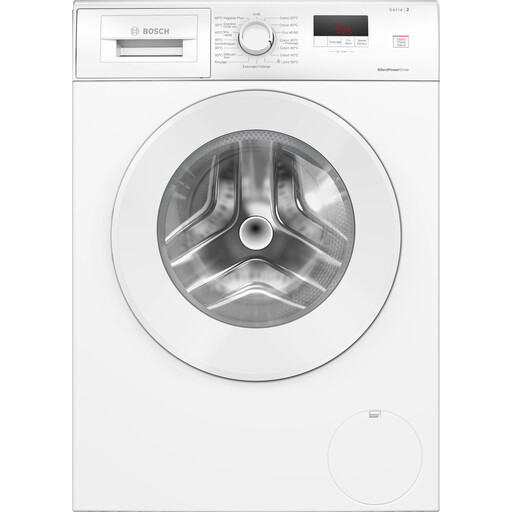 Image unavailable
Worth considering if you can fit a front-loader and a 7 kg capacity suits your laundry needs. The product title lists a spin speed of 1,400 rpm and an energy rating of A. Check the clearance in front of the door and the connections available at the installation site.
 Image unavailable
Worth considering if a top-opening machine is a better fit for your space. The product title lists a spin speed of 1,200 rpm and an energy rating of A. Also measure the depth and leave enough room above the lid. If noise is a particular concern, compare the spin figures on the energy label.
 Image unavailable
Worth considering if you need a dryer but can’t fit a second appliance. The listed capacity is 11 kg for washing and 6 kg for drying, so you won’t be able to dry a full wash load in one go. Compare the figures for the wash-and-dry cycle and check that there’s enough space in front of the door.
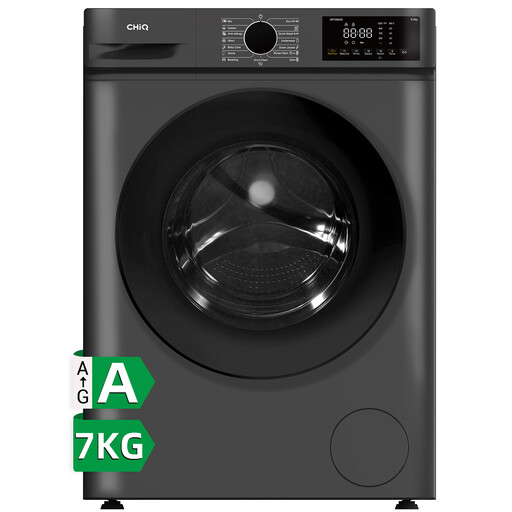 Image unavailable
Worth considering if you’re looking for a 7 kg front-loader for a space with limited depth. The product title lists a spin speed of 1,200 rpm, an energy rating of A and 16 programmes. Check the full dimensions, door clearance and noise figures on the energy label before comparing it with other models.
Measure the available width, depth and height, as well as the space needed to open the machine and get it into your home. UFC-Que Choisir puts the width of a top-loader at around 40 to 46 cm. A front-loader needs space in front of its door, even when it has a reduced depth.
It lets you compare the declared spin noise, but it can’t predict on its own how loud the machine will seem in your building. Also check the noise rating on the energy label and make sure the machine can be levelled correctly.
If installation means altering the property or its fittings, ask your landlord for written permission. This is the requirement ANIL highlights for rented homes in France. First check the existing connections and explain the proposed work before ordering the appliance.
A washer-dryer can be a good option if you don’t have enough room to hang laundry or install a second appliance, as long as its drying capacity suits your usual loads. According to UFC-Que Choisir, drying capacity is lower than washing capacity. If you prefer to dry clothes indoors, ADEME recommends using a well-ventilated, spacious room.
Compare the capacity, energy use per 100 cycles, water use per cycle and spin-noise figures, making sure you use the same reference cycle. ADEME recommends choosing a capacity that matches the laundry you actually wash, rather than simply opting for a larger drum.