If you can still air-dry your laundry, start by comparing the spin-drying efficiency of washing machines: you may not need a second appliance taking up floor space. For regular machine drying, a separate tumble dryer requires suitable space and installation; a washer-dryer takes up just one spot, but its drying capacity may be lower than its washing capacity. In either case, check the manual and the figures for the cycle you’ll actually use.
Who are these options for?
Just one spot on the floor
If you don’t have room for two appliances side by side, compare a washer-dryer with a washing machine that spins well enough for indoor air-drying. Your choice will mainly depend on how much space you have left to dry your laundry.
Regular machine drying
If you can set aside space for a second appliance, or install a compatible stacked set-up, a separate tumble dryer is worth considering. Check the clearances, ventilation and maintenance requirements in the manual for your chosen model.
Keeping your indoor airer
If you’re not planning to buy a drying appliance, spin-drying becomes an important consideration. ADEME recommends choosing an A-rated spin-drying efficiency class when laundry needs to dry quickly indoors; also compare the washing machine’s noise levels and energy and water consumption.
What should you compare before choosing?
First decide whether you can air-dry your laundry, then measure the available space and compare capacities and the cycle data relevant to how you’ll use the appliance.
Washing machine and airer
Worth considering if: you can still air-dry your laundry and only want to use one spot on the floor for washing.
Bear in mind: even after spinning, your laundry will need to finish drying in the space available.
Separate tumble dryer
Worth considering if: you regularly machine-dry your laundry and can install a second appliance as specified in its manual.
Bear in mind: you’ll need space for the appliance and room to use it; stacking requires a kit that’s compatible with both models.
Washer-dryer
Worth considering if: you want to wash and machine-dry your laundry with just one appliance on the floor.
Bear in mind: check the permitted drying load: according to their manufacturers’ specifications, the Bosch WNG24402FR and LG F964V72WRHT can each wash 9 kg but dry 6 kg.
| Priority |
What to check |
How it fits my needs |
| Spin-drying and drying |
For indoor air-drying, compare the spin-drying efficiency class, not just the stated spin speed. If you choose a washer-dryer, check its drying capacity in kg. |
I can air-dry my laundry, but I want it to be well spun before it goes on the airer. If air-drying isn’t enough for my needs, I’ll look at machine drying instead. |
| Space and installation |
Measure the height, width and depth, as well as the space needed to open the door. For a stacked set-up, check that the kit is compatible and confirm the clearances in the manuals. |
The appliance needs to fit in my space without blocking the door or access needed to use it. |
| Cycle used |
For a washer-dryer, the European label lists washing and washing-and-drying figures separately. For the relevant cycle, compare energy per 100 cycles, water per cycle and cycle duration. |
If I plan to run a wash-and-dry cycle, the washing-only figures won’t describe the cycle I’ll be using. |
| Everyday use |
Check the ventilation and clearances specified for the model. Consult its manual for filter maintenance and how condensation water is handled, depending on the appliance. |
I want to be able to use and maintain the appliance in the room I’ve chosen without blocking its ventilation openings. |
What buying pitfalls should you avoid?
-
Looking only at washing capacity
The permitted washing load may be larger than the permitted drying load. The specifications for the Bosch WNG24402FR and LG F964V72WRHT each list a 9 kg washing capacity and a 6 kg drying capacity.
If you want to run both stages one after the other, size your load according to the model’s drying capacity, or plan to take some of the laundry out before drying.
-
Comparing different cycles
For a washer-dryer, the figures for washing alone don’t describe those for a wash-and-dry cycle. The European Commission’s energy label lists these uses separately.
Compare the energy, water and duration figures for the complete cycle if that’s how you plan to use the appliance. If you’ll use a washing machine followed by an airer, look at the washing figures.
-
Measuring only with the door closed
The door opening, walkways and clearance requirements can all affect installation. The manual for the Bosch WQG24502FR tumble dryer, for example, says to keep its ventilation opening clear and ensure the room is adequately ventilated.
Measure the space with the appliance ready to use. Before stacking, also check the manufacturer’s documentation to make sure the kit is suitable for both models.
Stacking may require a separate stacking kit.
Which brands are worth considering?
Bosch
The Bosch models mentioned here let you look at a washer-dryer and the installation requirements for a separate tumble dryer.
- Bosch’s specifications for the WNG24402FR list a 9 kg washing capacity and a 6 kg drying capacity, so check both figures separately.
- The WQG24502FR manual says to keep the ventilation opening clear and ensure the room is adequately ventilated. Follow the manual’s requirements for the model you’re considering.
LG
The LG F964V72WRHT washer-dryer is an example of a combined appliance for when floor space is limited.
- LG France lists a 9 kg washing capacity, a 6 kg drying capacity and dimensions of 60 × 85 × 56.5 cm for this model.
- These dimensions alone don’t tell you whether it will fit your set-up: also check the door opening and the specified clearances.
Miele
The Miele TEA525WP is an example of a separate heat-pump tumble dryer, rather than a combined washing and drying appliance.
- Miele France lists a drying capacity of 8 kg for this model.
- Before choosing this model for a small home, compare its dimensions and the installation and maintenance requirements in its manual with the space you have.
Which appliances should you look at on Joybuy?
These options cover the three choices considered: a washer-dryer for one spot, a washing machine to use with an indoor airer, and separate tumble dryers if you can install a second appliance.
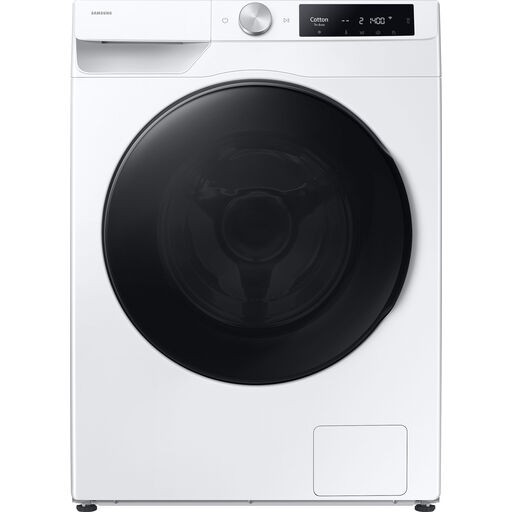 Image unavailable
Samsung WD11DG6B85BEU3, 11/6 kg washer-dryer
Wash and dry with a single appliance on the floor. The stated capacity is 11 kg for washing and 6 kg for drying, so adjust the load if you’re running both stages one after the other. Check the clearances and the wash-and-dry cycle figures for your needs.
View on Joybuy
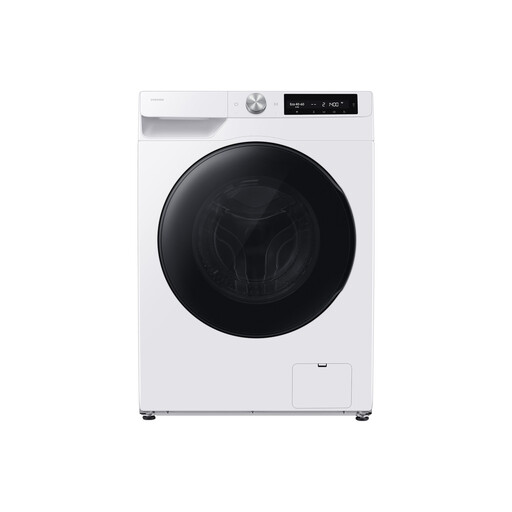 Image unavailable
Samsung WD10HG6U34BEU3, 10/6 kg washer-dryer
Another all-in-one option, with a stated capacity of 10 kg for washing and 6 kg for drying. A full washing load therefore exceeds the drying capacity; check the wash-and-dry cycle label and measure the space needed to open the door.
View on Joybuy
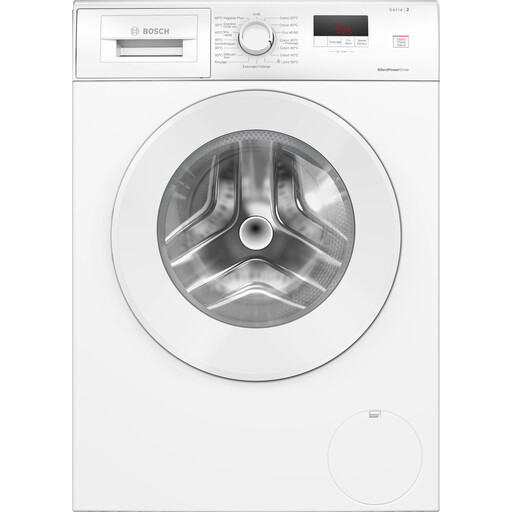 Image unavailable
Bosch WGE02407FR, 7 kg washing machine, 1,400 rpm
Worth considering if you’re keeping an indoor airer rather than adding a drying appliance. This 7 kg washing machine has a stated spin speed of 1,400 rpm; also compare its spin-drying efficiency class. It doesn’t machine-dry laundry.
View on Joybuy
 Image unavailable
Hotpoint CHD84MWBSEE, 8 kg heat-pump tumble dryer
An 8 kg separate drying option if you have room for a second appliance. Check its dimensions, required clearances and maintenance instructions before planning where to install it.
View on Joybuy
 Image unavailable
Comfee CD08EHP05W-HR, 8 kg heat-pump tumble dryer
This separate tumble dryer has a stated capacity of 8 kg. If you’re thinking of installing it in a small flat, measure the space and check the manual for the model’s clearance, ventilation and maintenance requirements.
View on Joybuy
Frequently asked questions
Which part of the label should I compare for a washer-dryer?
If you use the complete cycle, compare the ‘wash and dry’ figures. The European Commission lists washing and wash-and-dry cycle information separately, including energy per 100 cycles, water per cycle and duration. The washing-only figures don’t describe your full use of the appliance.
Does a separate tumble dryer need an external vent?
Don’t assume what connection is needed based on the general category ‘tumble dryer’ alone: check the manual for your model and how it handles condensation water. The Bosch WQG24502FR manual also says not to block the ventilation opening and to ensure the room is adequately ventilated.
Can you install a tumble dryer on top of a washing machine?
Yes, provided the manufacturer confirms that both models and the stacking kit are compatible, and you follow their installation instructions. The LG guide specifies around 10 cm behind the appliances for the configuration it describes; this doesn’t replace the instructions for your own set-up.
What maintenance does a heat-pump tumble dryer need?
Check the model’s manual for instructions on cleaning the lint filter and handling condensation water, including the tank or a connection if one is provided. Make sure you can access the appliance to carry out these tasks where you plan to install it.


