No fixed water supply
If your kitchenette doesn’t have a permanent water connection, consider models with a tank. Also check how the waste water will drain away: filling the machine by hand doesn’t remove the need for drainage.


In a small kitchen, first check which connections are available and how much space you have, then consider how many dishes build up between washes. A mini model with a water tank can work when there’s no fixed water supply, while a worktop or 45 cm appliance suits different loads. Consider a 60 cm model only if you have the space and enough washing up to justify it. Compare the Eco programme consumption figures for the specific models you’re considering; don’t assume how much they’ll use based on size alone.
If your kitchenette doesn’t have a permanent water connection, consider models with a tank. Also check how the waste water will drain away: filling the machine by hand doesn’t remove the need for drainage.
A worktop dishwasher could suit a kitchen used by one or two people. Measure the available depth, allow for the door to open and check access to the connections before choosing this size.
If mini loads aren’t enough and you have around 45 cm of width, along with the necessary connections, check the capacity and basket layout of a slimline model.
Check that installation is possible before choosing a capacity, then compare the consumption figures for models that will actually fit in your home.
| Criteria | What to check | What matters to different households |
|---|---|---|
| Connections | Water supply, drainage and power connection specified in the model’s instructions. | There’s no fixed water supply in my kitchenette, so I need to be able to fill the machine and arrange for it to drain. Around 36% of consumers would prioritise this installation option. |
| Space available | Height, width, depth and clearance in front of the door; the worktop space it takes up or the dimensions of the housing recess. | I want to keep enough space for food preparation and access to the sink. Around 29% of consumers would put this space constraint first. |
| Capacity without going up to 60 cm | Place settings, room for your utensils and basket layout in a 45 cm model. | As a couple, we fill a mini appliance too quickly, but we can’t spare 60 cm of width. Around 21% of consumers would prioritise this mid-size capacity. |
| Load size and consumption | Capacity you’ll actually use, kWh per 100 Eco cycles and litres per Eco cycle for each model. | We have room for a 60 cm model and enough washing up to fill it without having to wait too long. For around 14% of consumers, this capacity would be the priority. |
According to the European Commission, a dishwasher’s energy label includes details such as energy use per 100 Eco programme cycles, water use per cycle, capacity and noise. These figures help you compare specific models, but they don’t tell you how often your household will run a cycle.
A slimline model also needs enough depth and height, while a worktop appliance takes up food preparation space. For the built-in Whirlpool WSIO3T223PEX, Whirlpool lists a width of 44,8 cm, a height of 82 cm and a depth of 55,5 cm.
Measure the entire space, allow for the door to open and check the route for the hoses before choosing a model.
A smaller size alone doesn’t tell you how many cycles you’ll run or how much each cycle will use. The figures on the energy label apply to the Eco programme for that particular model.
Compare kWh per 100 Eco cycles, litres per cycle and capacity, then work out how often you’ll need to wash your dishes.
Filling a tank doesn’t take care of drainage or the power supply. Fnac’s L’Éclaireur describes filling the Daan Tech Bob by hand, while the instructions linked to a Joybuy listing for the Bob also mention connections to check, depending on your setup.
Check the instructions for the version you’re considering to confirm how to fill and drain it, the power connection and any accessories you’ll need.
If the water supply or drainage needs adapting, you won’t be able to simply place the appliance in the space you’ve chosen. You’ll also need somewhere to store the consumables.
Check the existing connections and any work required before ordering, then check which consumables are specified in the instructions.
The brand’s Bob mini dishwasher is designed for very small loads.
Bosch offers worktop appliances and built-in compact models: two different installation options to consider.
Beko’s French range includes 45 cm freestanding dishwashers with a stated capacity of 10 place settings.
Whirlpool offers 45 cm freestanding and built-in models to consider when space is limited.
The Electrolux ESL2500RO is an example of a built-in compact model rather than a worktop appliance.
These mini and worktop models are designed for small loads or kitchens where space is limited. Their capacities and water supply options vary, so check the instructions for each version before deciding where to install it.
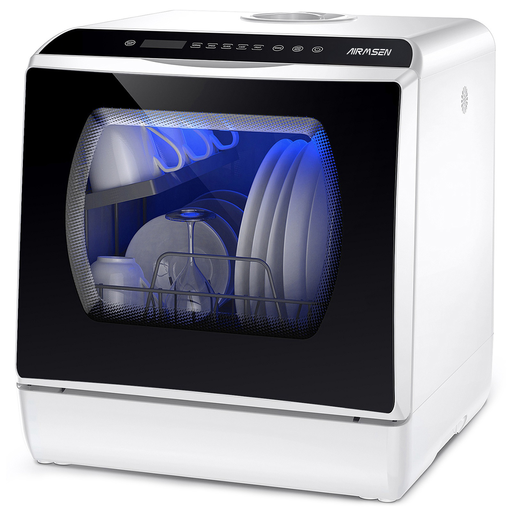 Image unavailable
Worth considering if a worktop appliance with a tank suits your installation requirements. The title lists an integrated 5 L tank and 5 + 1 wash cycles. Check the instructions to see how to drain the water.
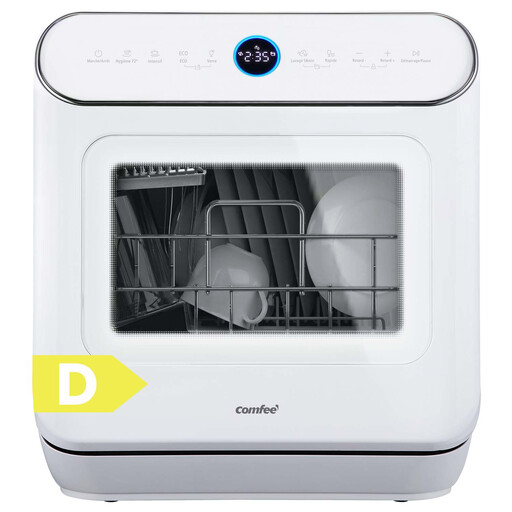 Image unavailable
Consider this for a small load if you have space on your worktop. The title lists 3 place settings, 7 programmes and energy rating D. Check how it drains and how much space you’ll need before installing it.
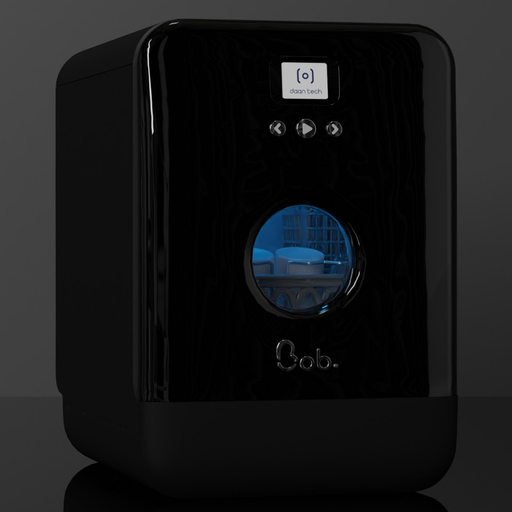 Image unavailable
This mini model is worth considering if you’re looking for a space for a small load. The Joybuy listing for this version states a capacity of 3 place settings and dimensions of 49 × 34 × 49 cm. Check the instructions to confirm how it takes in water and drains before relying on tank operation.
 Image unavailable
Worth considering if you want to place a tabletop appliance near the connections. The title lists 6 place settings and 7 programmes. Measure the space and check that the water supply and drainage will work in your kitchen.
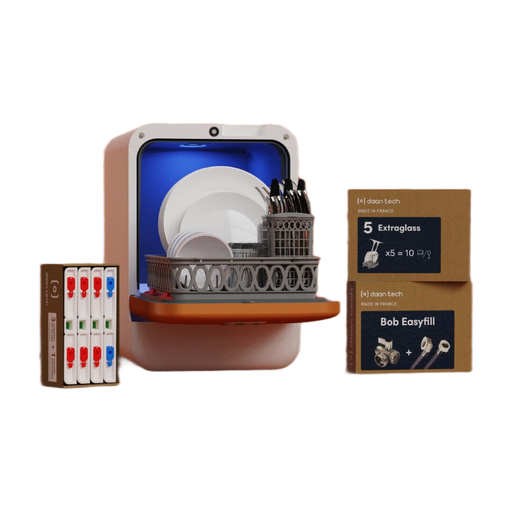 Image unavailable
This mini version is worth considering for a very small load. Check what’s included in the pack, its capacity and the water supply and drainage requirements for this specific model before installing it.
Check the water supply, drainage and power connection specified in the model’s instructions, as well as the length of the hoses and cable. A mini model with a tank may not need a fixed water supply, but you’ll still need to plan for drainage and a power connection.
No. Size alone isn’t enough to compare their consumption. According to the European Commission, the energy label includes details such as energy use per 100 Eco cycles and water use per cycle. Compare these figures with the capacity and how often you’ll use each model.
According to the European Commission, the EU energy label includes details such as the energy rating, energy use per 100 Eco programme cycles, water use per cycle, capacity and noise. Compare the same figures for models that fit your space and suit the amount of washing up you have.
Ask a professional to check that your installation is suitable before making any changes, and follow the instructions for the dishwasher you choose. Check the position of the socket and the cable route alongside the other connection requirements.