
Livraison le jour même ou le lendemain

Qualité garantie

Débloquez vos offres de bienvenue: Livraison GRATUITE | Jusqu'à -80 % | 30 jours d'essai gratuits à JoyPlus
Téléchargez l'application
Does your dog devour their food in seconds, to the point of choking or regurgitating? It's a situation that rightly concerns many owners. The slow-feeder bowl is often presented as a miracle solution. However, the market is flooded with models that can be ineffective, or even dangerous.
As the Head of Product Recommendations at Joybuy, my mission is to help you navigate the options. Together, we'll break down the common pitfalls and essential criteria to make an informed choice that will genuinely improve your companion's daily life.
Before you rush to buy the first model you see, it's crucial to understand the flaws that can turn a good investment into a useless, bulky gadget.
To make every meal a beneficial experience again, focus on these three key points. They make all the difference between a gadget and a genuine tool for your pet's well-being.
The simple word "plastic" is far too vague. Insist on products with a clearly detailed composition. The certifications to look for are:
A slow-feeder bowl isn't just for slowing down eating. It's also a dog puzzle that should offer mental stimulation appropriate for your dog's level.
A good product should be designed for quick and easy maintenance. Check if the bowl can be completely disassembled. Models that are dishwasher-safe (usually top-rack only) offer undeniable convenience and guarantee impeccable hygiene. A smooth surface without sharp angles or crevices is always preferable.
Rather than an impersonal list, here are solutions tailored to specific profiles, chosen based on the criteria and pitfalls we've just discussed.
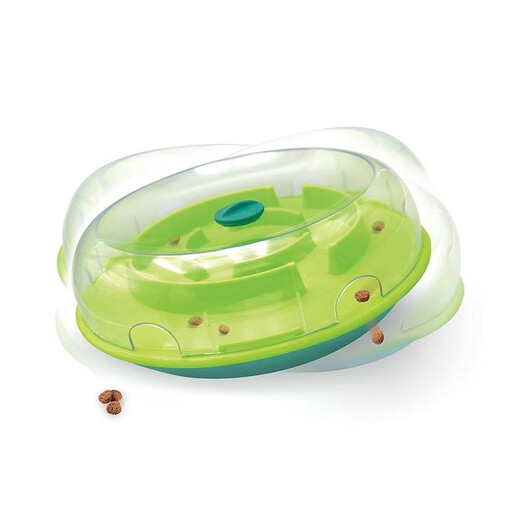
Why we chose it: Perfect for a dog just discovering puzzle toys. This model combines a slow-feeding function with a beginner-level puzzle. The dog has to push and wobble the bowl to make the kibble escape from the internal maze.
Made from composite materials that are BPA, PVC, and phthalate-free, it's perfectly food-safe. Its screw-off lid allows for easy and thorough cleaning, thus avoiding the hygiene trap.
Dual function: a slow-feeder bowl and a mental stimulation game. Its sturdy design is built to last.
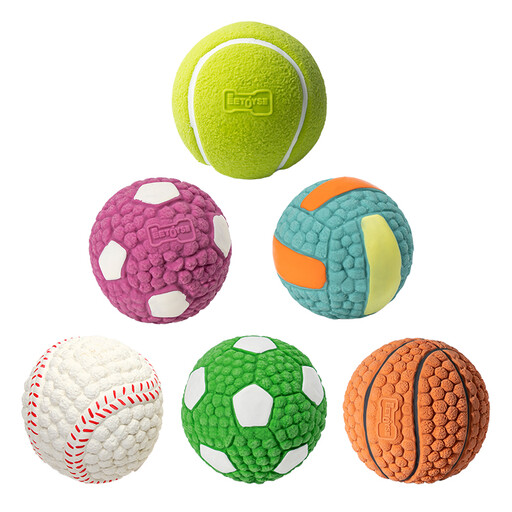
Why we chose it: For owners who want to turn mealtime into a real play session. This isn't a bowl, but a set of kibble-dispensing toys that encourage movement and help combat separation anxiety.
The soft latex is gentle on teeth and prevents injury. Fully washable, these balls ensure perfect hygiene. The built-in squeaker captures attention and fights boredom, thus preventing frustration.
A set of 6 balls to vary the fun and types of play. Ideal for fetch while dispensing rewards, which significantly increases daily energy expenditure.
We have compiled a complete and up-to-date selection of products that meet our strict selection criteria and current safety standards.
Finally, here are the answers to the questions you ask us most often.
Most quality plastic or silicone models can be hand-washed with hot water and dish soap. Use a small brush to reach all the nooks and crannies. For a deep clean, check if the product is dishwasher-safe (usually on the top rack, at a low temperature). Cleaning after each meal is recommended to prevent any bacterial growth.
If your dog tends to chew and destroy their toys, opt for ultra-durable materials. Some models are made of hard, non-toxic polymers specifically designed to withstand the most powerful jaws. It is essential to always supervise your dog during the first few uses to observe their behavior. Once the meal is finished, remove the bowl if you're worried they might mistake it for a chew toy.
You can use it for one or more meals a day, depending on your dog's energy level and need for stimulation. For a very active or easily bored pet, replacing a regular meal with a play session using a kibble-dispensing toy is an excellent way to channel their energy positively while strengthening your bond.