
Livraison le jour même ou le lendemain

Qualité garantie

Débloquez vos offres de bienvenue: Livraison GRATUITE | Jusqu'à -80 % | 30 jours d'essai gratuits à JoyPlus
Téléchargez l'application
Does your four-legged friend devour their food in record time, only to regurgitate or suffer from bloating right after?? It's a scenario that rightly alarms many pet owners. Eating too quickly can lead to digestive issues, discomfort, and even more serious risks like Gastric Dilatation-Volvulus (GDV), also known as bloat. Faced with this problem, one solution has become the standard: the slow-feeder bowl for dogs and cats.
However, the market is flooded with models making tempting promises, and it's easy to end up with a product that's ineffective, or worse, dangerous. To avoid falling into this trap, here are the pitfalls to watch out for before you make a purchase.
To make an informed choice, you just need to focus on a few technical criteria that never lie.
Choosing a slow-feeder bowl is about more than just its colour. Three fundamental elements should guide your decision to ensure safety, effectiveness, and daily convenience.
The choice of material is paramount. Each option has its strengths and weaknesses:
The goal is to slow your pet down, not discourage them. The design of the obstacles (spirals, waves, spikes) must be adapted to your companion's morphology.
A good bowl should simplify your life, not complicate it.
Rather than an exhaustive list, we've chosen to highlight a few products that each meet a specific need, keeping in mind the technical criteria we've just discussed.
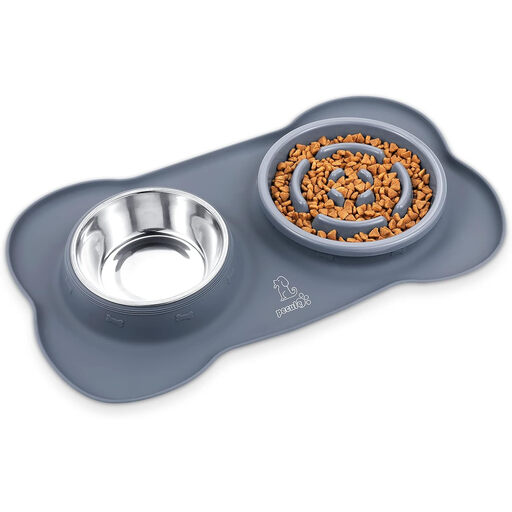
The ideal user: Anyone looking for an all-in-one, effective, and easy-to-manage solution. This 3-in-1 set checks all the boxes: a slow-feeder bowl, a water bowl, and an anti-spill mat. One purchase for maximum peace of mind.
Its large food-grade silicone mat guarantees rock-solid stability: no more bowls sliding around the kitchen. The removable bowls (stainless steel and silicone) are dishwasher-safe, which solves the problem of tedious cleaning.
Key Feature: Its 3-in-1 concept (slow-feeder, water bowl, anti-splash mat).
Benefits: Ultra-effective non-slip base, healthy materials, simplified cleaning, foldable for storage.
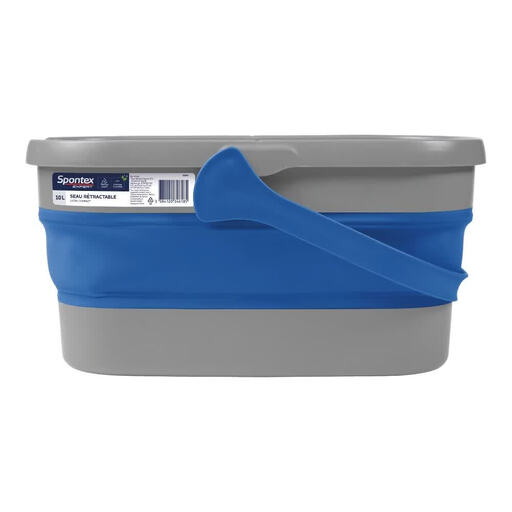
The ideal user: For globetrotters who take their companion everywhere, every square inch counts. The foldable travel bowl is therefore an essential accessory. Its principle: an ultra-compact format when folded, which unfolds in the blink of an eye at mealtime.
The bucket shown here serves as an example of the foldable concept. Be aware, to feed your pet, it's crucial to choose a model specifically designed for food, made from food-grade silicone. This guarantees it won't crack or release any toxic substances.
Key Feature: A virtually non-existent footprint.
Benefits: Feather-light, rinses in an instant. The best versions even include slow-feeder obstacles so you don't lose good habits, even on holiday.
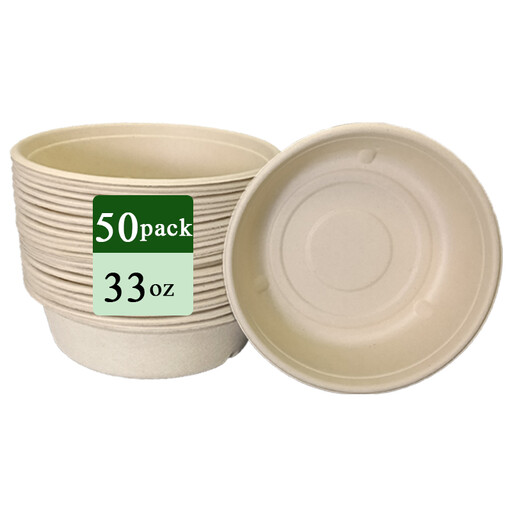
The ideal user: Not yet convinced about the utility of a slow-feeder bowl? Or just want to test the concept without breaking the bank? The trick is to transform a basic, inexpensive bowl.
This type of bowl is obviously not a slow-feeder. The idea is to repurpose it: its simple shape allows you to place an obstacle inside (a large, well-cleaned stone; a toy ball too big to be swallowed) that will force the animal to eat around it. A D.I.Y. method to be used only temporarily to validate the need.
Key Feature: A test at virtually no cost.
Benefits: Allows you to confirm if slowing down mealtime is the right solution for a dog that eats too fast, before investing. Warning: this method requires constant supervision.
We have selected a full range of products that meet our quality criteria and current safety standards.
The ideal method: a run through the dishwasher, if the material is compatible. Otherwise, arm yourself with a small brush and hot, soapy water to thoroughly clean every nook and cranny. Rinse thoroughly. For perfect hygiene, cleaning after each meal is essential to prevent bacterial growth.
An adjustment period is often necessary. To coax them, start by placing a small amount of their favourite food in it (a bit of wet food works wonders). You can also hide a few treats inside to create a positive association. Above all, be patient and don't give in to the temptation to bring back the old bowl too quickly. Perseverance is key!
Inspect it regularly. At the first sign of advanced wear (deep scratches, cracks, chewed parts), it's time to replace it. These defects are breeding grounds for bacteria and pose a risk of ingesting small pieces. As a general rule, for a good quality plastic or silicone model with daily use, plan on a replacement every one to two years.