For busy mornings
If you switch between topped toast and toast from the toaster, compare standard, crustless and thick-sliced options based on how you’re most likely to use them.


For weekday breakfasts, whether you eat your toast as it is or toasted, start by choosing sliced bread with the right number of slices and pack weight for your household. The words “medium sliced” alone don’t tell you how thick the slices are. Also check whether it has a crust, as well as the ingredients, allergens and storage instructions for the product you choose.
If you switch between topped toast and toast from the toaster, compare standard, crustless and thick-sliced options based on how you’re most likely to use them.
Check the ingredients, allergens and nutritional information for each product, especially when comparing standard sliced bread with a brioche-style recipe.
The number of slices and storage instructions after opening can help you choose a pack that suits how often your household has breakfast.
For reliably good toast, start with the format you’ll use, then compare the ingredients and storage instructions for the options you’re considering.
| What to consider | What to check | Who is it for? |
|---|---|---|
| Versatile slices | Number of slices, net weight, whether the bread has a crust, and whether it’s intended to be eaten as it is or toasted. | If I want bread for toast in the morning and to pop in the toaster now and then, I look for slices that work for both; around 42% of consumers prioritise this versatility. |
| Ingredients | Ingredients and allergens for the exact product; sugars, salt, fibre and fat per 100 g. | When ingredients matter to my household, I want to compare recipes rather than rely on the front of the pack alone; around 33% of consumers share this priority. |
| Pack size for the week | How many slices you’ll need for the week and the storage instructions after opening. | If I’m planning several breakfasts from the same pack, I want to be able to use it in line with the storage instructions; around 25% of consumers prioritise a pack size that suits their routine. |
The product listings consulted include descriptions such as thick-sliced and maxi slices. These terms alone don’t tell you whether the slices match what you consider a medium thickness.
Check the net weight, number of slices and whether the bread has a crust before choosing.
The Harrys brioche-style recipe we looked at contains sugar and eggs, so it shouldn’t be judged by the same taste and ingredient criteria as a standard loaf.
If ingredients guide your choice, compare the ingredient lists and nutritional values per 100 g for the specific products.
The sliced breads we looked at contain wheat, while other declared allergens or traces vary by recipe.
If you have an allergy or avoid certain foods, check the label on the pack you buy, even if you already know the brand.
A pack with more slices is only practical if you can use it in line with the storage instructions after opening.
Think about how many breakfasts you’re planning and follow the instructions on the packaging.
The Harrys products listed by Auchan include standard and brioche-style sliced bread, with or without crusts, in a range of pack sizes.
Carrefour offers a standard Classic' sliced loaf in maxi slices, in a 550 g bag.
Auchan’s sliced bread range includes standard, wholemeal, seeded and crustless options.
For breakfast, whether you eat it as it is, lightly toasted or with a topping, this selection features a 85 g pack of Danish toast. If you’re looking for slices to last all week, check how many are in the pack before buying.
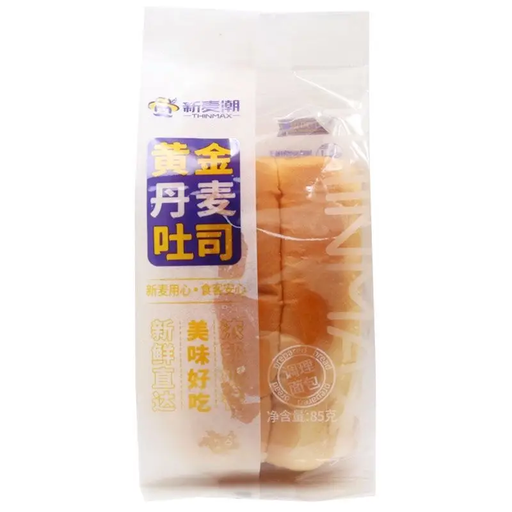 Image unavailable
Described as a quick breakfast option, this toast can be eaten as it is or lightly toasted, with butter or jam.
The pack weighs 85 g. If you’re planning to use it for several breakfasts, check the number of slices, their thickness, the allergens and the instructions for after opening.
No. On the sliced bread products listed in the French listings we consulted, this phrase doesn’t specify an exact thickness. Compare the net weight, number of slices and format details for the product you’re considering.
According to the DGCCRF, labelling for pre-packed food in France includes details such as the product name, ingredients, nutritional information and net quantity. When comparing two loaves, read this information for the specific products rather than relying on how they’re presented.
Check the label on every pack: the products we looked at contain wheat, and some also declare other allergens or possible traces, including milk, eggs, soya, nuts or sesame. Another recipe from the same brand may have different declarations.
Follow the instructions for the product you’ve bought. The Harrys listings we consulted recommend storing their products at room temperature, away from heat, and resealing the bag securely after use.