
Livraison le jour même ou le lendemain

Qualité garantie

Débloquez vos offres de bienvenue: Livraison GRATUITE | Jusqu'à -80 % | 30 jours d'essai gratuits à JoyPlus
Téléchargez l'application
Whether for a night under the stars, a game session with the kids, or for a friend staying the night, choosing a sleeping pad seems simple enough. Yet, the market is flooded with models making such varied claims that it's easy to make a mistake and end up with a completely unsuitable product. To prevent your purchase from ending in disappointment, let's review the most common mistakes to avoid.
Here are the most frequent pitfalls to steer clear of:
To make sense of it all, focus on a few technical specifications that truly make a difference.
The R-Value is the standard measurement of a pad's thermal resistance. The higher the value, the more the pad insulates you from the cold ground. It's a much more reliable indicator than thickness alone.
Choosing an insulated sleeping pad with the right R-Value is the key to a warm night's sleep.
Each technology meets a specific need, from a spare bed for guests to ultralight bivouac gear.
Your intended use is the criterion that should guide your entire decision. A baby play mat must be non-toxic, easy to clean, and thick enough to cushion falls. A camping pad for high-altitude mountaineering will prioritize insulation and low weight. Finally, a portable mattress for guests should be comfortable and quick to set up.
To put theory into practice, here are a few user profiles and the products that match them.
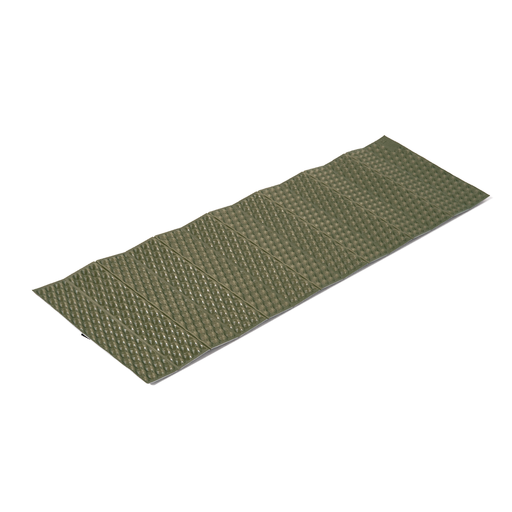
Why it's a match: Perfect for the backpacker who prioritizes reliability above all else. Its XPE foam construction makes it puncture-proof, and its 750g weight is perfectly manageable on multi-day treks. It is built for 3-season use.
This pad doesn't fall for the "thicker is better" trap. At 2.6 cm with an R-Value of 2.6, it relies on smart insulation from its dimpled structure that traps air, rather than on unnecessary bulk.
Durability: puncture-proof and wear-resistant. Insulation: the "egg crate" design creates an effective insulating air layer.
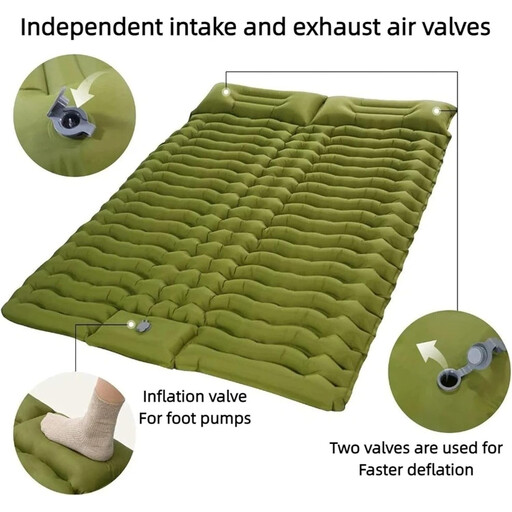
Why it's a match: Ideal for car camping or as a guest bed for two. Its generous dimensions and 8 cm thickness offer comfort worthy of a real bed. The integrated foot pump makes setup incredibly easy.
This product doesn't pretend to be an ultralight backpacking pad. It fully embraces its role as a high-comfort mattress, avoiding the trap of false versatility by focusing on a use where weight (1.7 kg) is not the priority.
XXL Comfort: large surface area and generous thickness. Simplicity: integrated foot pump for quick and effortless inflation.
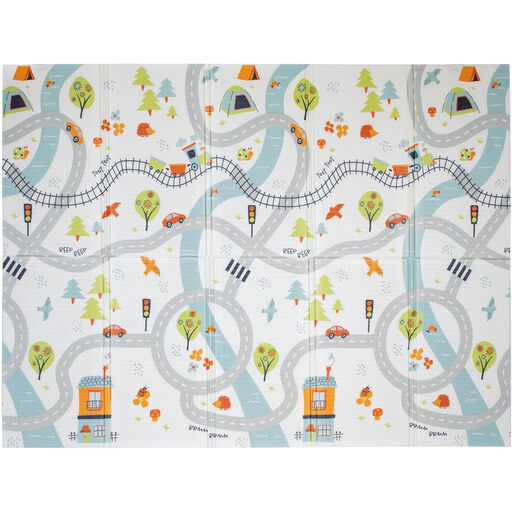
Why it's a match: Specially designed for toddlers, this mat offers a large play area (200 x 150 cm) and 1 cm of thickness to cushion small tumbles. Easy to clean and foldable, it stimulates development with its reversible designs.
This is the perfect example of a specialized product. It's not a camping pad repurposed for another use, but a true play mat, with materials and a design conceived for children's safety and hygiene.
Safety and Comfort: thick foam to properly cushion impacts. Practicality: foldable, lightweight, and a surface that can be wiped clean with a sponge.
Discover our full selection of products, all rigorously selected to meet our performance criteria and current safety standards.
Its longevity will largely depend on its type and the care you give it. A foam pad made of closed-cell foam, being virtually indestructible, can last for many years, even with heavy use. An air pad, more susceptible to punctures, will have a lifespan tied to the quality of its materials and the care you take (avoiding abrasive or sharp ground). In any case, storing it away from sun and moisture is the key to preserving it for as long as possible.
Most models can be cleaned simply with a damp cloth and mild soap. Avoid harsh detergents and hard brushes. Crucially, make sure it is completely dry before storing it to prevent mould and mildew. For storage, foam pads should be rolled or folded loosely, while inflatable models are gently folded before being returned to their stuff sack.
Absolutely. It's a very effective technique, especially in cold weather. The trick is to place the pad with the highest R-Value (often the foam pad) directly on the ground, then put the more comfortable pad (the inflatable one) on top. This way, you combine the insulating barrier of the first with the comfort of the second.