What should you look for?
First check which type of milk is appropriate for your child’s age and whether there are any allergen-related requirements, then compare the expected taste or packaging.
| Criteria |
What to check |
Who is this for? |
| Age and type of milk |
Check your child’s age, then distinguish between growing-up, whole, semi-skimmed and skimmed milk. Manger Bouger recommends growing-up milk if possible for children aged 1 to 3, and says semi-skimmed milk is suitable from age 4. |
If my child is under 3, I want to avoid replacing their milk with skimmed milk just because it seems lighter. Around 36% of consumers would put age suitability first. |
| Accepting plain milk |
Check the product description and ingredients list. Choose a sensible size for a first try rather than relying on the word ‘mild’. |
When a child refuses certain flavours, I’d rather try plain milk without assuming they’ll accept another product. Taste would be the priority for around 29% of consumers. |
| Allergy or intolerance |
Check the allergens on the packaging. If an allergy has been diagnosed, follow medical advice; ‘lactose-free’ doesn’t mean ‘milk protein-free’. |
If a reaction to milk is involved, I need to know which dietary requirement applies before switching products, including for school meals. This would come first for around 21% of consumers. |
| Pack size and storage |
Compare the volume of each unit and the storage instructions after opening the product you choose. For nutritional values, use the same 100 ml basis. |
When my child only drinks a small amount, I look for packaging that suits how much the household uses, to help reduce waste. Around 14% of consumers would prioritise this. |
Joybuy products by age
These products let you compare two semi-skimmed milks to consider from age 4 and a powdered growing-up milk for children aged 1 to 3. None can predict which one a child will prefer.
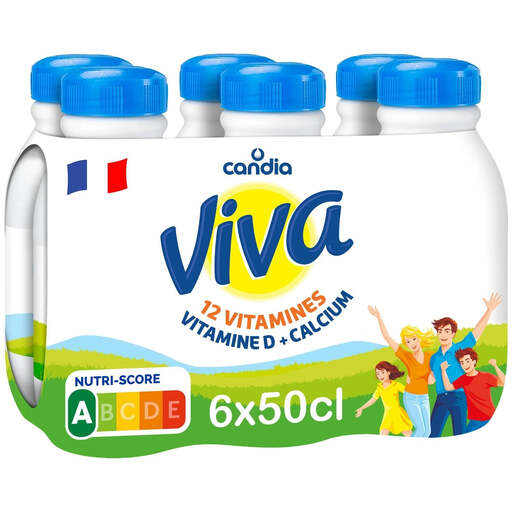 Image unavailable
Candia Viva semi-skimmed milk, 6 × 50 cl
Worth comparing if you’re looking for semi-skimmed milk for a child aged at least 4, in line with Manger Bouger’s guidance. The 50 cl units let you open part of the pack at a time, but there’s no guarantee your child will like the taste.
View on Joybuy
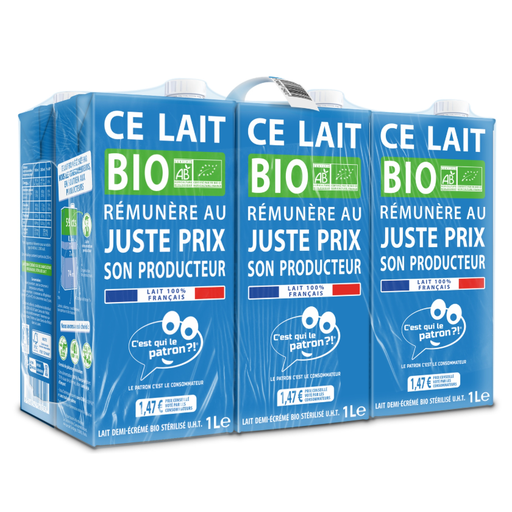 Image unavailable
C’EST QUI LE PATRON semi-skimmed milk, 6 × 1 L
Worth considering for a child aged at least 4 if your household also drinks this semi-skimmed milk. Before a first taste test, check that the pack of six 1 L units suits your needs and read the storage instructions on the packaging.
View on Joybuy
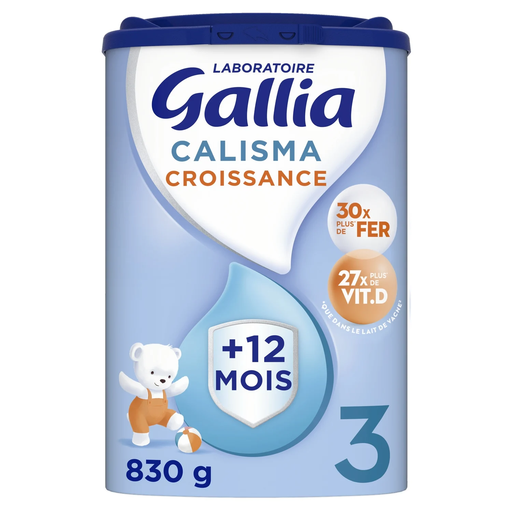 Image unavailable
Laboratoire Gallia Calisma Croissance 3rd Age, powdered milk from 12 months, 830 g
Worth looking at if your child is aged 1 to 3 and growing-up milk suits their needs, in line with Manger Bouger’s guidance. This is a powder that must be prepared according to the pack instructions. Check the allergens, including milk and fish, listed for this product.
View on Joybuy
Frequently asked questions
Is skimmed milk suitable for a child under 3?
Not as their main milk, according to Manger Bouger, which highlights the need for fat before age 3. For children aged 1 to 3, its guidance recommends growing-up milk if possible, or whole cow’s milk depending on the situation.
From what age is semi-skimmed milk suitable?
Semi-skimmed milk is suitable from age 4, according to Manger Bouger. If your child refuses certain flavours, this age guidance won’t predict which product they’ll accept.
Is lactose-free milk suitable for someone with a milk allergy?
Not necessarily: removing lactose doesn’t mean removing milk proteins. Assurance Maladie distinguishes lactose intolerance from a food allergy. If an allergy has been diagnosed, follow your healthcare professional’s advice before making any substitution.
How can you organise school meals if your child has a food allergy?
An individual care plan can set out the dietary adjustments needed at school, according to the Ministry of National Education. Make sure you understand the instructions for your child and check the allergens listed on pre-packed products.
How can you compare two milks before trying them?
Compare the type of milk, ingredients, allergens, pack size and storage instructions. For nutritional information, use the same 100 ml basis, in line with the comparison principle described by the Directorate-General for Competition Policy, Consumer Affairs and Fraud Control.


