
Livraison le jour même ou le lendemain

Qualité garantie

Débloquez vos offres de bienvenue: Livraison GRATUITE | Jusqu'à -80 % | 30 jours d'essai gratuits à JoyPlus
Téléchargez l'application
Finding the perfect ski helmet and goggle duo can be a real puzzle. Between compatibility, safety standards, and optical technologies, it's easy to get lost. However, poorly-fitted gear can not only turn a day on the slopes into a nightmare (fogging, pressure points, etc.) but also put your safety at risk.
This guide is here to shed some light on the subject. We'll break down the key factors and present a selection of products that check all the boxes, whether you're a discerning beginner or an expert seeking peak performance.
Before you dive in, here are a few technical criteria to consider for making an informed choice that meets the expectations of skiers and snowboarders in Europe.
A helmet's number one job is to protect you. Beyond the outer shell, technologies designed to protect against angled impacts have become the gold standard. A MIPS ski helmet (Multi-directional Impact Protection System) incorporates a low-friction layer inside the helmet. During an angled impact, this layer allows for a slight rotational movement of the head independent of the helmet, which helps to better dissipate the rotational forces transferred to the brain. Always verify that the helmet is certified under both European (CE EN 1077) and American (ASTM F2040) standards, which guarantee compliance with the strictest resistance tests.
On the mountain, the weather can change in the blink of an eye. Ski goggles with interchangeable lenses allow you to adapt your vision to the conditions in seconds. Magnetic ski goggle systems are by far the most convenient for swapping lenses, even while wearing gloves.
Pay close attention to the VLT (Visible Light Transmission) rating. A low-VLT lens (Category 3 or 4) is perfect for bright, sunny days, while a high-VLT lens (Category 1) enhances contrast in overcast conditions or for night skiing. Some optics, like those from collaborations with specialists such as Zeiss, offer remarkable clarity and terrain perception—a significant advantage for anticipating changes in the snow.
A helmet and goggles must work together as a seamlessly integrated system. The fit between the top of the goggle and the helmet must be flawless to avoid the dreaded "gaper gap"—that unsightly space that lets cold air in. A good integration also ensures that the helmet and goggle ventilation systems align, promoting optimal airflow to expel moisture and prevent fogging.
For those who wear prescription glasses, OTG (Over The Glasses) ski goggles are essential. These models feature a larger internal volume and side notches to comfortably accommodate your eyewear frames.
Our team has scoured the spec sheets to bring you combos that blend technology, safety, and versatility. Here are our top picks from the OutdoorMaster ski gear catalogue.
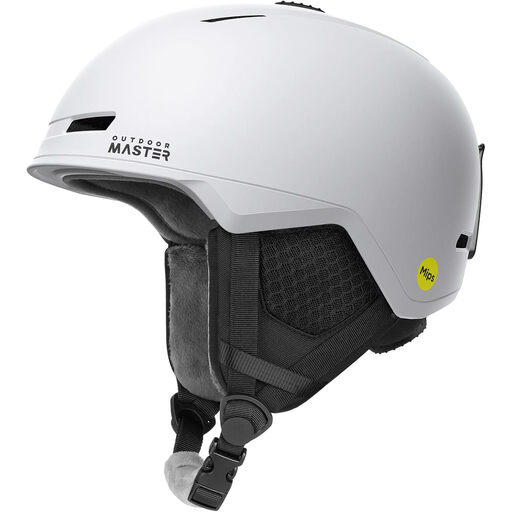

Why this combo stands out?
This duo is a complete, high-performance solution. The Diamond II MIPS helmet provides advanced protection against multi-directional impacts, while the ULTRA goggle focuses on visual versatility and comfort. Their shared design ensures a perfect fit, eliminating issues with gaps and ventilation.
Highlights:
Who is it for? For intermediate to advanced skiers and snowboarders looking for a reliable, safe, and versatile setup that can adapt to all conditions without any compatibility hassles.
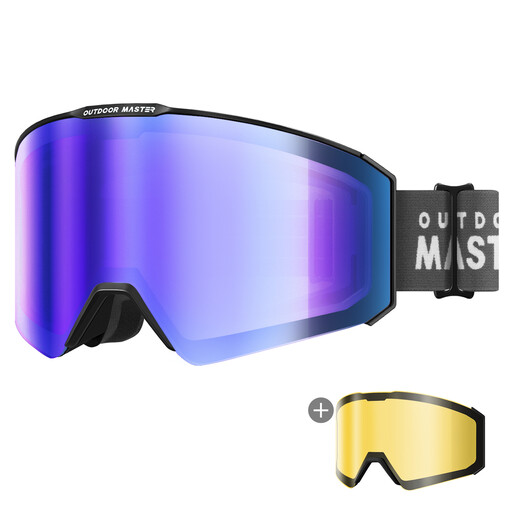
Why it stands out?
This goggle's main strength? Its collaboration with optics giant ZEISS. The Zeiss ski goggle, the Falcon, is designed to boost contrast and deliver exceptional visual clarity. It helps you better read the terrain and identify ice patches or snow drifts, even in whiteout conditions.
Highlights:
Who is it for? For skiers who demand superior optical quality, often ride in challenging visibility (whiteouts, forests, late afternoon), and for whom a precise reading of the terrain is an absolute priority.
Good gear isn't just for your head. To safely carry your equipment, an extra layer, or your snacks on the slopes or in the backcountry, a technical backpack is essential.
? Discover our selection of OutdoorMaster backpacks to complete your kit.
1. How do I know if a ski helmet and goggles are compatible? The first criterion is the fit. There should be no significant gap between the top of the goggle and the helmet's brim or edge. Ideally, the goggle's top vents should align with the helmet's ventilation channels to create an anti-fog airflow. Buying both items from the same brand, like OutdoorMaster, is often the best way to ensure a perfect match.
2. What is MIPS technology in a ski helmet?MIPS technology is an internal low-friction layer that allows the head to move 10 to 15 mm relative to the helmet during an angled impact. This movement helps redirect rotational forces that would otherwise be transferred directly to the brain. It's an added safety feature increasingly found on mid-range and high-end helmets.
3. Why choose ski goggles with interchangeable lenses? Light conditions on the mountain can shift from bright sun to dense fog in under an hour. Ski goggles with interchangeable lenses allow you to use the most suitable lens for any condition. A dark lens protects against glare in bright sun, while a clear or yellow lens enhances contrast in low light. This improves your visibility, comfort, and safety all at once.