
Livraison le jour même ou le lendemain

Qualité garantie

Débloquez vos offres de bienvenue: Livraison GRATUITE | Jusqu'à -80 % | 30 jours d'essai gratuits à JoyPlus
Téléchargez l'application
A heated knee massager can help you unwind after a day spent sitting, a workout or a spell of stiffness. But the differences between models are more than just minor details: some only heat a small area, others offer several vibration modes, while cordless versions give you more freedom to move around.
Before you place an order, it’s worth looking at the practical features rather than the marketing claims. Here are the most common pitfalls to watch out for, along with the criteria to consider when choosing a knee massager that’s right for you.
Simply being labelled “heated” doesn’t tell you much. With just one temperature setting, a device can quickly become uncomfortable, particularly during a short break or when used on a sensitive area. Check the number of heat settings, the stated temperature range in degrees Celsius and whether you can use the vibrations without turning on the heat.
The models featured here generally offer several settings. However, bear in mind that the temperatures listed are based on the specifications provided for each product. If in doubt, always start with the lowest setting and follow the manufacturer’s instructions.
An ill-fitting electric knee massager may slip or press uncomfortably against your leg. The strap length, fastening system and availability of extensions are therefore important considerations.
If you plan to use it on your elbow or shoulder, an adjustable strap is particularly useful. Versatile models should also be flexible enough to fit different body shapes without applying too much pressure.
A cordless device is only really convenient if its battery keeps up with how often you use it. Check its capacity in mAh, charging time and stated battery life. Controls that are difficult to read can also make the device harder to use, particularly for older people.
A timer, LED display or detachable controller can make sessions easier to manage. These features are no substitute for reading the manual and following the safety instructions.
Most models combine adjustable heat with vibration massage. Vibration may be available at several intensity levels or through different automatic modes. As for infrared heat or red light, if these features appear in the product details, treat them as functions built into the device, not as a promise of medical results.
For everyday use, choose a model that lets you adjust the heat and vibration separately. That way, you can tailor each session to suit you: vibration only after exercise, or moderate heat for a relaxing moment.
Devices in this category often offer settings ranging from around 40 to 65 °C. A wider range gives you more options, but it doesn’t mean you should always choose the highest temperature.
A 15, 30 or 45-minute timer helps you keep sessions to a set length and prevents the device from running unattended. If the specifications mention an automatic shut-off, also check the manufacturer’s instructions for charging and use.
For a cordless knee massager, a 2 000 to 3 000 mAh battery is a useful benchmark. However, battery capacity alone won’t tell you how long it will last in practice. This also depends on the heat setting, vibration intensity and ambient temperature.
Also consider the weight, dimensions and material that sits against your skin. Neoprene and breathable fabrics can make the device more comfortable to wear, while an integrated display makes it easier to keep track of the settings.
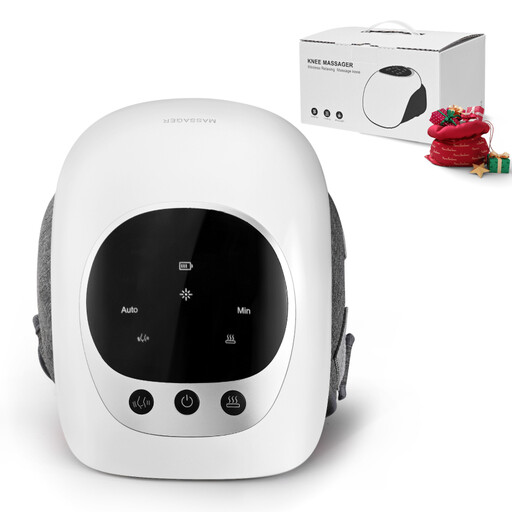
Why it suits this type of user : Rechargeable and easy to use at home, this model has a touch-sensitive LED display, three heat settings and three vibration intensities. It’s a simple way to try this type of device for the first time.
The settings are clearly specified, and the 40 cm nylon strap lets you adjust the fit around your knee or shoulder.
Three heat settings, three vibration intensities, a portable design and a built-in rechargeable battery.
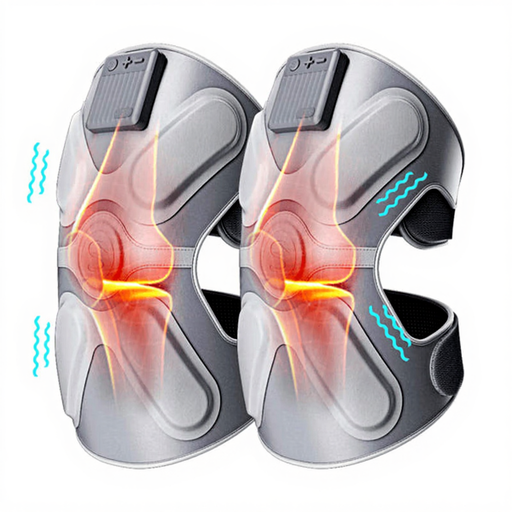
Why it suits this type of user : This cordless model has a 2 000 mAh battery, which is rated to last for up to 90 minutes, as well as four vibration motors and four heat settings.
The physical controls and advertised voice prompts make it easier to adjust the settings, without relying solely on a touchscreen.
Four vibration motors, an advertised larger heating area and a cordless design.
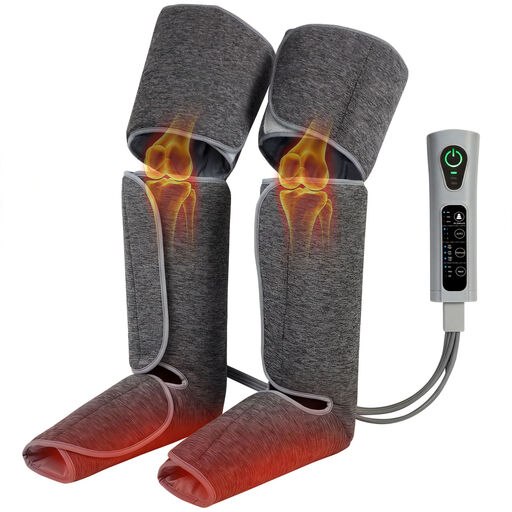
Why it suits this type of user : This device covers the calves, knees and feet, with six air cushions, three automatic modes and three intensity levels. It’s better suited to a complete leg-care routine than to targeted knee massage.
The timer, automatic shut-off and overheat protection help you manage sessions more safely at home.
Advertised 360-degree compression, three automatic modes, three intensity levels and adjustable covers.
We’ve brought together a comprehensive selection, updated in real time, of products that meet these exacting criteria and European safety standards.
Before your first session, fully charge the device and check the cables, battery and straps for signs of wear or damage. Position it without fastening it too tightly, then start at the lowest intensity.
Don’t use the device on skin that is irritated, injured or swollen. A muscle recovery device designed for comfort is no substitute for medical advice. If you have persistent pain, an injury or a known joint condition, consult a healthcare professional before using it. Stop the session straight away if the heat or vibrations become uncomfortable.
If you’re buying it as a wellbeing gift, also make sure the recipient will be able to operate the controls, adjust the strap and recharge the device easily.
How often you use it depends on the model, session length and your comfort level. Follow the instructions in the manual, use the timer if there is one, and avoid prolonged sessions without supervision. Regular use shouldn’t cause pain or irritation.
These devices generally use little electricity, as they run on a battery or a low-power USB supply. The cost depends on your local electricity tariff, the device’s power rating and how often you recharge it. With a rechargeable battery, there’s no need to leave the device plugged in throughout your session.
Its lifespan depends on the battery, motors, stitching quality and how often you use it. To help your device last longer, clean its surface according to the instructions, avoid excessive moisture, don’t bend the cables and use a compatible adapter. Before buying, also check the warranty terms and the availability of after-sales support.