
Livraison le jour même ou le lendemain

Qualité garantie

Débloquez vos offres de bienvenue: Livraison GRATUITE | Jusqu'à -80 % | 30 jours d'essai gratuits à JoyPlus
Téléchargez l'application
Whether you're a seasoned artist, a fine arts student, or a casual sketcher, choosing the right sketchbook is a crucial step. With the vast array of options available, it can be tough to navigate. Factors like size, paper weight, binding, and surface texture all directly impact the final look of your artwork and your drawing experience.
This guide is here to help you make sense of it all and find the perfect surface for your artistic practice. We've also handpicked a few standout products, each with its own unique features, to help you make the right choice.
Before diving into our selection, let's review the three fundamental criteria that define a good drawing pad.
Paper weight, measured in grams per square metre (g/m?), refers to the paper's thickness and density. It's a critical factor, as it directly relates to the techniques you plan to use.
The size of your sketchbook will primarily depend on your mobility: do you draw mostly in a studio, while travelling, or a bit of everywhere?
The binding directly affects the handling and usability of your sketchbook.
Let's move on to our top picks. We've chosen a few models that stand out from the crowd, each with its own unique strengths.
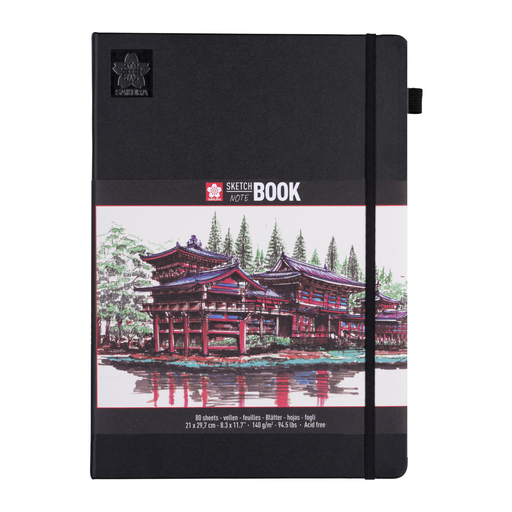
Key Features
This SAKURA notebook is designed to be a true portable studio. Its illustrated hardcover and practical details like the pen holder, storage pocket, and elastic closure make it a complete and well-designed companion for demanding artists. Its archival-quality paper ensures excellent long-term preservation of your work.
Pros
Who is it for?
For the artist or illustrator looking for a large-format, durable, and functional medium, whether for studio projects or for presenting their work.
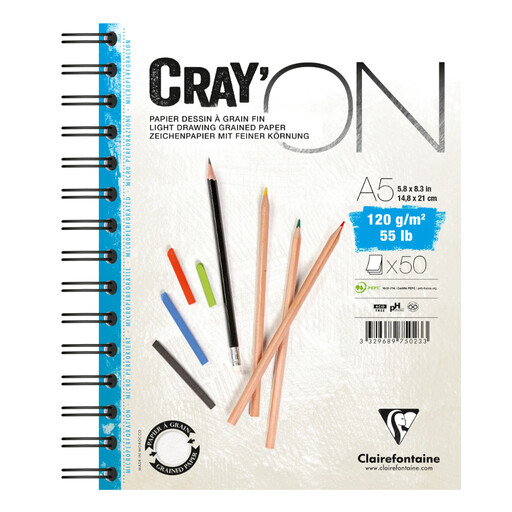
Key Features
The key strength of this Clairefontaine pad is its dual-sided paper. One side has a very fine grain to grip pigments, while the other is perfectly smooth for a softer touch. This versatility, combined with excellent resistance to erasing and scraping, makes it a superb technical medium.
Pros
Who is it for?
For fans of dry media (pencil, charcoal, pastel) who appreciate having a choice of texture and need a drawing paper that can withstand repeated erasing.
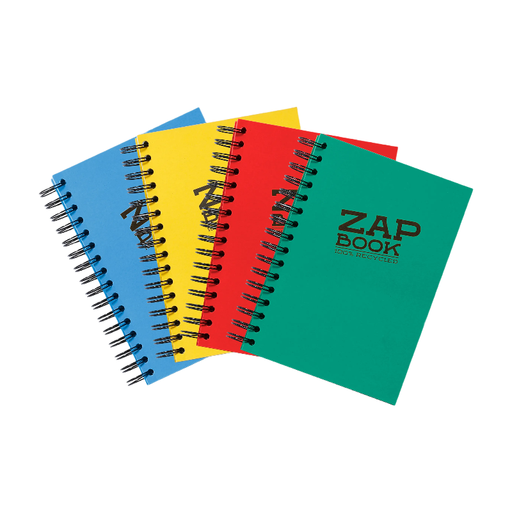
Key Features
The Zap Book is the ultimate portable and eco-friendly notebook. Its pocket size, spiral binding, and 100% recycled paper make it the perfect companion for daily scribbles. With 160 sheets, it's built to last.
Pros
Who is it for?
For artists on the go, students, and anyone who wants a compact, eco-friendly sketchbook to pull out their pencil anywhere, anytime.
Every artist is unique, and your needs may change over time. Does our selection not quite meet your expectations? Or are you simply curious to explore other avenues?
Feel free to browse our complete collection of journaling kit supplies to discover other sizes, weights, and paper textures that will perfectly match your style.
What paper weight should I choose for a sketchbook?
It all depends on your technique! For simple sketches with a pencil or pen, an 80 to 100?g/m? paper is sufficient. For mixed media (ink, marker, pastel), opt for a versatile weight between 120 and 160?g/m?. Finally, wet media like watercolour require a heavyweight paper (180?g/m? minimum) to prevent buckling.
What's the difference between a drawing pad and a sketchbook?
Although the terms are often used interchangeably, the distinction is simple: a sketchbook is primarily for drafts and quick ideas, often with thinner paper. A drawing pad, on the other hand, is designed for more finished pieces, featuring higher-quality, thicker paper that's made to last.
Why choose acid-free paper?
It's a guarantee of quality and longevity for your fine art supplies. An "acid-free" (or pH-neutral) paper won't yellow or become brittle over time. This ensures that your artwork and its colours will stand the test of time without deteriorating.