
Livraison le jour même ou le lendemain

Qualité garantie

Débloquez vos offres de bienvenue: Livraison GRATUITE | Jusqu'à -80 % | 30 jours d'essai gratuits à JoyPlus
Téléchargez l'application
Whether you're a seasoned artist, an illustrator, or a casual sketcher, choosing the right sketchbook is a crucial step. The wrong paper can make your colours lose their vibrancy. A poorly designed size can hinder your creative flow. A fragile binding puts the preservation of your work at risk. Faced with a seemingly endless selection, it can be hard to find your way.
This guide is here to give you clear, concrete benchmarks and help you choose THE sketchbook that will elevate your creations, cutting through the marketing jargon.
Before diving into our selection, let's review the three characteristics that make all the difference in a good sketchbook.
Expressed in grams per square metre (g/m?), paper weight defines the thickness and sturdiness of the paper. It's the number one criterion, and it must be chosen carefully based on the media you use.
The ideal size will depend on your habits. An A5 sketchbook slips easily into any bag for drawing outdoors, while an A4 sketchbook offers a much more comfortable working surface in the studio.
The binding also plays a role:
Much more than mere decoration, the cover protects your creations. A hardcover will better withstand the wear and tear of travel, while a softcover version will be lighter. Finishes like an elastic closure, a ribbon bookmark, or an inner pocket are not gimmicks: they transform a simple notebook into a true creative companion.
Now that we've covered the basics, here are the models that caught our eye, each excelling in a particular area.
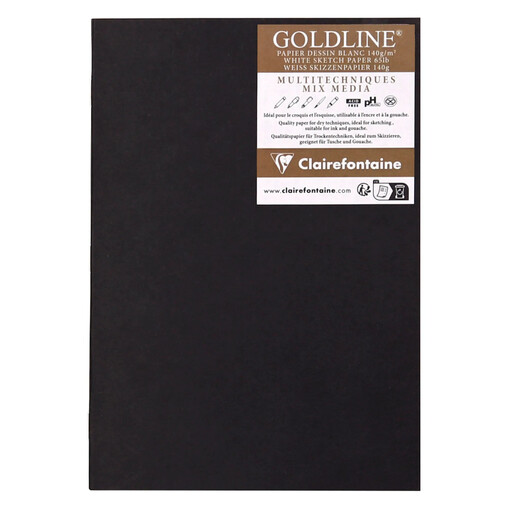
The standout feature: its versatility. Its 140 g/m? white paper is a fantastic compromise, handling dry media as well as light ink or watercolour washes with ease. Its stitched binding ensures it opens perfectly flat.
Advantages:
Who is it for? For artists, students, and hobbyists who want an all-in-one sketchbook (for sketches, illustrated notes, experiments) without having to buy multiple notebooks.
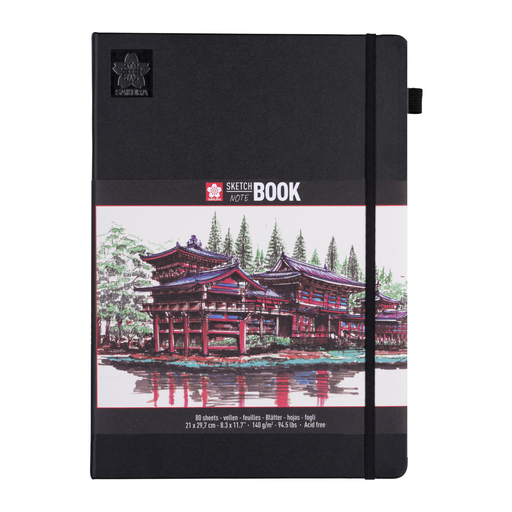
The standout feature: its generous size and professional finishes. This A4 sketchbook is a true mobile studio. Its cream-coloured, acid-free 140 g/m? paper enhances both ink and pencil lines.
Advantages:
Who is it for? The ideal companion for illustrators, designers, and artists working on detailed projects, layouts, or comprehensive studies. A perfect choice for anyone looking for a robust, well-designed, and ready-for-action artist's sketchbook.
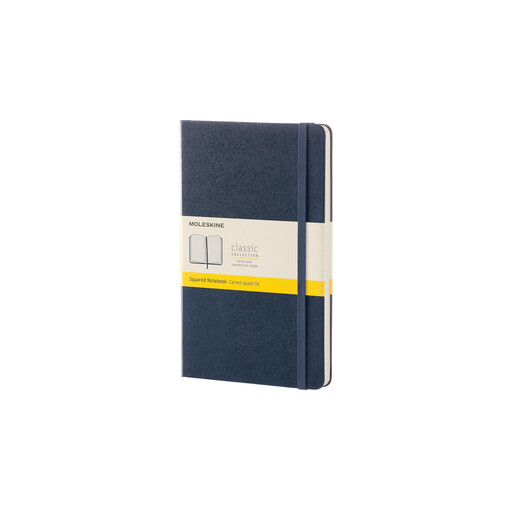
The standout feature: its iconic status and impeccable quality. The Moleskine needs no introduction: it's THE benchmark for note-taking, journaling, and light sketching. Its famous 70 g/m? ivory-coloured paper offers unparalleled smoothness for writing and pencil drawing.
Advantages:
Who is it for? For creatives, writers, and nomads looking for a beautiful object that is as functional as it is aesthetic, to capture ideas on the fly. Ideal as a premium notebook or for quick sketches, its thin paper, however, quickly shows its limits with ink or watercolour.
Our selection covers the most common uses, but the perfect sketchbook is ultimately a matter of personal taste: paper grain, size, page colour... If you haven't found your match yet, feel free to explore our complete collection to find that hidden gem.
Discover all our plain notebooks
It all depends on your technique! To keep it simple: for dry media (pencil, charcoal), 90 to 120 g/m? is sufficient. For ink, markers, or light washes, aim for a heavyweight paper sketchbook of at least 140 g/m? to avoid unpleasant surprises (bleed-through, buckling). For watercolour, specialised 300 g/m? paper is almost mandatory.
Yes, but sparingly! On 140-160 g/m? paper, you can get away with a very light wash (with little water). Any more than that, and the paper is likely to buckle or even tear. For a flawless result, nothing beats a true watercolour sketchbook with 300 g/m? paper.
The main difference lies in the paper. A sketchbook uses paper with a weight, grain, and sometimes a surface treatment designed for artistic techniques. A notebook, like the famous Moleskine, is primarily optimised for writing with thinner paper (70-90 g/m?), although it's also great for light pencil sketches.