
Livraison le jour même ou le lendemain

Qualité garantie

Débloquez vos offres de bienvenue: Livraison GRATUITE | Jusqu'à -80 % | 30 jours d'essai gratuits à JoyPlus
Téléchargez l'application
Whether you're a budding artist, a design student, or simply a creative hobbyist, choosing a sketchbook might seem like child's play. However, the sheer number of options is so overwhelming that it's easy to end up with a notebook that's completely wrong for your needs. Paper that buckles at the first drop of watercolour, ink that bleeds through to the other side, a binding that falls apart after a few weeks… these are all-too-common mishaps.
As a Product Expert at Joybuy, my mission is to help you make sense of it all. Let's forget the marketing jargon and focus on the essentials to make an informed decision that's perfectly suited to your artistic practice and your budget. This guide is here to help you avoid beginner mistakes and find the medium that will elevate your creations.
Before we compare models, let's review the classic mistakes that lead straight to disappointment.
To get it right, you only need to consider three technical criteria. These alone determine 90% of a sketchbook's suitability for your needs.
Paper weight, expressed in grams per square meter (gsm), is an indicator of the paper's thickness and density. It is THE number one criterion for ensuring compatibility with your tools.
The grain of the paper is its surface texture. It directly influences the finish of your lines and how pigment grips the surface.
The size (with the popular A4 notebook leading the pack) depends on your need for space and portability. The binding, on the other hand, directly affects your comfort.
To illustrate how these criteria translate in practice, here is our selection, designed for three different artist profiles.
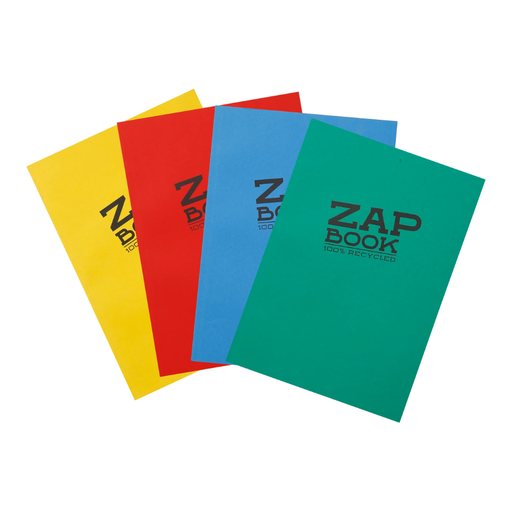
Why we love it: This pad is the quintessential simple and effective work tool for students and creatives who juggle pencil drawing and visual note-taking. Its 100% recycled paper and generous page count make it as economical as it is functional for intensive use.
Its 80 gsm paper weight is clearly calibrated for dry media, which prevents the unpleasant surprise of buckling paper. It is also acid-free and pH-neutral, ensuring your sketches won't yellow.
An unbeatable quantity-to-price ratio with its 160 sheets, perfect for practicing without limits. Quality is guaranteed by a benchmark brand: Clairefontaine.
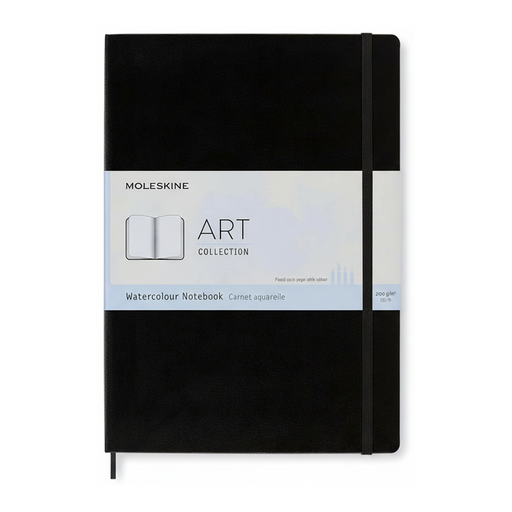
Why we love it: Specifically designed for wet media, this Moleskine notebook combines thick paper, a robust sewn binding, and a perfect lay-flat opening. The trusted tool for creating finished works of art.
With its 200 gsm paper, it's built to handle watercolour washes without warping. Its sewn binding guarantees durability and a lay-flat opening that simple glue-bound notebooks can't offer.
Its acid-free ivory paper provides a warm base for colours and ensures excellent preservation over time. The inner pocket is a handy little extra for slipping in notes and references.
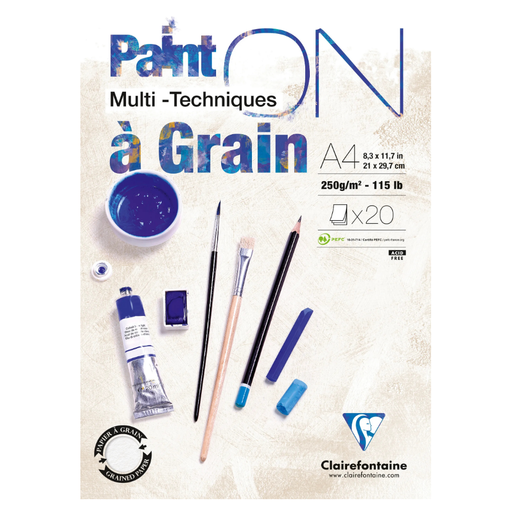
Why we love it: For the all-rounders who love to experiment, this pad is the all-in-one solution. Its thick paper and reversible surface (one side grained, the other smoother) allow you to juggle different media without changing your support.
Its heavyweight 250 gsm paper makes it ready for anything, from dry to wet media, eliminating the risk of choosing the wrong paper. Its versatility means you don't have to buy multiple specialised pads.
Its dual-grain surface is its ace in the hole: two textures in a single sheet for maximum creative flexibility. Bonus: the paper holds up very well to corrections by scraping or erasing.
We have put together a complete selection of sketchbooks that meet our quality criteria and industry standards.
What's the difference between a drawing pad and a sketchbook? Although the terms are often used interchangeably, a sketchbook is traditionally designed for quick sketches and studies, with thinner paper (80-110?gsm). A drawing pad, on the other hand, refers to a higher-quality support with thicker paper (120?gsm and up), suitable for finished artwork.
How can I preserve my drawings so they don't turn yellow? The secret is to choose paper labelled "acid-free" and "pH-neutral". These papers are treated to neutralise the agents responsible for yellowing and degradation. Also, remember to store your sketchbooks away from direct sunlight and humidity.
Can you use alcohol markers on any paper? No, that's a very bad idea. The ink from alcohol markers is designed to blend and will bleed through most papers (the dreaded bleed-through). For a clean result, opt for paper that is at least 160?gsm, or ideally, special marker paper that has a barrier coating. The Paint'ON pad (250?gsm) is an excellent, robust alternative for this purpose.