
Livraison le jour même ou le lendemain

Qualité garantie

Débloquez vos offres de bienvenue: Livraison GRATUITE | Jusqu'à -80 % | 30 jours d'essai gratuits à JoyPlus
Téléchargez l'application
Choosing a size 7 basketball isn't just about the colour. For teenagers aged 13 and over, adults, clubs and regular players, the diameter, material and surface quality have a direct impact on grip, bounce and lifespan.
However, some marketing claims should be taken with a pinch of salt. A ball advertised as "all-surface" can wear out quickly on abrasive ground, while a model labelled "official" may not necessarily meet the requirements of a specific competition. Here are the points to check before buying, followed by a selection suited to different profiles.
A 29.5-inch basketball generally corresponds to size 7, which is approximately 75 cm in circumference. This is the standard size commonly used by players aged 13 and over, adults and men's categories.
However, the term "official" does not guarantee approval for all competitions. For a club, it's best to check the regulations of the relevant federation or league, particularly regarding the ball's material and pressure.
A very textured surface can offer excellent traction on an outdoor court, but may feel less pleasant indoors. Conversely, a soft PU or microfiber cover often provides a more comfortable feel in the gym, while being less resistant to concrete abrasion.
The depth of the channels, the pattern's relief and the consistency of the surface are therefore just as important as the material used.
A ball delivered deflated must be properly prepared before its first session. With incorrect pressure, the bounce becomes inconsistent and the grip loses precision. A ball left in direct sunlight, in an overheated car or on a damp surface is also likely to age faster.
A basketball with a pump, a few needles and a carry bag make a practical set to avoid forgetting essentials.
For a size 7 basketball, look for the following details:
For children aged 9 to 12, a size 5 of around 27.5 inches will generally be easier to handle. Buying a size 7 for a young player simply because it's marketed as "standard" can make passing and shooting more difficult.
A rubber basketball is generally suitable for frequent use on tarmac, concrete or street courts. Easy to clean, its textured surface often maintains good grip in various conditions. On the downside, its feel can be firmer than that of a model designed primarily for indoor use.
PU and microfiber focus more on a soft, pleasant touch. These materials are interesting for technical indoor work, but check that the ball is genuinely intended for outdoor use. A model described as an indoor outdoor basketball should specify the compatible surface types.
The bounce depends on the pressure, the inner bladder and the consistency of manufacture. Product descriptions may mention a reinforced casing, a butyl bladder or technology designed to minimise air loss. This information is useful, but it doesn't replace regular pressure checks.
The term water-resistant basketball, or even waterproof, should also be interpreted with caution: it makes cleaning easier and allows occasional use on a damp surface, but it does not mean the ball can be submerged or stored wet. After a session in the rain, dry it with a cloth before storing it in a cool, dry place.
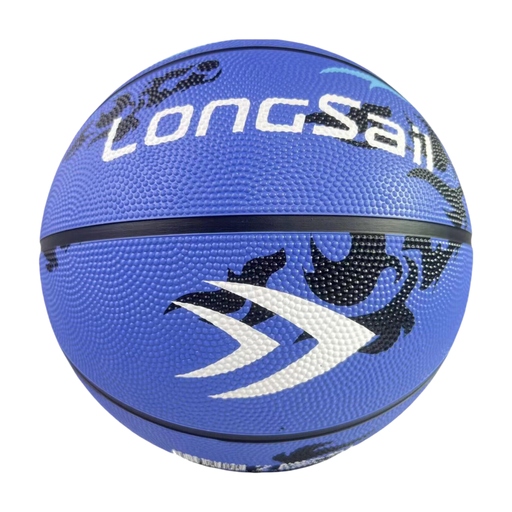
Why this choice suits this profile: its rubber cover and kit including a pump, needles and a bag cover the needs of a first practice at home, in the park or on an outdoor court.
Its dimpled texture and deep channels make it easy to grip, while the 29.5-inch format avoids confusion with a youth model.
Rubber described as waterproof, butyl bladder and inflation accessories included.
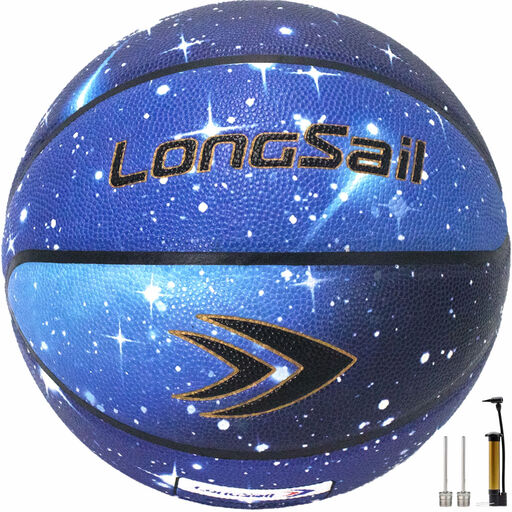
Why this choice suits this profile: its PU or microfiber cover, depending on the version, is aimed at players who prioritise feel and control during their technical indoor sessions.
The product page clearly distinguishes the size 7 format from the youth format and mentions a reinforced construction with deep channels.
PU, microfiber or rubber cover depending on the version, with a rubber bladder described as resistant to deformation.
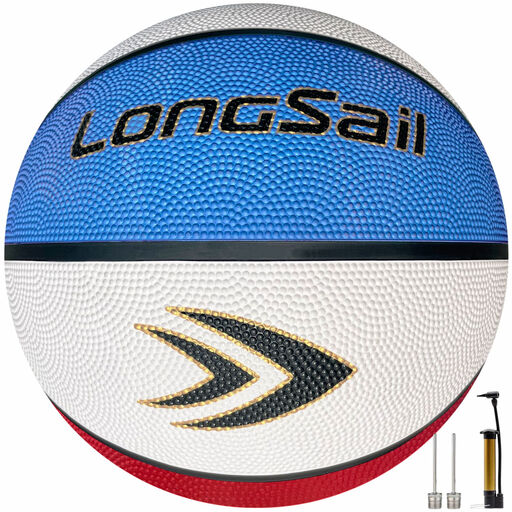
Why this choice suits this profile: its rubber cover and its stated use both indoors and outdoors make it suitable for frequent training, park games and group sessions.
Its scratch-resistant surface and structured texture are suited to the demands of regular outdoor use, without presenting the ball as invulnerable.
Deep channels, butyl bladder and carry bag supplied with a pump and two needles.
We've put together a comprehensive, real-time updated selection of products that meet these demanding criteria as well as European safety regulations.
To preserve a size 7 basketball:
The lifespan depends on the number of sessions, the type of surface and the quality of care. Concrete and asphalt naturally accelerate wear compared to wooden floors.
Size 7, also called a 29.5-inch basketball, is generally suitable for players aged 13 and over as well as adults. For competitions, however, check the specific rules for the relevant category.
Yes, provided the product page clearly states indoor-outdoor use. A rubber model will often be more suitable for abrasive surfaces, while a PU or microfiber cover can offer a more pleasant feel indoors. In any case, clean and dry the ball after a damp session.
Not necessarily. Some models are sold with a hand pump, needles and a bag. Check the exact contents of the package: a ball delivered deflated must be inflated before its first use.