
Livraison le jour même ou le lendemain

Qualité garantie

Débloquez vos offres de bienvenue: Livraison GRATUITE | Jusqu'à -80 % | 30 jours d'essai gratuits à JoyPlus
Téléchargez l'application
Working from home, intense gaming sessions, long hours of studying… our desks have become the hub of our daily lives. But poor posture or an unsuitable work surface can quickly turn this time into a nightmare for your back and focus. That's where the sit-stand desk comes in: a simple and effective solution to improve your well-being by easily alternating between positions.
With the market exploding with options, it's hard to know where to start. This guide is here to break down the essential features and help you choose the ergonomic workstation that will fit perfectly into your daily life and your home, cutting through the marketing jargon.
Before you commit to a model, let's review the essential criteria. This will help you define your priorities and make the right choice, with no regrets.
The secret to a good height-adjustable desk lies in its mechanism. Most models feature one or two electric motors, offering unparalleled ease of use?: a simple press of a button, and the desktop adjusts to your desired height.
Some options can be a real game-changer in your daily routine?:
This is the number-one factor?: the space you have available. Take the time to carefully measure the spot for your future work desk. A standard 120?x?60?cm desktop is enough for a simple setup with a laptop and one monitor. For a dual-monitor configuration or if you need space to spread out documents, aim for a 160?x?70?cm desktop, or even larger. Don't forget cable management?: cable grommets and an under-desk storage tray are the keys to a clean and organized computer desk.
A desk isn't just a tool; it's a piece of furniture that should complement your interior design. The industrial-style desk, which pairs wood-effect desktops with black steel frames, is a safe bet that combines looks with sturdiness. Pay attention to the quality of the materials (dense particleboard, thick steel frame) and the maximum load capacity, especially if you have a heavy setup. Adjustable feet are a significant advantage to ensure perfect stability, even on an uneven floor.
To help you decide, our editors have reviewed several models to offer a selection that meets different needs and budgets.
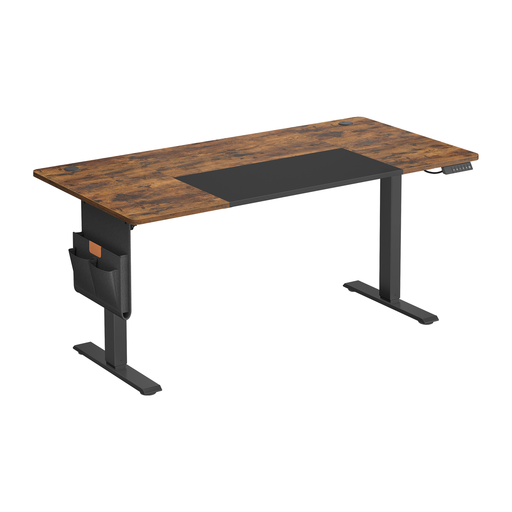
Why it stands out?: It checks all the boxes for the ideal sit-stand desk?: a large desktop, comprehensive features, and a well-thought-out design. It's a top-tier choice for a primary workstation.
Highlights?:
Who is it for? Professionals working from home, creatives, and gamers who need a large, comfortable workspace and don't want to compromise on features.
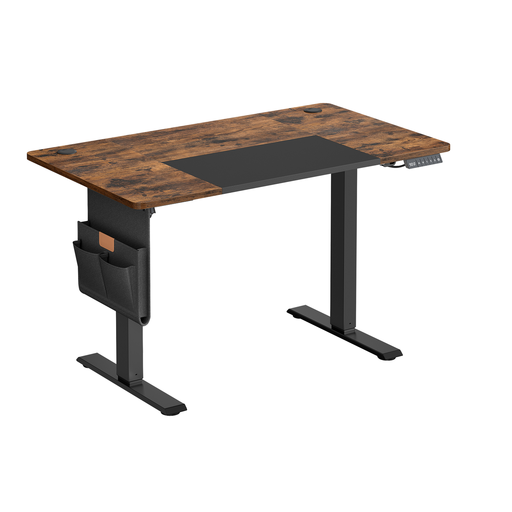
Why it stands out?: This is the smaller sibling of the previous model. It packs the same excellent features into a more compact format, perfect for smaller spaces.
Highlights?:
Who is it for? Students, apartment-dwelling remote workers, or anyone looking for a complete and high-performing sit-stand desk without sacrificing living space.
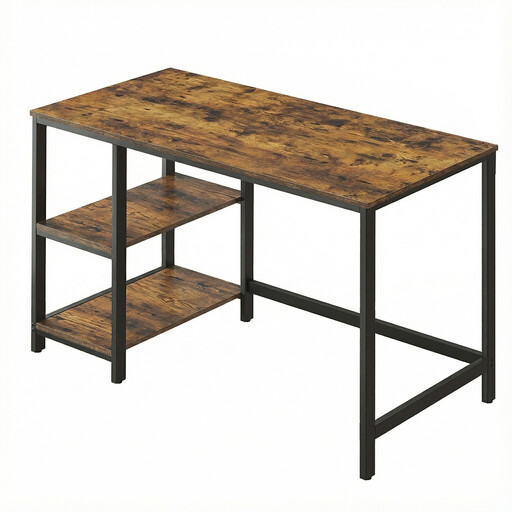
Why it stands out?: For those who don't need height adjustment, this fixed desk focuses on style, simplicity, and unbeatable value.
Highlights?:
Who is it for? This is the smart choice for those who prioritize style and functionality at a great price, without needing height adjustment. Ideal for a first setup or a tight budget.
This selection highlights a few key models, but your needs are unique. Dimensions, materials, features… to explore an even wider range and find your perfect match, take a look at our full catalog.
? Explore our complete collection of desks
It's simple. When sitting, your forearms should rest flat on the desk, forming an angle of about 90 degrees with your upper arms, and your feet should be flat on the floor. When standing, the same 90-degree elbow angle rule applies. The whole point of an adjustable desk is to find that perfect, millimeter-precise fit.
Not at all, or very little! The motors in modern models are designed to be exceptionally quiet. The noise level of a good electric desk rarely exceeds 50 decibels, which is equivalent to a whisper or the hum of a modern refrigerator. It's more than quiet enough not to disturb anyone, whether at home or in an open-plan office.
There's no magic formula; the key is to move regularly. A good rule of thumb is to switch every 30 to 60 minutes. When you start, try short periods of standing (15-20 minutes) and gradually increase the duration. The goal isn't to stand all day, but simply to break up long periods of sedentary time. The built-in reminder functions on some desks are perfect for helping you do this without even thinking about it.