
Livraison le jour même ou le lendemain

Qualité garantie

Débloquez vos offres de bienvenue: Livraison GRATUITE | Jusqu'à -80 % | 30 jours d'essai gratuits à JoyPlus
Téléchargez l'application
By the Joybuy editorial team, July 19, 2026
Remote work has become the norm, and with it, long hours glued to a desk. This sedentary lifestyle takes a toll on both mind and body, leading to fatigue and pain. The sit-stand desk has emerged as the ideal solution to reintroduce movement into our workdays, allowing us to alternate postures with ease.
But with an overwhelming number of options on the market, how do you navigate the choices? This guide is here to provide clarity, outlining the essential criteria and showcasing a selection of models for every need and workspace.
Before you take the plunge, a few technical details deserve your attention. They will make all the difference in your daily routine. Here are three criteria to scrutinize to make the right choice.
First step: measure your available space. A desk that's too large will overwhelm a small room, while a model that's too small will be impractical. Consider the desktop area needed for your setup (computer, monitors, keyboard) while still leaving a comfortable workspace. The most common sizes range from 120 x 60 cm for compact setups to 180 x 80 cm for those who need to think big.
A modern electric desk does more than just go up and down. The memory function is a real game-changer: it allows you to save your preferred heights (e.g., sitting and standing) and switch between them with a single press. Other options, like a built-in USB-C port to charge your devices, thoughtful cable management, or headphone hooks, transform a simple desk into a perfectly organised remote work station.
Sturdiness is the non-negotiable criterion. A steel frame ensures the desk won't wobble, even at its highest position. The motor must be powerful enough to lift your equipment effortlessly, but also quiet enough not to disturb your concentration (or that of those around you). Finally, check the ease of assembly: clear instructions and well-labelled parts will save you a headache. A quick setup means you can start enjoying your new desk right away.
Here are a few models that caught our eye for their design and features, created to optimise working from home.
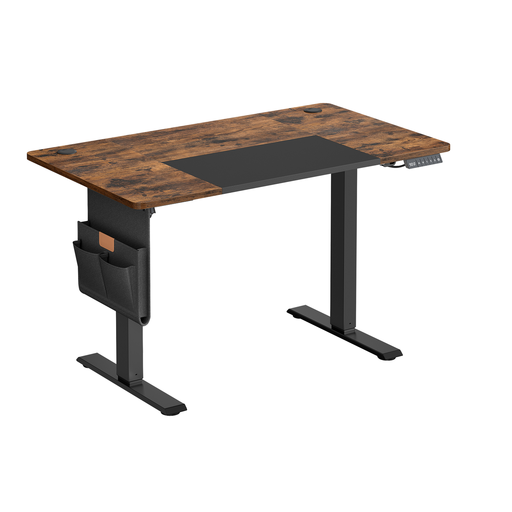
Key Selling Point: This model is a complete and well-designed solution for small spaces. Its 120 x 60 cm dimensions fit in easily without compromising on the essential features of a modern ergonomic desk. It includes a memory function, a USB-C port, and welcome organisational accessories.
Highlights:
Who is it for? Perfect for students, freelancers, or remote workers with limited space who refuse to sacrifice comfort and functionality.
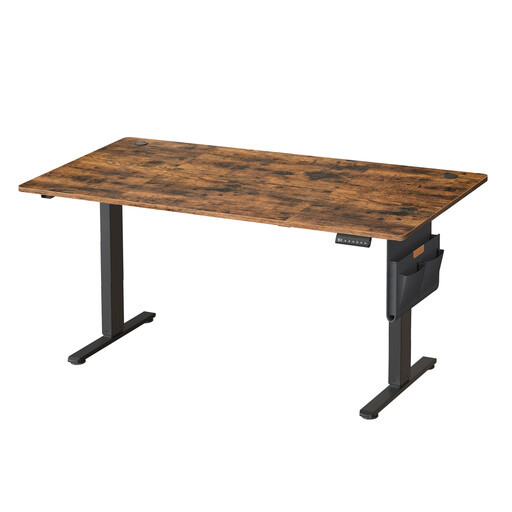
The Perfect Balance: With its more comfortable 160.1 x 70.1 cm desktop, this desk strikes the perfect balance between work surface and a manageable footprint. Its solid construction and reliable motor ensure rock-solid stability, even when fully loaded and in the standing position.
Highlights:
Who is it for? Ideal for professionals who juggle multiple monitors or need a more generous work surface without giving up on cutting-edge ergonomics.
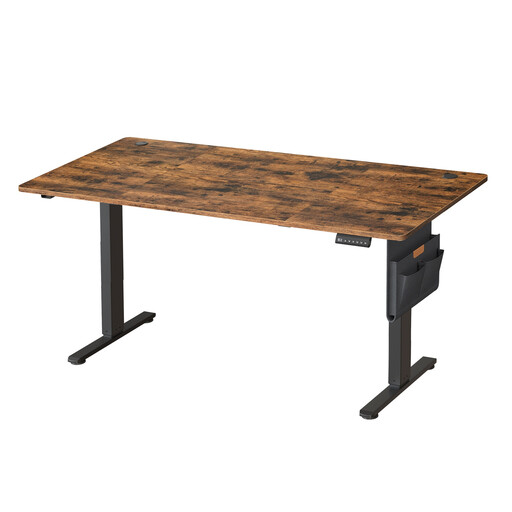
The XXL Workspace: This model is in a league of its own with its massive 180 x 80 cm desktop. It's the choice for professionals who work with blueprints, large-format documents, or dream of a multi-monitor setup without limitations.
Highlights:
Who is it for? For the most demanding users: architects, designers, developers, and anyone who needs maximum space without compromising on the benefits of a sit-stand desk.
To make the most of a corner or manage an even more complex workstation, an L-shaped adjustable desk is often the ideal solution. This format offers a vastly increased work surface while fitting perfectly into a corner.
? Discover our range of L-shaped adjustable desks
The perfect height depends on your body. In a seated position, your forearms should rest flat on the desk, with your elbows at a 90-degree angle. The same principle applies when standing: adjust the desktop until your elbows are at a right angle as you type. The memory function proves very useful for saving these two positions.
Recent models are designed to be particularly discreet. The noise level of a good electric desk rarely exceeds 50 decibels during adjustment, which is equivalent to a quiet conversation or the background noise in a library. This allows you to change positions without disturbing anyone or losing your train of thought.
Manufacturers have worked hard to simplify assembly. Most desks come with a detailed guide, clear diagrams, and numbered parts. By following the steps, assembly usually takes about an hour, either alone or with a partner.