
Livraison le jour même ou le lendemain

Qualité garantie

Débloquez vos offres de bienvenue: Livraison GRATUITE | Jusqu'à -80 % | 30 jours d'essai gratuits à JoyPlus
Téléchargez l'application
A cluttered countertop around the sink isn't just an eyesore. It's a genuine hygiene problem: damp sponges become breeding grounds for bacteria, and soap bottles leave stubborn limescale marks. A good sink organizer promises to end this chaos. The problem? Many models are disappointing and end up cluttering the cupboard where we store useless gadgets.
Before you make a decision, it's crucial to know the common pitfalls that turn a promising purchase into a source of frustration. As the Head of Product Recommendations at Joybuy, my mission is to guide you toward the features that truly make a difference, for an accessory that is as durable as it is functional.
The market is flooded with models, but they are far from equal. Here are the most common design flaws that condemn an organizer to become unusable in just a few months.
The Material Trap: Hidden Rust Many products boast of being "rust-resistant" but are actually made of low-quality chrome-plated metal. With constant exposure to water, this fragile coating flakes off, and rust sets in within a few weeks. The result? Orangey stains on your countertop that are nearly impossible to remove.
Chronic Instability and Poor Drainage A sink caddy that is too light or poorly designed is likely to tip over every time you grab the brush or the dish soap bottle. Worse still, a model without effective perforations or a removable drip tray quickly turns into a swamp: water stagnates at the bottom, creating an ideal environment for mould and bad odours.
Counterproductive Design Some organizers, with their deceptively sophisticated designs, are a real nightmare to clean. Soap scum and dirt get trapped in inaccessible nooks and crannies. To top it all off, it's not uncommon for the compartments to be so poorly designed that they can't hold a standard-sized sponge or a dish brush. The accessory that was supposed to make your life easier becomes perfectly useless.
To avoid making a mistake, focus on a few key, non-negotiable points. These are what guarantee the quality and longevity of your future designer kitchen accessory.
The choice of material is absolutely crucial. It determines not only the lifespan of your organizer but also its hygiene.
A good design isn't just about aesthetics; it's primarily about intelligence. For a multifunctional kitchen organizer, this comes down to two essential points.
Rather than a long, impersonal list, we have selected models that meet specific needs, all evaluated against the quality and practicality criteria we've just defined.
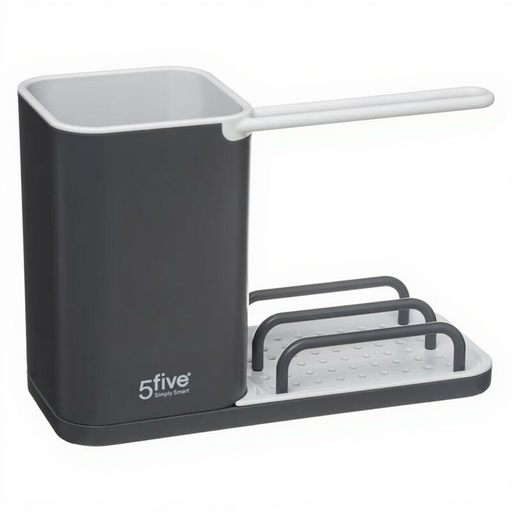
Why we recommend it: It's the perfect all-in-one solution for those who refuse to choose between style and practicality. Its anthracite grey colour blends elegantly into modern kitchens.
Its smart, single-unit design eliminates the problem of instability. By combining 4 functions into one stable unit, it puts an end to the clutter created by an accumulation of accessories.
It combines a cutlery holder, a mini drainer, a sponge holder, and a soap dispenser. An ultra-complete 4-in-1 solution for finally optimized kitchen countertop storage.
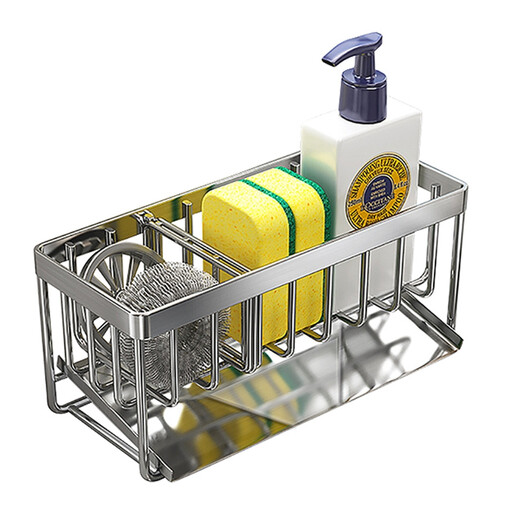
Why we recommend it: For anyone who won't compromise on quality and hygiene. This model is built to last and withstand moisture without ever failing.
It neutralizes pitfall #1 (rust) thanks to its 100% 304 stainless steel construction. Its open-wire design and drip tray prevent water from stagnating and radically simplify cleaning.
A premium material for absolute resistance to corrosion and perfect hygiene. Its minimalist and timeless design transcends trends.
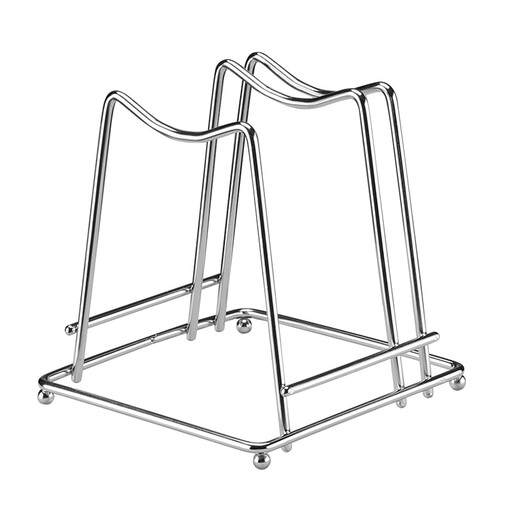
Why we recommend it: Is your sink area under control? Take it to the next level by tackling the rest of the countertop. This accessory tames the lids and cutting boards that are always lying around.
It applies the same winning formula to another critical area of the kitchen. The 304 stainless steel and its robust structure (4mm wires) are a dual guarantee against rust and warping.
It provides ultra-stable vertical storage for multiple lids and boards. The result: a valuable space-saver and your cooking essentials always within reach.
To continue optimizing every corner of your kitchen, discover our complete selection of storage solutions, all chosen for their quality and ingenuity.
How do I properly clean my sink organizer to prevent mould? The secret is consistency. Ideally, empty and rinse the water collection tray every day. Once a week, give it a thorough cleaning with soapy water and a small brush to dislodge any soap residue. Dry it carefully before putting everything back in place. Good to know: high-quality plastic models are often dishwasher-safe (check the manufacturer's instructions).
Can a stainless steel organizer really rust? Absolutely, if it's a low-quality alloy. The terms "inox" or "stainless steel" are sometimes used misleadingly for cheap metals. For maximum protection in the humid environment of a kitchen, insist on the specific mention of 304 stainless steel (or 18/8). This standard guarantees a sufficient content of chromium and nickel to make it virtually impervious to rust and corrosion.
What's the difference between a sink caddy and a dish rack? A sink caddy is a small, compact storage unit that holds cleaning essentials (sponges, brushes, dish soap). A stainless steel dish rack or plastic one is a much larger structure designed for drying your dishes after washing (plates, glasses, cutlery). Some hybrid models, like the 4-in-1 organizer presented above, cleverly merge these two functions into a compact format.