To choose a frozen pizza for one while keeping fat intake down, start by comparing the figures per 100 g, then consider how much you plan to eat. A single-serving size or vegetable topping doesn’t automatically mean it’s low in fat. In France, under Regulation (EC) No 1924/2006 published on EUR-Lex, the claim ‘low fat’ requires a maximum of 3 g of fat per 100 g of solid food. Also check the salt, allergens and cooking instructions for the specific product you’re considering.
Who is this option for?
People looking for a specific fat-content threshold
If you’re specifically looking for a pizza that can carry the ‘low fat’ claim, the figure per 100 g is your first point of reference. A recipe that’s lower in fat than another doesn’t necessarily meet the threshold for this claim.
People living alone who want an easy-to-serve portion
A single-serving size or mini pizzas can make serving easier. However, to work out how much fat you’ll consume, consider the weight you actually eat, not just the stated pack size.
Shoppers comparing several label details
If salt, ingredients or allergens also matter to you, check these details for the specific product before choosing between cheese, meat or vegetable recipes.
What should you compare?
For a frozen pizza intended for one person, start with the fat per 100 g, then work out the figures for the amount you’ll eat. The priorities below are for shoppers who also want to keep their fat intake down.
| Criteria |
What to check |
Who it matters to |
| Fat content |
Compare the fat per 100 g. For the regulated ‘low fat’ claim, Regulation (EC) No 1924/2006 sets a maximum of 3 g per 100 g of solid food. |
If my goal is based on a specific threshold, I want to distinguish a pizza that’s simply lower in fat from one that meets the regulated claim. This would be the top priority for around 50% of shoppers concerned. |
| Amount eaten |
Check the net weight and number of portions, then work out the nutritional values for the amount you’ll actually serve. |
When I’m eating alone, I want to prepare an easy-to-manage amount without assuming that a smaller size is low in fat. Around 30% of shoppers concerned might put portion control first. |
| Other practical considerations |
Compare salt per 100 g and for the amount eaten; check the allergens and cooking instructions for the specific product. |
I don’t want a focus on fat to make me overlook salt, an allergen or cooking instructions that aren’t suitable for my equipment. For around 20% of shoppers concerned, this would be the main priority. |
Mistakes to avoid
-
Assuming ‘single-serving’ means ‘low fat’
Auchan’s 200 g 4 Cheese pizza, sold as a single portion, contains 20 g of fat in the whole pizza, according to Auchan’s product listing.
Use the pack size to gauge the amount, then check the fat per 100 g and for the whole pizza separately.
-
Relying on vegetable toppings
Carrefour’s product listing for its Organic Grilled Vegetable pizza gives a fat content of 6.3 g per 100 g. This is above the maximum of 3 g per 100 g set by Regulation (EC) No 1924/2006 for the ‘low fat’ claim on solid foods.
Compare the nutritional values of the recipes you’re interested in, whatever the toppings.
-
Forgetting about salt when comparing fat content
Auchan’s product listing for its 200 g 4 Cheese pizza gives a salt content of 2.1 g for the whole pizza. Comparing fat alone would mean overlooking this.
Check the salt per 100 g and for the amount you plan to eat, too.
-
Overlooking allergens and cooking instructions
Check the ingredients list and preparation method for the exact recipe you’re buying, rather than assuming they’re the same as another pizza from the same brand.
Before buying, read the declared allergens and make sure the instructions suit your equipment.
Brands to consider when comparing products
Buitoni
Carrefour stocks a Buitoni Air Fryer Mozzarella Pizza in a single-serving size, among other products.
- Carrefour’s Buitoni range includes a single-serving size.
- To assess its fat content, check the nutritional information for the specific product you choose; the name and pack size aren’t enough.
Dr. Oetker
Dr. Oetker’s frozen pizza range includes Ristorante recipes.
- There are several recipes to compare, along with their toppings and nutritional information.
- Carrefour’s listing for the Ristorante Bolognese e Formaggi gives a fat content of 9.9 g per 100 g and displays a Nutri-Score B. This is above the 3 g per 100 g threshold for the regulated ‘low fat’ claim on solid foods.
Carrefour
Carrefour stocks a 380 g Organic Grilled Vegetable pizza, among other products.
- Its product listing gives a fat content of 6.3 g per 100 g, making it possible to compare recipes on a like-for-like basis.
- This is above the regulated threshold of 3 g per 100 g. Also consider how much of the 380 g pizza you plan to eat.
Turini, référencée chez E.Leclerc
E.Leclerc lists a 200 g Turini single-serving Chorizo pizza.
- The 200 g pack size shows how much the whole pizza weighs.
- E.Leclerc’s listing gives 9.0 g of fat and 1.2 g of salt per 100 g, as well as a Nutri-Score D. The single-serving size doesn’t change these per-100 g figures.
Auchan
Auchan lists a 200 g frozen 4 Cheese pizza as a single portion, with microwave preparation instructions.
- The product listing shows the nutritional values for the whole pizza.
- According to Auchan, this pizza contains 20 g of fat and 2.1 g of salt per 200 g portion. Check these totals rather than relying on the pack size alone.
Mini pizzas to compare on Joybuy
These Margherita mini pizzas are a good option if you’re looking for an easy-to-serve amount. To decide how many to prepare while keeping an eye on fat, check the nutritional information and the amount you’ll eat.
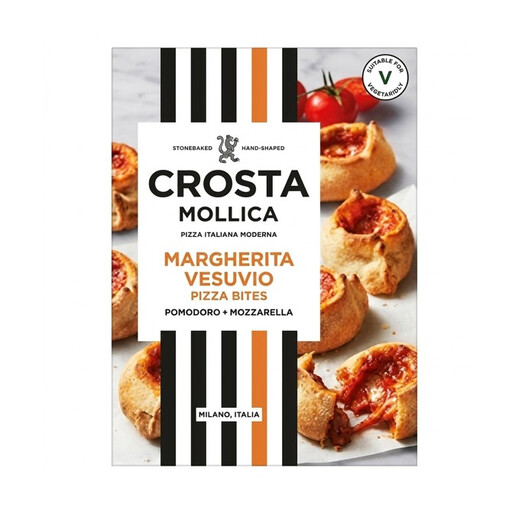 Image unavailable
CROSTA ET MOLLICA Mini Pizzas Margherita, 270 g
The mini size may suit you if you’d rather choose how much to serve than prepare a large pizza.
The pack weighs 270 g. Before choosing your portion, check the number of pieces, fat per 100 g, allergens and cooking instructions.
View on Joybuy
Frequently asked questions
When can a pizza carry the ‘low fat’ claim?
In France, a solid pizza must contain no more than 3 g of fat per 100 g to carry this claim, in accordance with Regulation (EC) No 1924/2006 published on EUR-Lex. A small pizza or a vegetable recipe doesn’t meet this requirement just because of its size or toppings.
Should I check the figures per 100 g or for the whole pizza?
Check both: the figures per 100 g let you compare recipes on a like-for-like basis, while the total for the amount you’ll eat helps you choose a suitable portion. Check the pizza’s weight if the packaging doesn’t give the figures for the whole product.
Is a 200 g single-serving pizza always low in fat?
No. According to Auchan’s product listing, its 200 g 4 Cheese pizza is a single portion but contains 20 g of fat in the whole pizza. The pack size tells you how much you’re serving, not the fat content on its own.
What should I check besides fat content?
Compare the salt per 100 g and for the amount you’ll eat, then read the ingredients list and allergens for the specific product. If you plan to use a microwave or air fryer, also check that the cooking method is included in the instructions.


