A quick break with minimal fuss
If you’re eating straight from the tin or adding sardines to a salad, look for fillets or products explicitly labelled ‘boneless’. However, the word ‘fillets’ alone doesn’t guarantee that every bone has been removed.


For lunch at your desk, choose sardine fillets or a product explicitly labelled boneless if you want to keep handling to a minimum. Whole sardines are fine if you don’t mind the bones. Then check the drained weight, if stated, the recipe and the storage instructions after opening: the weight printed on the tin doesn’t tell you how much fish it contains on its own.
If you’re eating straight from the tin or adding sardines to a salad, look for fillets or products explicitly labelled ‘boneless’. However, the word ‘fillets’ alone doesn’t guarantee that every bone has been removed.
The 70–100 g sizes listed by Saupiquet and in the E.Leclerc catalogue can make part of a lunch alongside bread, salad vegetables or a starchy side. Check the drained weight too, to see how much fish you’ll get.
If you’re happy to eat whole sardines, compare tins weighing 115–135 g and choose between sardines in spring water, tomato sauce or oil. Size and recipe are two separate things to consider.
| What to consider | What to check | Who is it for? |
|---|---|---|
| Easy to eat | Look for ‘fillets’ or ‘boneless’ on the exact product; don’t assume a smaller tin means the sardines are boneless. | When my break is short, I want to open the tin without having to remove the bones. Around 37% of consumers put ease of eating first. |
| Recipe | Check the ingredients, fat and salt per 100 g, comparing like with like. | If I choose based on the sauce or oil, I want to know exactly what’s in the recipe. For around 27% of consumers, the recipe’s ingredients come before other considerations. |
| Amount of fish | Compare the net weight and, if shown on the label, the drained weight. Decide whether you’ll have a side with it. | I want to know whether the tin will be the main part of my lunch or something I’ll add to another dish. Portion size is the main consideration for around 27% of consumers. |
| Pack format | Check whether it’s a single tin or a multipack, then whether the product is available through your preferred way of shopping. | I’m looking for one tin for my break and want to be able to get the recipe I’ve chosen. Around 9% of consumers prioritise these practical considerations. |
The net weight includes the fish and the other ingredients in the recipe. For example, Auchan’s 115 g sardines in olive oil state a drained weight of 80 g.
Check the drained weight if it’s shown, then decide whether you’d like to add bread, vegetables or a starchy side.
Connétable’s tomato recipe with no added oil contains 10 g of fat per 100 g. The wording describes the recipe, but doesn’t tell you its nutritional value on its own.
Compare the ingredients, fat and salt in the tin you’re thinking of buying.
These styles may involve different amounts of effort during a lunch break. The word ‘fillets’ alone doesn’t confirm that every bone has been removed.
If this matters to you, look for an explicit statement on the exact product.
Storage instructions after opening vary by product. The Carrefour and Auchan product pages consulted recommend keeping the sardines in the fridge and eating them within 48 hours or two days.
If you don’t finish the tin at work, follow the label’s instructions on storage and how soon to eat it.
Saupiquet offers sardine fillets in olive oil in a 100 g tin, a size worth considering for lunch with a side.
The products reviewed include whole sardines in tomato sauce and olive oil, including a 115 g size.
The Auchan catalogue features sardine tins in several sizes, including a 115 g organic product in olive oil.
The E.Leclerc catalogue features 95 g tins of whole sardines in spring water, as well as fillets in other single-serve sizes.
Carrefour’s range of single-serve products includes a 115 g tin of boneless sardines in spring water.
These 115 g and 135 g products show the choice between fillets, small sardines in different recipes and another single-serve size. For lunch at work, distinguish between the net and drained weights, and check separately for any requirements you have about bones.
 Image unavailable
Fillets may suit you if you want to handle the fish as little as possible during your break. The tin states a net weight of 115 g and a drained weight of 81 g. If it’s essential that every bone has been removed, check the product label.
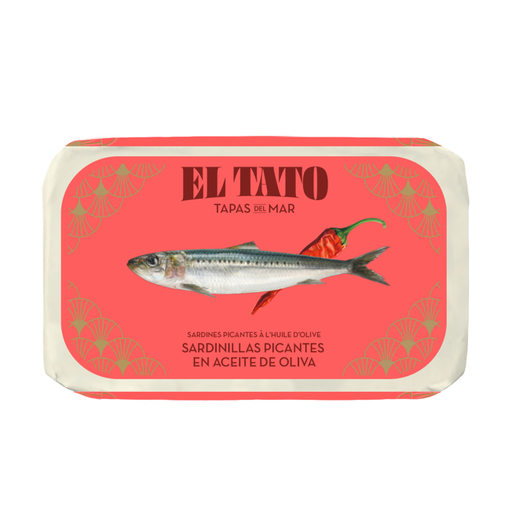 Image unavailable
This single-serve tin is for anyone specifically looking for a chilli recipe. The product name states a net weight of 115 g and a drained weight of 81 g. Check the information about bones if you plan to eat straight from the tin.
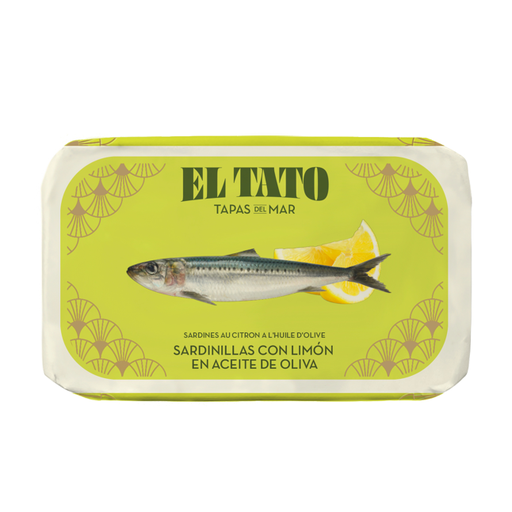 Image unavailable
The lemon recipe sets this tin apart from the chilli version in the same size. The product name states a net weight of 115 g and a drained weight of 81 g. Check the information about bones and storage after opening separately.
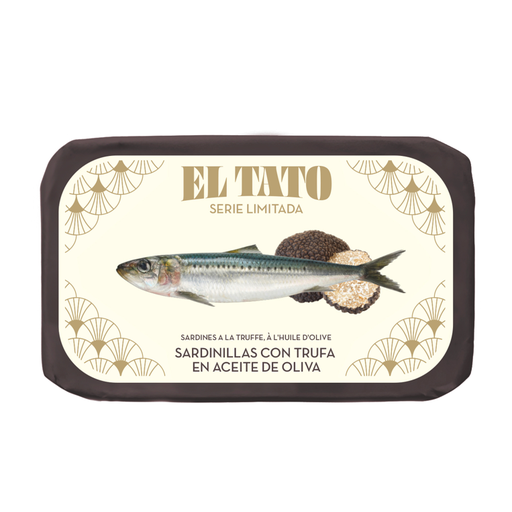 Image unavailable
Choose this version if you’d like to compare the truffle recipe with the other options. The tin states a net weight of 115 g and a drained weight of 81 g. Check the label for allergens and information about bones before taking it to work.
 Image unavailable
Compare this 135 g net-weight tin with the 115 g sizes if you’re looking for a different amount for lunch. Check the drained weight on the label if the amount of fish without the oil matters to you, and look for information about bones too.
A 70–100 g tin can go with a salad or some bread, while 115–135 g sizes contain more product by net weight. Check the drained weight too: an Auchan 115 g product states a drained weight of 80 g, showing why the two figures shouldn’t be confused.
No: ‘boneless’ describes how the fish is prepared, not the nutritional content of the recipe. To compare two tins, check their ingredients and the amount of salt and fat per 100 g.
Follow the storage instructions on the tin and make sure you can use a fridge if you plan to keep the rest. The Carrefour and Auchan products reviewed advise keeping them in the fridge and eating them within 48 hours or two days. Follow the timeframe given for your product.
Check the information for the exact product, both on its label and when shopping online. For pre-packed food sold in the European Union, the labelling rules set out by the European Union require, among other things, a list of ingredients, allergen information and nutritional details.