Households stocking up on tins
You buy several tins for upcoming meals and want to know how much fish each one will serve. The drained net weight helps you distinguish the sardines from the liquid they are packed in.


When stocking up on single-serve tins, first compare the amount of sardines you can actually use, then choose a recipe to suit the meals you have planned: in oil, in water or seasoned. If bones could make serving difficult, look for a product explicitly labelled “boneless”. In all cases, check the label on the tin you buy and follow the storage instructions after opening.
You buy several tins for upcoming meals and want to know how much fish each one will serve. The drained net weight helps you distinguish the sardines from the liquid they are packed in.
You use sardines on toast, in salads or in quick dishes. Whether you choose olive oil, water or a seasoned recipe depends on what else you plan to serve with the meal.
If bones are a concern for some of your guests, look for fillets or a product explicitly labelled “boneless”, rather than assuming all tinned sardines are prepared in the same way.
For several family meals, start with the amount of fish you want in each tin, then consider the recipe and how you plan to serve the sardines.
| What to compare | What to check | Who it matters to |
|---|---|---|
| Usable quantity | Compare the net weight and drained net weight, where stated, across tins of a similar size. | When I’m planning several meals, I want to know how many sardines will be left once I’ve drained away the liquid; around 40% of consumers would put this question of quantity first. |
| Recipe | Read the ingredients and distinguish between sardines in oil and those in water; compare nutritional information on the same basis. | If I want to season the sardines myself, a tin in water serves a different purpose from one in olive oil; around 30% of consumers would prioritise the choice of recipe. |
| Serving and labelling | Look for an explicit “fillets” or “boneless” label if needed, check for allergens and read the storage instructions after opening. | If I want to serve the tin without making assumptions about bones, or check the ingredients before the meal, I look at the label first; around 30% of consumers would prioritise these checks. |
The net weight includes the liquid the fish is packed in. For example, Auchan lists 95 g drained weight for its 135 g tin of sardines in water.
To plan portions, look for the drained net weight of the product you intend to buy.
Auchan says that the ingredients in its olive oil product may vary depending on the online grocery service and the date of purchase.
Check the ingredients and nutritional information on the tin you choose, especially if a particular ingredient matters to you.
Saupiquet fillets and Connétable’s product labelled “boneless” are different options from whole sardines.
If bones are a deciding factor, look for the wording that matches the product you want on the packaging.
The instructions for the Auchan and Saupiquet products mentioned here say to refrigerate after opening and eat within two days. Anses notes that sardines are among the fish that can pose a histamine risk if they are not stored correctly.
Refrigerate any leftovers promptly and follow the time limit stated on your tin.
Saupiquet offers, among other products, 100 g tins of sardine fillets in extra virgin olive oil.
Connétable offers sardines in extra virgin olive oil, as well as a separate product labelled “boneless”.
Carrefour offers a 135 g single-serve tin of sardines in extra virgin olive oil under this brand.
Auchan offers 135 g single-serve tins in extra virgin olive oil and in water.
The range featured by E.Leclerc includes a 135 g single-serve tin of sardines in olive oil, as well as multipacks.
These Joybuy tins show a range of recipes and styles of single-serve sardines: in olive oil, in water, labelled “boneless” or seasoned. Compare the size of each product with the amount you need for your meals.
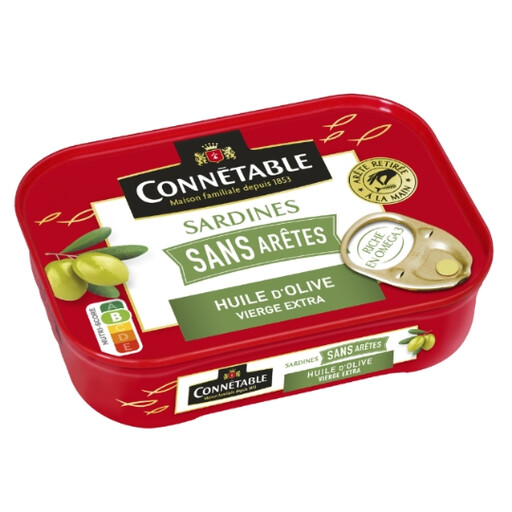 Image unavailable
Consider this tin if you’re looking for sardines in olive oil. The title gives a weight of 140 g; check the drained weight on the packaging to work out how much you can serve.
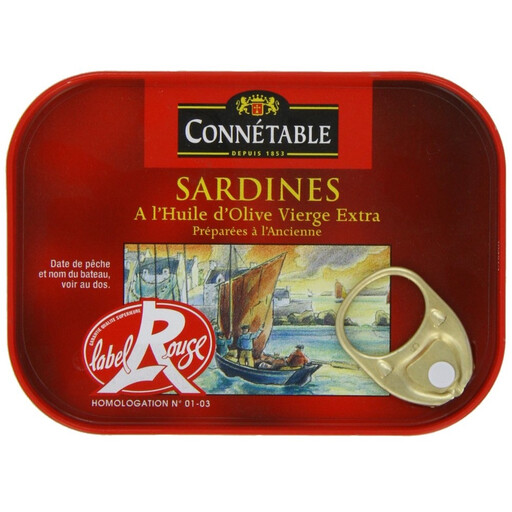 Image unavailable
This 135 g single-serve tin is a good choice if you’re looking for sardines in olive oil. If you’re planning several meals, check the drained weight on the label.
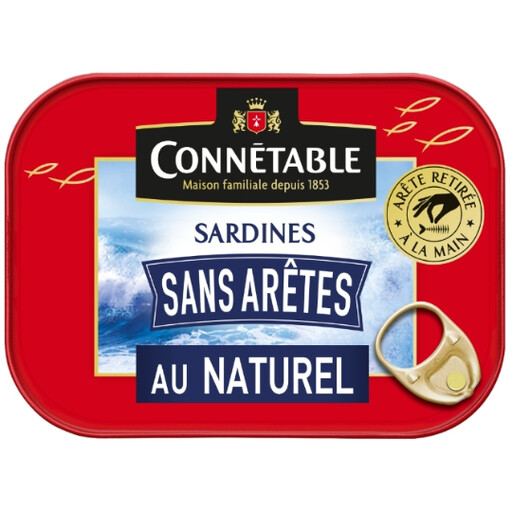 Image unavailable
Consider this option if you’re looking for sardines in water in a boneless format. The title gives a weight of 98 g; check the tin for the drained amount you can use for your meal.
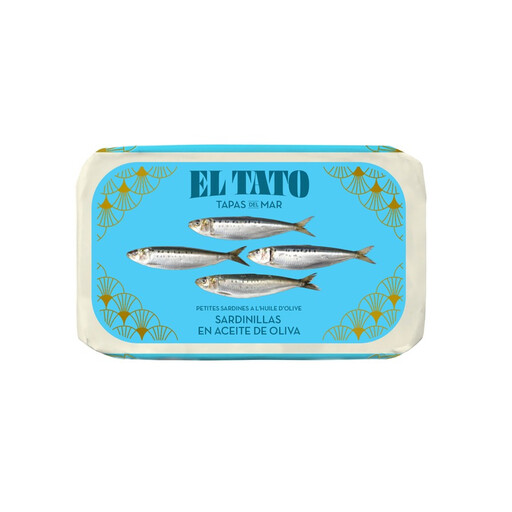 Image unavailable
This tin is an option if you prefer small sardines in olive oil. The title includes the details 16/20u and 115/81 g; check the label to understand what the two weights mean before planning your portions.
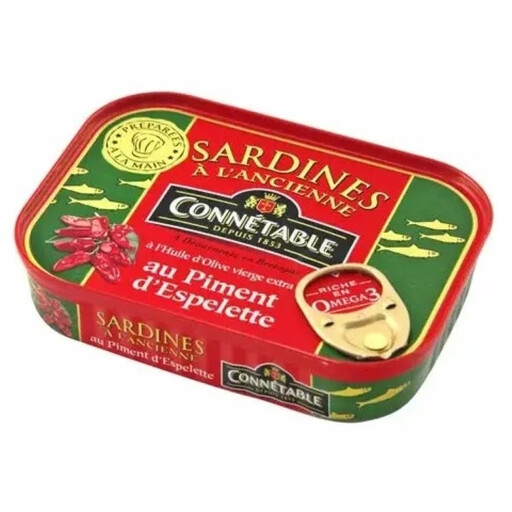 Image unavailable
This seasoned recipe is for meals where you’d like a touch of Espelette pepper. The title gives a weight of 115 g and the format as 1/6; check the drained weight if you’re comparing the amount of fish with other tins.
Not necessarily: the net weight also includes the liquid the fish is packed in. To estimate the amount of fish, check the drained net weight if it’s shown on the tin. Auchan lists 95 g drained weight for its 135 g tin of sardines in water.
Choose according to the meal you’re planning: olive oil is part of some recipes that are ready to serve, while sardines in water leave you free to add your own seasoning. The Connétable and Carrefour Classic' products mentioned here contain sardines, extra virgin olive oil and salt; Auchan’s sardines in water contain sardines, water and salt.
Check the ingredients list on the packaging you buy. France’s Directorate-General for Competition Policy, Consumer Affairs and Fraud Control (DGCCRF) notes that allergenic ingredients must be highlighted on food labels.
Follow the time limit and storage instructions on your tin. The Auchan and Saupiquet products mentioned here should be refrigerated and eaten within two days of opening. Anses stresses the importance of storing fish correctly to reduce the risk of histamine, which can affect fish including sardines.
The label on the tin you buy is the one to check. Auchan says that the ingredients in its olive oil product may vary depending on the online grocery service and the date of purchase, so check the ingredients on the product you receive.