What should you check before choosing?
When buying soup for your first food shop, decide first whether you want a ready-to-heat product or one that you mix up yourself. Then compare portions and labels: ‘single-serve’ doesn’t tell you what the soup comes in or how much you’ll get.
Ready-to-heat soup in a bottle
Worth considering: if you’d rather not mix up your soup. Liebig, for example, offers a 36 cl creamy soup in a resealable bottle.
Bear in mind: check that this quantity suits you and follow the storage instructions after opening.
Soup sachets
Worth considering: if you’d like to make one mug at a time. Auchan stocks Royco soups in sachets, each making 20 cl.
Bear in mind: you’ll need hot water and a container. Check the ingredients in your chosen recipe.
| What to consider |
What to check |
Who this matters to |
| Portion size and preparation |
Compare the net volume of a ready-to-heat soup with the quantity made by each sachet. Check the number of portions and preparation instructions. |
When I’m eating alone, I want to make the amount that suits me without ending up with lots of leftovers or extra washing up. This is a priority for around 45% of consumers. |
| Salt, ingredients and allergens |
Compare salt content on a like-for-like basis, especially per 100 ml of prepared soup when this information is given. Check the ingredients and allergens for the product you’re considering. |
Before choosing a convenient recipe, I want to check its ingredients and spot anything I need to avoid. Around 33% of consumers would make this a priority. |
| Storage and leftovers |
Check how much space the packaging takes up and, for a 500 ml or 1 L format, what you need to do after opening. |
With limited space and meals eaten alone, I’m looking for a format I can store and finish without leaving soup open. This would be the top priority for around 22% of consumers. |
Soups and formats available on Joybuy
These products include soups you prepare yourself and a pack of two 30 cl portions. Compare the recipe, volume and preparation instructions to find what suits your first food shop.
 Image unavailable
Royco dried soup with noodles, carrot and mushroom, 3 × 20 cl
Worth considering if you want to prepare one portion at a time and have hot water and a container.
The pack is listed as 3 × 20 cl. Check the allergens and nutrition information for this recipe on the packaging.
View on Joybuy
 Image unavailable
Hikari Enjuku Tofu instant miso soup, 8 units
Worth considering if you’re looking for a miso soup to prepare yourself rather than a ready-to-heat soup in a single-serve pack.
The pack contains 8 units. Check the instructions to find out how much water to use for each one, and compare the salt content in the prepared soup.
View on Joybuy
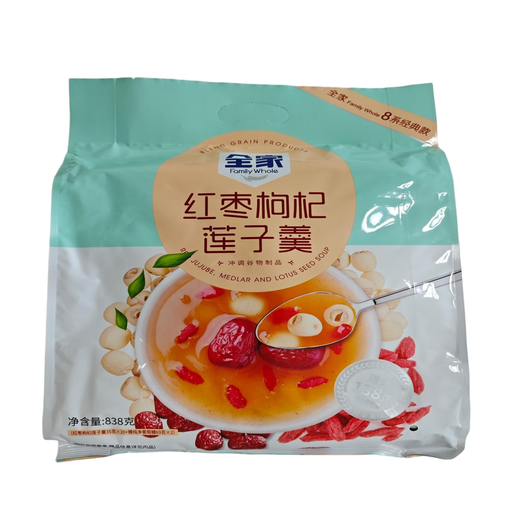 Image unavailable
Family Whole soup with red dates, goji berries and lotus seeds, 838 g
This recipe is different from creamy vegetable soups, so check that it’s the type of soup you’re looking to make.
The listed weight is 838 g. Check the packaging to find out how much to prepare per portion and what the different parts of the pack are.
View on Joybuy
 Image unavailable
Liebig 12-vegetable soup, 2 × 30 cl
With two 30 cl portions, you can choose how much to open to suit your meal.
Check the packaging for preparation instructions, allergens and storage guidance after opening.
View on Joybuy
Frequently asked questions
Does single-serve soup always come in a tin?
No. A portion can also come in a sachet that you mix up yourself or a bottle of ready-to-heat soup, as shown by the Royco formats stocked by Auchan and Liebig’s 36 cl bottle. Check the packaging and volume rather than relying on the ‘single-serve’ label alone.
What should you check on the label before buying packaged soup?
Start with the volume or amount prepared, the ingredients list, allergens and nutrition information. For prepacked food sold in France, the Ministry of the Economy explains that allergenic ingredients must be highlighted and the net quantity must be stated.
Do best-before and use-by dates mean the same thing?
No. According to the Ministry of the Economy, a use-by date is a strict deadline for the foods it applies to, while a best-before date means something different. In both cases, follow the storage instructions on the product, particularly after opening.
Is the Nutri-Score enough to compare two soups?
No. Santé publique France describes the Nutri-Score as a voluntary label that makes nutrition information easier to understand. If it’s shown, use it alongside the salt, ingredients and allergens, comparing portions on a like-for-like basis.


