To put together a Sunday lunch plate, first decide how much sardine to serve. Look at the drained net weight, if it’s given, rather than relying on the tin’s total weight. If your guests prefer sardines without bones, look for an explicit ‘boneless’ label. Then choose sardines in water, oil or tomato sauce to suit your planned seasoning, checking the ingredients for the specific product.
Who is this guide for?
Hosts putting together a lunch plate
A single-serve tin can be served with bread, potatoes, salad or vegetables. To work out how much fish you’ll need, distinguish between the tin’s total weight and its drained net weight. The product listings for Carrefour Classic’ and Auchan both give a drained net weight of 95 g for their sardines in water.
Guests who prefer to avoid bones
If you’re serving sardines on toast or mixing them into a salad, look for a product explicitly labelled ‘boneless’. The Joybuy listing for Connétable sardines in olive oil specifies that the central bone has been removed.
People who choose the recipe first
Sardines in water leave you free to add your own seasoning, while recipes in olive oil or tomato sauce come with their own ingredients. Compare the ingredients list and nutritional values for each product, especially the salt and fat per 100 g.
What should you look for?
For a meal made up of several dishes, first decide how much fish you want, then check for bones and choose a recipe to suit your guests and side dishes.
| What to consider | What to check | Who it matters to |
|---|
| Amount to serve |
Compare the drained net weight and number of tins, rather than looking only at the total weight. |
When putting together a plate with side dishes, I want to know how much fish to serve without opening an extra tin; around 40% of consumers prioritise this quantity. |
| Whether it contains bones |
Look for an explicit ‘boneless’ label or an indication that the central bone has been removed. |
If my guests prefer to avoid bones, ease of serving matters more than the recipe; this is a priority for around 30% of consumers. |
| Recipe and ingredients |
Read the ingredients, then compare the salt and fat per 100 g across the products you’re considering. |
When I’ve already planned the seasoning for a dish, I want to choose between sardines in water and a seasoned recipe; around 30% of consumers put the ingredients first. |
Mistakes to avoid
-
Assuming the tin’s weight is the amount of sardines
Water, oil or sauce all contribute to the total weight. The Auchan listing, for example, gives a tin weight of 135 g and a drained net weight of 95 g.
To plan portions and side dishes, compare the drained net weight of the products you’re considering.
-
Assuming ‘no oil’ tells you everything about the ingredients
This label alone doesn’t tell you how much salt the product contains or give you its other nutritional values. Connétable lists 0.90 g of salt per 100 g for its Généreuses sardines in tomato sauce with no oil.
Compare the ingredients, salt and fat per 100 g on the labels of the specific products.
-
Choosing whole sardines without thinking about serving them
A tin of whole sardines may not suit guests who want to avoid bones, particularly in a mixed dish.
If this is important, check that the product is explicitly labelled ‘boneless’.
-
Forgetting what to do after opening
The Saupiquet and Auchan listings say that the relevant products should be refrigerated and eaten within two days or 48 hours of opening.
Follow the instructions on the tin you buy and refrigerate any leftovers as directed on its label.
Sardine brands to consider, depending on the recipe
Saupiquet
A tin of fillets in extra virgin olive oil with olives is one option to consider for a single-serve meal.
- The Saupiquet listing gives a tin weight of 100 g and says the fillets in this recipe are packed by hand.
- This description doesn’t cover the whole range. The brand says to refrigerate this product after opening and eat it within two days.
Connétable
The brand offers whole sardines in tomato sauce with no added oil, as well as a separate olive oil product with the central bone removed.
- The Connétable listing for Généreuses sardines in tomato sauce with no oil details the tomato, vinegar and herbs.
- Product details vary by recipe: the Joybuy listing for its olive oil product gives a drained weight of 98 g.
Carrefour Classic’
Sardines in water are a good choice if you’d like to add your own seasoning to the plate.
- The Carrefour listing gives a drained net weight of 95 g and lists sardines, water and salt as the ingredients.
- ‘In water’ doesn’t mean salt-free, so check the label if this ingredient matters to you.
Auchan
The 135 g tin of sardines in water is another option if you’d like to season them yourself.
- The Auchan listing gives a drained net weight of 95 g and lists sardines, water and salt as the ingredients.
- The 135 g refers to the net weight of this product, not its drained net weight.
Pêche Océan
E.Leclerc’s whole sardines in water come in a 95 g tin.
- The E.Leclerc listing says the sardines are pre-cooked and lists water and salt as ingredients.
- These are whole sardines, so if bones are a deciding factor, check whether this style suits your guests.
Sardines available on Joybuy
These single-serve tins include recipes in water, olive oil and tomato sauce. Compare their style and labels to find the right amount to serve, check for bones and choose the seasoning you want.
 Image unavailable
Connétable Sardines in Extra Virgin Olive Oil, 140 g
Worth considering for a plate where olive oil is part of the seasoning. The Joybuy listing gives this product a drained weight of 98 g and says the central bone has been removed.
View on Joybuy
 Image unavailable
Connétable Boneless Sardines in Water, 98 g
Consider these if you’re looking for a recipe in water and a boneless product. To work out how much fish to serve, check the drained net weight on the label.
View on Joybuy
 Image unavailable
EL TATO Sardine Fillets in Olive Oil, 115/81 g
Fillets can work well in a dish where you want to spread the sardines around. Check the packaging to see what the 115/81 g figures refer to, and whether bones matter to your guests.
View on Joybuy
 Image unavailable
Connétable Sardines in Olive Oil with Espelette Pepper, 1/6, 115 g
Consider this seasoned recipe if Espelette pepper suits the dish you have planned. Check the drained net weight and whether the sardines contain bones before working out portions.
View on Joybuy
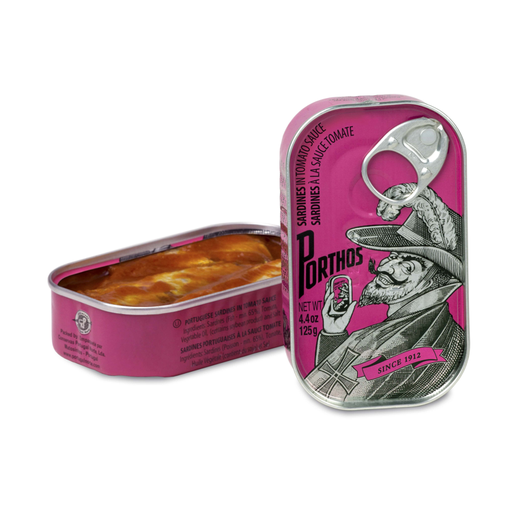 Image unavailable
PORTHOS Vintage Sardines in Tomato Sauce, 112/81 g
Consider these if a tomato recipe suits your chosen side dishes. Check the label to see what the two weights refer to and whether the style of sardines suits your guests.
View on Joybuy
Frequently asked questions
Should you check the total weight or drained weight of a single-serve tin?
Check the drained net weight to estimate how much sardine you’ll get, excluding the liquid. The DGCCRF says this information must appear on the label when a product is sold in a covering liquid. The Auchan listing shows the difference, with a net weight of 135 g and a drained net weight of 95 g.
Which allergen should you check on a tin of sardines?
Sardines are fish, so check the ingredients list for your chosen product if this allergen is relevant to you. Also read the full ingredients list if the recipe includes a sauce or other ingredients.
How long can you keep sardines after opening?
Follow the storage instructions and use-by period given on the tin you buy. For the Saupiquet, Auchan and Connétable products described in their respective listings, the instructions say to refrigerate them and eat them within two days or 48 hours of opening. This guidance doesn’t necessarily apply to every recipe.


