People who pay attention to ingredients
You compare sugars, fat and ingredients before choosing a fruit yoghurt. A ‘with fruit’ or ‘0%’ label is no substitute for checking the exact recipe.


For a single serving, choose a fruit yoghurt based on what matters most to you: the fat and sugar content, pieces of fruit or a creamy texture. Compare the nutritional information per 100 g and per pot, and remember to check the ingredients, number of servings and use-by date. The ‘0%’ label doesn’t tell you everything about the recipe.
You compare sugars, fat and ingredients before choosing a fruit yoghurt. A ‘with fruit’ or ‘0%’ label is no substitute for checking the exact recipe.
You prefer pieces of fruit, a smooth stirred yoghurt or a creamy recipe. The fruit content and ingredients can help you tell these options apart.
You’re planning pots for several individual servings. The number of pots, their weight, the use-by date and storage instructions matter just as much as the recipe.
Decide what matters most to you, then check the recipe and format of the specific product you’re planning to buy.
| Criteria | What to check | Who it matters to |
|---|---|---|
| Ingredients and nutrition | Compare sugars and fat per 100 g and per pot; check the ingredients list if sweeteners are a factor in your choice. | If I choose mainly based on the ingredients, I want to compare recipes without relying on the ‘0%’ label alone. Around 38% of consumers put this criterion first. |
| Pack size and storage | Check the number of pots, the weight of each pot, the use-by date and the storage instructions on the pack. | If I’m buying several individual servings, I need to be able to store the pots and eat them within the stated time. This comes first for around 37% of consumers. |
| Fruit and texture | Look for descriptions such as ‘with pieces’, ‘stirred’ or ‘creamy’, as well as the fruit content if it’s listed. | I’m looking for a particular texture, especially fruit pieces rather than a smooth yoghurt, so I check the recipe for each product. Almost 25% of consumers prioritise this. |
Sugar, fruit and fat content varies between recipes. The product listings for Yoplait Panier L’Original and Auchan creamy yoghurt state 7.8 g and 14 g of sugars per 100 g respectively.
Compare the nutritional information on the same basis and check the ingredients for the product you’re considering.
Carrefour’s listing for the Danone 0% product states that it contains sucralose and acesulfame-K. The fat-related label doesn’t tell you about all the other ingredients.
If you prefer to avoid sweeteners, check whether they’re included in the ingredients list.
A multi-pot pack must be stored according to the instructions on its packaging. The DGCCRF states that a use-by date must not be exceeded.
Before buying, check the pack’s date and make sure you can store and eat all the servings as directed.
Pots that aren’t eaten in time could go to waste.
E.Leclerc’s listing for Delisse yoghurt with large fruit pieces warns that it may contain cherry stones or pieces of cherry stone, and states that it is not suitable for children under 36 months.
If you’re buying for a young child, read the warnings for the specific product rather than assuming they apply to the whole category.
The products reviewed include a 0% fruit yoghurt and a stirred Velouté Fruix: two recipes to compare separately.
Panier L’Original is a fruit yoghurt with pieces of fruit.
The product reviewed is a fermented fruit milk drink with bifidus, sold in a pack of 16 × 125 g pots.
The product reviewed combines large pieces of fruit with a pack of 16 × 125 g pots.
The product reviewed is a fruit yoghurt with pieces, described as creamy.
This strawberry-flavoured fermented drink comes in individual servings. It’s a different option from a fruit yoghurt with pieces that you eat with a spoon, so check that it’s the type of product you’re looking for.
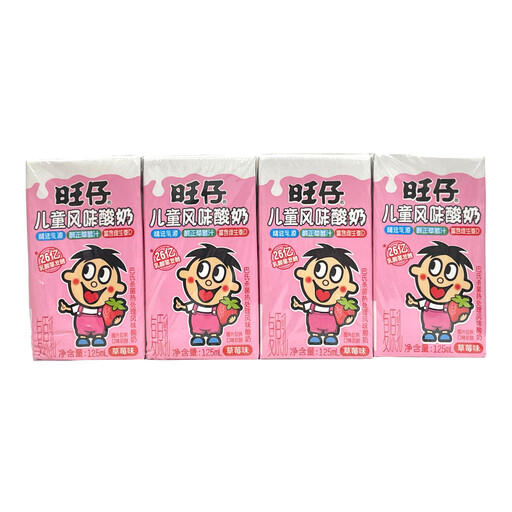 Image unavailable
The pack of four 125 ml servings could suit you if you’re looking for an individual portion of a strawberry-flavoured drink rather than a fruit yoghurt with pieces.
Check the date and storage instructions on the pack you buy.
Start by comparing the ingredients and nutritional information per 100 g, then take the pot size into account. The DGCCRF states that prepacked food labels include details such as the product name, ingredients list and nutrition declaration. Also check the date and storage instructions for the product you choose.
No. For the Danone product reviewed, ‘0%’ refers to fat and doesn’t tell you how much sugar another product contains. Compare the ‘of which sugars’ line and the ingredients for each product; Carrefour’s listing for this Danone 0% also mentions sweeteners.
No. Yoghurt with a use-by date must not be eaten after that date, as the DGCCRF explains. You should also follow the storage instructions on the packaging.
Check the warning for the specific product before choosing it for a young child. E.Leclerc’s listing for Delisse yoghurt with large pieces states that it is not suitable for children under 36 months, partly because it may contain cherry stones or pieces of cherry stone. This warning does not automatically apply to all fruit yoghurts.