
Livraison le jour même ou le lendemain

Qualité garantie

Débloquez vos offres de bienvenue: Livraison GRATUITE | Jusqu'à -80 % | 30 jours d'essai gratuits à JoyPlus
Téléchargez l'application
For any virtual racing enthusiast, moving from a controller to a sim racing wheel is a rite of passage. The appeal is undeniable: greater immersion, razor-sharp precision, and tumbling lap times. But be warned—the market is a jungle of technical jargon and marketing promises where it's easy to get lost and regret your purchase. To ensure you're investing in pure performance, not just hype, it's crucial to know the pitfalls to avoid.
Our editorial team's mission is to clear this path for you. Here are the two most common mistakes we see, and how to avoid them:
PS5 wheel or Xbox wheel) or, even worse, your wheel base... is a recipe for guaranteed (and costly) frustration. Each brand (Thrustmaster, Moza, etc.) maintains its own closed ecosystem. A wheel from one brand will almost never work on a base from another.Building a cohesive and high-performance sim racing setup rests on three technical pillars. These alone determine 90% of your experience behind the wheel.
The force feedback is the heart of the experience, the system that physically connects you to the virtual road. It transmits loss of grip, the feeling of running over kerbs, and the texture of the asphalt into your hands. There are two main technologies:
Before making any purchase, check this point scrupulously. Compatibility operates on two levels:
PC wheel, PS5 wheel, or Xbox wheel? Most often, a wheel base is compatible with PC and only one of the two consoles. Official licenses (like "Licensed for Xbox") are a guarantee of a hassle-free experience.Thrustmaster Ferrari wheel is absolutely not designed for a Moza base, and vice versa. Brands like Moza Racing or Thrustmaster offer complete product lines that ensure perfect synergy.We tend to focus on the wheel, but a good sim racing pedal set is just as, if not more, crucial for consistency and performance. The major difference lies in the brake pedal's sensor:
Rather than an endless list, here are curated pairings designed for specific driver profiles, cleverly sidestepping common pitfalls.
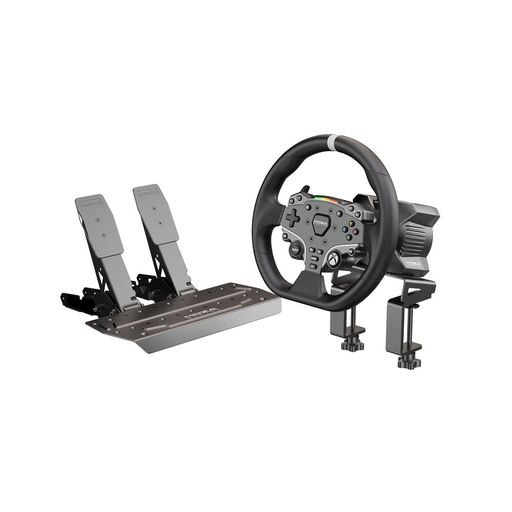
Who is it for? Ideal for the Xbox and PC gamer who wants to take a serious first step into sim racing with a complete, high-performance, and ready-to-use solution.
This bundle avoids the compatibility trap with its official Xbox license and sidesteps the "deceptive bargain" pitfall by offering a true Direct Drive (3.9 Nm) experience, which is far more refined than gear-driven systems at the same price point.
Complete set (base, wheel, pedals). 3.9 Nm of torque for detailed feedback. Integrates into Moza's upgradeable ecosystem.
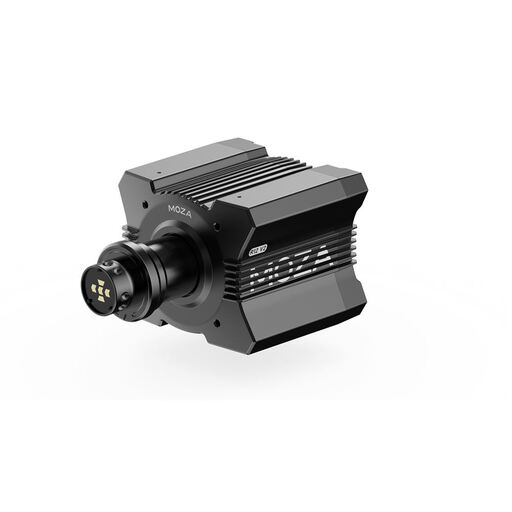
Who is it for? For the PC driver building a dedicated sim racing cockpit who needs a powerful, precise, and durable motor base to feel every detail of the track.
This base avoids the trap of "small" Direct Drive systems that lack punch. With 12 Nm of torque, it delivers considerable power and a level of detail that entry-level models can't hope to match.
Powerful and consistent 12 Nm of torque. 21-bit magnetic encoder for absolute precision. Aviation-grade aluminium chassis for optimal durability and heat dissipation.
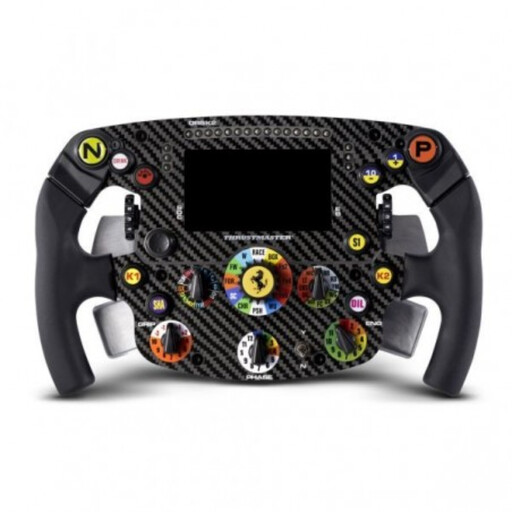
Who is it for? For the driver who already owns a compatible Thrustmaster base and is seeking the ultimate immersion in F1 games with a functional, officially licensed replica.
This product perfectly illustrates the importance of the ecosystem. It avoids the pitfall of buying a "generic" wheel by offering a specialised solution that meets a specific need, maximising immersion for a particular type of racing.
1:1 scale replica. 4.3-inch LCD screen for displaying telemetry data. Aluminium magnetic paddle shifters and a carbon fibre faceplate.
We have compiled a complete selection of products that meet our criteria for performance and reliability, all tested and approved by our editorial team.
Absolutely not. A good belt-driven wheel already offers a fantastic experience that is light-years ahead of a controller. It's an excellent starting point. That said, if your budget allows, an entry-level Direct Drive bundle (like the Moza R3 or R5) is a wise long-term investment: the platform is more precise, more reliable, and ready for future upgrades.
For wheels with moderate torque (up to 8 Nm), a sturdy, stable desk is often sufficient. However, for powerful Direct Drive bases (9 Nm and up), a dedicated sim racing cockpit becomes almost essential. It ensures that all the motor's force is transferred to your hands without any flex, while also providing an ergonomic driving position that is crucial for logging lap after lap without fatigue.
Durability largely depends on the underlying technology. Systems with magnetic sensors (Hall effect) and Direct Drive motors are built to last, as they have virtually no parts that wear down from friction. Conversely, entry-level models with potentiometers and plastic gears can show signs of weakness (loss of precision, noise) after a few years of intensive use. Regular dusting and following the manufacturer's guidelines will always help extend the life of your equipment.